This video features Ben Stoeger, a USPSA Grand Master, discussing the necessity of ammunition for competitive shooting. He clarifies that while dry fire is crucial and can lead to GM classification, high-level competition requires significant live fire, estimating 20,000-40,000 rounds annually for elite shooters. Stoeger emphasizes that live fire builds confidence and hones skills like recoil management, which dry fire alone cannot fully replicate, though dry fire is more efficient for specific drills like target transitions.
Instruction from Joel Park, a Grand Master in practical shooting, details three major trials in his competitive journey. He emphasizes the importance of focused practice, managing physical tension and perception of speed, and developing discipline to execute pre-planned strategies under pressure. Park suggests these elements are crucial for shooters to overcome plateaus and improve performance.
This guide, drawing from the expertise of competitive shooter Joel Park, outlines how to maximize dry fire practice for significant skill development. It emphasizes consistency, sustainable goal-setting, and integrating live-fire observations into your training. Park, a Grand Master with extensive professional training, stresses the importance of efficient practice and minimizing setup friction to achieve championship levels.
Joel Park, a USPSA Grand Master, emphasizes the critical need for specialization to achieve elite performance in competitive shooting. He explains that while fundamentals are transferable, mastering the unique nuances of grip pressure and recoil for a specific platform is essential for championship-level success. Park advises dedicated training with identical setups and warns against diluting focus across multiple disciplines if a high rank is the ultimate goal.
This video aims to differentiate between the skill levels of 'Master' and 'Grand Master' within a specific context, likely related to competitive shooting or firearms proficiency. While the title doesn't explicitly name firearms, the terminology strongly suggests a firearms-related topic. The content will likely explore the distinctions in performance, accuracy, speed, or tactical application that define these advanced levels.
This video details a unique shooting challenge where 'tactical shooters' compete against a USPSA Grand Master using randomly drawn firearms. The drills emphasize positional shooting, movement, precision with a revolver, and speed on steel targets, providing insights into competitive shooting performance and firearm handling under pressure. The competition highlights the skill gap between experienced amateurs and professional shooters.
This video documents a USPSA major match experience with Grand Master shooter Hunter Constantine. The content highlights the benefits of competitive shooting for skill development and social connection. While no specific firearms are explicitly detailed as being used in the match, the context of USPSA competition implies the use of modern semi-automatic pistols. The description also mentions Hunter Constantine's EDC belt business, suggesting a crossover into everyday carry gear. The video promises an in-depth look at a competitive shooting event.
This live chat features Phil Strader, Product Manager for SIG SAUER, discussing the influence of competitive shooters on product development. The conversation aims to understand how feedback from USPSA Grand Masters impacts the design and evolution of firearms, specifically focusing on the SIG SAUER P320 platform. This is a valuable insight into the relationship between professional shooters and firearm manufacturers.
This video showcases Tetiana Gaidar training for an upcoming competition, focusing on speed and accuracy. The shooter demonstrates impressive performance with split times as low as 12, indicating a high level of skill and efficiency in her shooting.
This guide details advanced IPSC shooting techniques as demonstrated by Grand Master Willard Carrera. It covers essential elements like mental preparation through stage walkthroughs, the critical importance of front sight focus for accuracy and speed, and specific drills for improving performance. Carrera, a seasoned competitor, emphasizes discipline, fitness, and strategic practice over solely relying on expensive equipment.
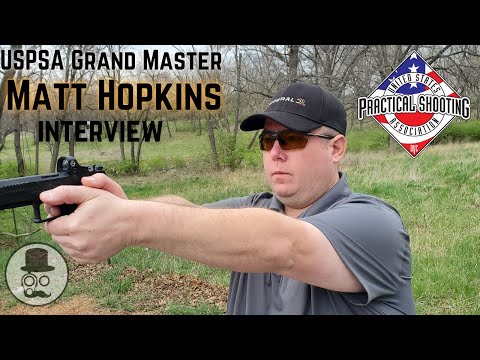
Matt Hopkins, a USPSA Grand Master and candidate for Area 3 Director, discusses his journey into competitive shooting, starting from a personal defense need. He emphasizes the importance of embracing humility and fundamentals when starting, advocating for penalty-free shooting as a key to progressing through C and B classes. Hopkins details the transition to A and M classes, highlighting the necessity of increasing speed and consistent execution, and touches upon advanced techniques like target focus shooting and efficient movement. He also shares insights into the role of an Area Director and discusses current rule changes and their potential impact on the sport.
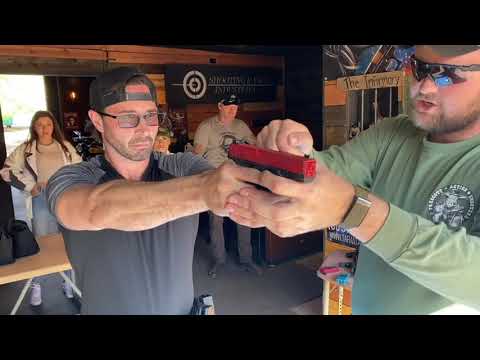
This guide synthesizes expert instruction from USPSA Grand Masters Brian Nelson and Zack Smith on advanced grip and stance techniques for competitive shooting. It details methods like the 'Pull Test,' 'Pulse Test,' and proper application of wrist, elbow, and shoulder pressure to minimize muzzle rise and maximize accuracy during rapid fire. The techniques are demonstrated live with TTI customized pistols, emphasizing biomechanical efficiency for high-performance shooting.
Gun Laws by State
Read firearms regulations for all 50 states + D.C.
Find Gun Dealers
Search licensed FFL dealers near you.