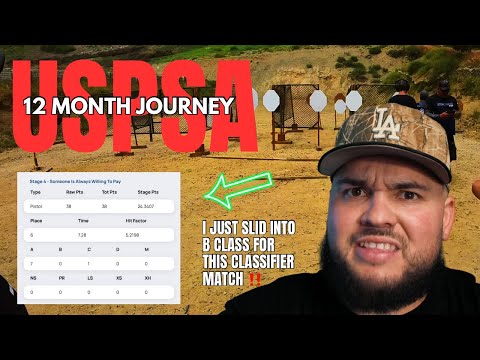
This video documents a USPSA Limited Optics classifier match featuring the CZ Shadow 2. The shooter focuses on improving footwork, transitions, and maintaining a sense of urgency throughout the stages. Key takeaways include the importance of aiming for specific points within the A-zone for accuracy, the impact of ammunition reliability (specifically light primer strikes with Belom 124gr), and the challenges of achieving a desired classification, ultimately resulting in a C-class rating. The shooter emphasizes continuous training and learning from mistakes to improve performance.
This video documents a USPSA competition focusing on the Limited Optics division with a CZ Shadow 2. The shooter aims to improve their skills and progress towards an 'A Class' classification. Key takeaways include the importance of efficient stage planning, maintaining a low athletic stance, improving footwork and transitions between shooting positions, and practicing quick reloads. The shooter also highlights common mistakes like foot faults and standing too upright, emphasizing the need for consistent training to build speed and accuracy.
This video documents a USPSA shooter's journey towards M-Class within 12 months, focusing on classifier stages. Key takeaways include the importance of aiming for specific points within the A-zone rather than center mass, improving footwork and transitions, and maintaining magazine reliability through cleaning. The shooter emphasizes learning from each stage, particularly the classifier, to refine technique and achieve classification goals.
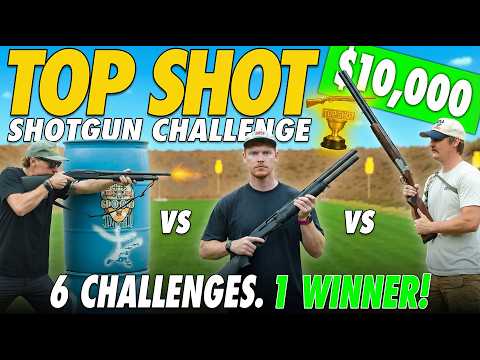
This video details the shotgun portion of the Dirty Kid Top Shot competition, featuring drills like the Build Drill and a movement drill. Participants utilized various shotguns, including the Mossberg 590S, Beretta 1301 Tactical, and Benelli M4, shooting rifled slugs and buckshot. The competition emphasizes speed, accuracy, and hit factor, with participants facing challenges like malfunctions and recoil management.
This video provides guidance on how to approach and train with partial targets in shooting competitions. The instructor emphasizes that there's no single absolute strategy, and decisions should depend on factors like distance, hit factor, and shooter proficiency. The advice focuses on developing intuition through practice, prioritizing penalty avoidance, and understanding that 'wasted time' might be necessary for accuracy on difficult shots.
This video by Tap Rack Bang, LLC, explains the concept of 'throttle control' in firearm training, drawing parallels between competitive shooting (USPSA) and defensive scenarios. It details how different target types and scoring zones influence the shooter's rate of fire and accuracy requirements. The instructor demonstrates how to adapt shooting speed based on target presentation, cover, and the presence of non-threats, emphasizing that competitive target engagement strategies have direct validity in enhancing defensive shooting capabilities.
This guide synthesizes competitive shooting techniques demonstrated by experienced shooter Alyssa Seymour in a USPSA match. It covers rapid target engagement, effective use of red dot sights, smooth stage movement with reloads, and the importance of analyzing performance metrics like hit factor and hit distribution (Alpha/Charlie). The advice is geared towards intermediate to advanced competitors looking to improve speed and accuracy under pressure.
This video documents a USPSA match, focusing on the shooter's performance and areas for improvement. Key takeaways include the importance of fluid movements, avoiding overconfirmation on targets, and strategic reloading. The shooter also discusses a target engagement method called 'point, blend, sights' and the impact of dry fire practice on performance. While acknowledging a failed Grandmaster run and a D-class score due to a malfunction, the shooter highlights progress in transitions, movement, and stage planning, aiming for continuous improvement.
This video follows a shooter's first USPSA match of 2026, offering insights into the differences between USPSA and IDPA. The shooter, relatively new to USPSA with only three matches under their belt, discusses concepts like hit factor, stage planning, and dealing with common issues like dropped magazines and equipment malfunctions. The content provides a beginner's perspective on navigating a competitive shooting event, highlighting areas for improvement and learning.
This expert-level guide breaks down the 2-4-2 drill as demonstrated by Rick Crawley of Achilles Heel Tactical. The drill, designed to improve shooting efficiency and accuracy under time pressure, involves engaging targets in a specific sequence (2-4-2). The video emphasizes analyzing hit factors, movement efficiency, and target prioritization for both rifle and pistol. It highlights how this drill exposes deficiencies in movement and decision-making, recommending both dry and live-fire practice.
Christian Sailer, an expert with significant experience in law enforcement and military training, emphasizes focusing on fundamental shooting skills over complex hit factor math for most practitioners. He advocates for mastering sight picture, transitions, and consistent accuracy before delving into advanced scoring strategies. Sailer's approach prioritizes positive reinforcement and practical application, aiming to genuinely improve shooter performance.
This video demonstrates a dynamic movement drill for competitive handgun shooting, specifically USPSA. The shooter, identified as Mojo, utilizes a CZ Shadow 2 pistol equipped with a Holosun 509T red dot sight. The drill emphasizes rapid engagement of both cardboard and steel targets, followed by calculating the Hit Factor using a mobile app. Instruction from a professional/competitive shooter highlights efficient movement and target transitions.
Gun Laws by State
Read firearms regulations for all 50 states + D.C.
Find Gun Dealers
Search licensed FFL dealers near you.