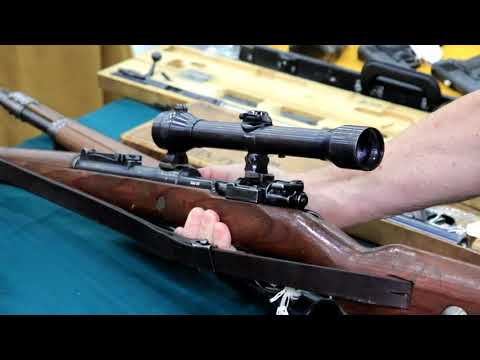
This video showcases a diverse collection of historical firearms, primarily from WWII, focusing on their unique features, production variations, and collector appeal. The presenter highlights specific models like the Luger, P38, Nambu, Femaru, CZ variants, and HSC, detailing their origins, calibers, proof marks, and historical context. The emphasis is on the collector's perspective, noting rarity, condition, and specific production details that increase value.
This video provides an expert examination of a 'last-ditch' Japanese Type 30 Pole Bayonet from the end of WWII. Ian McCollum details its simplified manufacturing, lack of rifle lug, and lashing mechanism for pole mounting. The specimen is identified as Jinsen Arsenal marked, with production also noted at Mukden and Nagoya. The low-cost accessories, including a canvas frog and twine-wrapped wooden scabbard, are also discussed, along with its historical context and use in Pacific campaigns.
This episode of 'Opening the Archives' showcases a Nambu pistol surrendered during the Battle of Okinawa. The pistol, in mint condition, was presented by Major General Koji Shiwa to Colonel Raymond Carlton. The segment highlights the historical significance of the item as a war trophy and a symbol of the surrender, emphasizing the extensive documentation and original ammunition accompanying it.
This guide details the loading and firing technique for the Japanese Type 14 Nambu pistol, as demonstrated by a firearms enthusiast. It covers visual inspection, ammunition identification, magazine insertion, chambering a round, and engaging targets. The demonstration emphasizes safe firearm handling and proper loading procedures for this historical firearm.
This video from Forgotten Weapons debunks the myth of the Type 94 Nambu being a 'surrender pistol.' Instructor Ian McCollum, a recognized expert, demonstrates the firearm's unique exposed sear bar, explaining its mechanical function and clarifying that it was not designed for deceptive use during surrender. The video highlights the pistol's historical context and mechanical intricacies.
This YouTube Short, titled "Don’t Buy the Story | Japanese Grouping #shorts #ww2 #japanese", appears to be a brief, visually-driven piece related to World War II Japanese firearms, likely focusing on accuracy or historical context as implied by "Grouping". The description promotes the creator's Instagram and website, which likely showcase collectible firearms. Without a transcript, the exact content is unknown, but the title strongly suggests a focus on historical military firearms.
This video delves into the historical use of opium-laced cigarettes by Imperial Japan during World War II. It details how the 'Golden Bat' brand was utilized as a tool for pacification and funding the war effort by targeting the Chinese population, while simultaneously prohibiting drug use among Japanese soldiers. The discussion highlights the strategic weaponization of narcotics and the complex historical context surrounding Japanese military operations.
This YouTube video announces the pre-order of a new book from Headstamp Publishing titled "Tobacco of the Emperor." The book, authored by Patrick Phillips and photographed by James Rupley, focuses on Japanese cigarettes and related materials from the turn of the 20th century to the end of World War Two. It covers the general history of tobacco in Japan, its use in the military, details on Japanese cigarette brands and packaging, associated accessories like pipes and lighters, and foreign cigarettes consumed in Japan. The book is available for pre-order through a Kickstarter campaign for another project, "Clockwork Basilisk," and can be purchased as a standalone item or an add-on. A special "Japanese bundle" combining this book with "Swords of the Emperor" and exclusive extras is also offered.
This video presents three World War II era pistols for viewers to choose from, highlighting their historical significance and condition. The options include a pristine 1941 German Luger, a 1939 Colt 1911 A1 issued to the U.S. Army, and a pre-war Japanese Nambu with accessories. The presenter encourages a vote based on ownership and shooting preference.
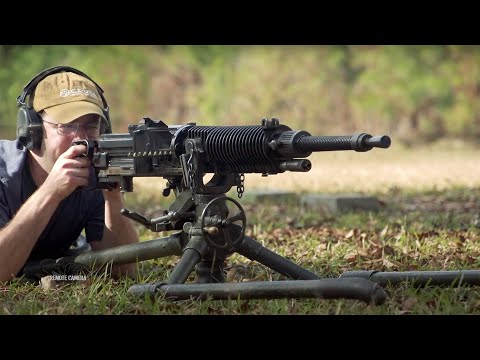
This "I Have This Old Gun" segment from American Rifleman Television, aired in 2020, delves into the history and details of the Japanese Type 3 heavy machine gun. The video highlights its role as the predecessor to the well-known World War II-era Type 92 "woodpecker." It serves as an educational piece for firearms enthusiasts interested in historical military ordnance and its evolution.
This video provides a comprehensive overview of various firearms and military collectibles showcased at the Show of Shows 2021 in Louisville, Kentucky. The presenter highlights numerous historical firearms, including Radom pistols, CZ 27s, Lugers, and M1 Carbines, detailing their condition, markings, and historical significance. The video also features a variety of military memorabilia such as SS tunics, daggers, and holsters, offering insights into their rarity and value. The presenter, with apparent expertise in historical firearms, shares his findings and purchases from the show, emphasizing the importance of condition and authenticity in collecting.
This guide details the field stripping process for the Japanese Type 97 Tank Machine Gun, adapted from the Czech ZB-30 design. It covers removing the end plate, bolt/operating rod assembly, and barrel. The process highlights unique features like the forward-mounted recoil spring and quick-change barrel, crucial for maintenance in confined armored vehicles. The video emphasizes the importance of proper disassembly for cleaning and reliability, especially for this rare collector's item.
Gun Laws by State
Read firearms regulations for all 50 states + D.C.
Find Gun Dealers
Search licensed FFL dealers near you.