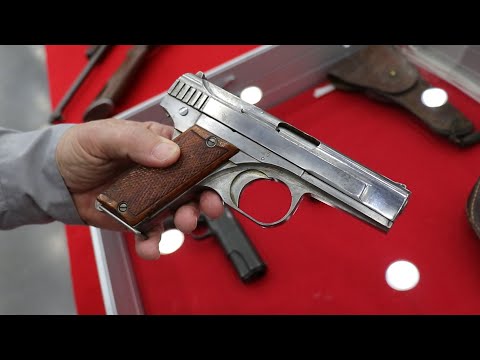
This guide details the key production variations observed in the Nanbu Type 14 pistol, as presented by Othais from C&Rsenal. It covers significant changes in the trigger guard, magazine retention, cocking piece, sights, and overall manufacturing quality between pre-war and late-war models. The analysis highlights historical manufacturing expedients and design evolutions.
This guide details the operation and firing of the Nambu Type 14 pistol, as demonstrated by Misha. It covers magazine loading with 8mm Nambu cartridges, chambering a round, engaging the safety, and live-fire execution at an outdoor range. The video highlights the pistol's last-round bolt hold open feature, offering practical insights for handling this vintage firearm.
This episode of Gun Talk Radio features discussions on machine gun ownership regulations, highlighting that civilians can own pre-1986 machine guns with proper NFA paperwork and tax stamps. The hosts and guests debate underrated cartridges, with suggestions ranging from classic hunting rounds like the .270 Winchester and .30-06 Springfield to more niche options like the 7mm-08 Remington and .256 Winchester. The conversation also touches on discontinued firearms, with the Calico 9mm and Thompson Center Icon being mentioned as desirable models. The historical Knob Creek Machine Gun Shoot is recalled as a significant event for experiencing a wide variety of automatic firearms.
This guide details the loading and firing technique for the Japanese Type 14 Nambu pistol, as demonstrated by a firearms enthusiast. It covers visual inspection, ammunition identification, magazine insertion, chambering a round, and engaging targets. The demonstration emphasizes safe firearm handling and proper loading procedures for this historical firearm.
This video showcases a collection of World War II and World War I era firearm rigs, focusing on pistols and their associated accessories. The presenter, identified as knowledgeable in firearms, details the rarity and value of matching magazines, holster variations, and specific production codes. The content provides historical context and technical observations for collectors and enthusiasts.
This guide details the field stripping process for the Japanese Type 100 SMG, as demonstrated by Ian McCollum. It covers the D-ring takedown mechanism for separating the receiver from the stock and accessing internal components. Proper safety precautions are emphasized throughout.
This guide details the preparation and live-fire demonstration of the Nambu Type 14 pistol. It covers magazine loading, weapon preparation steps like safety disengagement and cycling the bolt, and live fire observation, including slow-motion ejection. The demonstration highlights proper handling of this vintage firearm.
This Q&A session with Ian McCollum of Forgotten Weapons covers a wide array of firearms topics, from rare ammunition stockpiling and historical firearm mechanisms to modern weapon design critiques and the accessibility of artillery hobbies. McCollum, a recognized expert, shares insights on firearm research, media accuracy, and practical shooting advice.
This video provides a detailed look at the Type 94 Nambu pistol, including its unique external sear bar and 6-round 8mm Nambu magazine. Expert instruction demonstrates shooting techniques from various angles (POV, side profile, front-facing) to analyze recoil, slide movement, hammer action, and casing ejection. Slow-motion footage highlights the mechanical operation during rapid fire, offering insights for advanced firearm handlers.
This guide details the field stripping process for the Papa Nambu pistol, an interim Japanese handgun. It highlights key differences from the Grandpa Nambu and emphasizes a unique disassembly method involving barrel depression and trigger guard manipulation. The guide strongly warns against dry-firing due to the fragile firing pin. Instruction is provided by Ian McCollum of Forgotten Weapons, known for his deep historical and mechanical expertise.
This video explores rare firearms at the Show of Shows 2020 in Louisville, KY. It highlights an extremely rare Japanese Hamada pistol in 8mm Nambu, with only 50 believed to have been made. The video also features a factory-engraved Walther PP, presented in 1938 by Fritz Sauckel, noting its de-nazification and unique ivory grip with an inscription. The presentation case and accessories for the Walther are also detailed.
This entry debunks the 'surrender pistol' myth surrounding the Type 94 Nambu, presenting expert analysis from Ian McCollum of Forgotten Weapons. It details the pistol's design purpose for air and tank crews, its improvements over the Type 14, and clarifies the function and effectiveness of its exposed sear bar safety mechanism, arguing against accidental discharge when carried correctly.
Gun Laws by State
Read firearms regulations for all 50 states + D.C.
Find Gun Dealers
Search licensed FFL dealers near you.