This video demonstrates a specialized stripper clip reloading technique for the KelTec PR57 pistol, chambered in 5.7x28mm. Instructor Karl Kasarda showcases how to efficiently reload the firearm's fixed 50-round internal magazine using a 10-round stripper clip, a method often associated with submachine guns but adapted here for pistol use. The demonstration highlights the practical application of this reload under live-fire conditions, emphasizing its potential for maintaining a high rate of fire.
This episode of This Week in Guns features a discussion with Karl Kasarda of InRange TV, covering topics from YouTube's content moderation policies and the importance of decentralized distribution to detailed analyses of various firearms. The conversation delves into the technical aspects of firearms like the SKS and AR-15, critiques specific models such as the Standard Manufacturing Thunderstruck and Ruger Wrangler, and explores legal and societal issues surrounding gun ownership, including the prosecution of parents and the effectiveness of gun buybacks.
This guide details the operation of the fire selector on the original 1918 BAR, as explained by Karl Kasarda. It covers the positions for semi-automatic, full-automatic, and safe modes, emphasizing a unique safety mechanism that requires depressing a button to engage the safe. The information is presented with high authority, drawing on detailed knowledge of historical firearm iterations.
This entry details the operation of the WW2 American M2 Flamethrower, as demonstrated by expert Karl Kasarda on InRangeTV. The guide covers the basic live fire command and discharge sequence, highlighting the weapon's significant visual and auditory output. It emphasizes safe handling and operational commands essential for such a device.
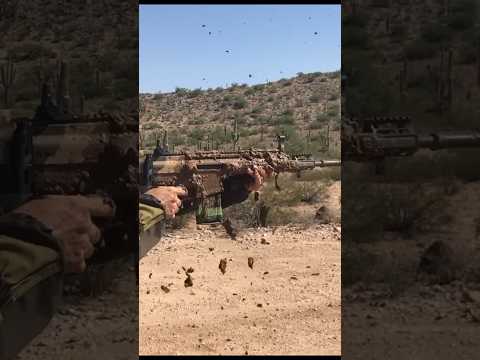
This video demonstrates a rigorous mud test on the Palmetto State Armory (PSA) Jakl rifle, conducted by InRangeTV. The test involves applying significant amounts of mud to the rifle's critical components and firing multiple rounds, including a full magazine dump. The PSA Jakl successfully passed the test, showcasing its reliability in extreme environmental conditions. The objective and testing-oriented approach highlights the expertise of InRangeTV in firearm reliability evaluations.
This guide details the proper application of a Gaza-style or CAT tourniquet, as demonstrated by Karl Kasarda on InRangeTV. It emphasizes initial strap tightness before windlass use for effective hemorrhage control and occlusion. The instruction highlights the importance of securing the windlass and managing patient pain during application.
This video provides a hands-on demonstration of two common revolver reloading methods: speedloaders and moon clips. Instructor Karl Kasarda, with high authority, showcases the practical differences in speed and ease of use between the two systems, particularly on an 8-shot Smith & Wesson Model 327 Performance Center. The guide covers loading, unloading, and firing sequences, offering valuable insights for revolver owners looking to improve their reloading efficiency.
This guide details the historical loading and firing procedure for a 1700s Hand Mortar, as demonstrated by Karl Kasarda. It emphasizes a two-person operation for loading the black powder charge and the fuse-lit grenade, followed by a firing sequence typically from a defensive position. The demonstration highlights the significant smoke and recoil associated with this historical weapon.
This guide details the operation of the US Civil War era Maynard Carbine, a break-action breech-loader. Expert Karl Kasarda demonstrates the unique loading process using specialized brass cartridges and the lever-actuated mechanism. The demonstration covers firing, the resulting black powder smoke, and manual extraction of spent casings, highlighting its efficiency over muzzle-loaders.
This video demonstrates a rigorous mud test on the FN SCAR-H, showcasing its operational reliability even when heavily contaminated. Expert analysis from Karl Kasarda highlights the rifle's effective sealing against external debris, allowing it to pass the test with minimal intervention. The SCAR-H joins an elite group of firearms that have previously succeeded in similar harsh condition tests.
This video details the specific loading procedure for the 1860 Henry rifle, also known as the Litchfield Repeater. It emphasizes a safe method for loading the tubular magazine by sliding rounds in at a shallow angle to prevent accidental detonation. The demonstration covers both adding a round directly to the lifter for increased capacity and the main magazine loading process, highlighting the importance of slowly lowering the follower to avoid dangerous primer strikes.
Instruction from Karl Kasarda of InRangeTV, a high-authority speaker, details the .223 Wylde chamber. This chambering is presented as a specialized option for precision match shooters, particularly those using 80-grain bullets at 600 yards. While it offers enhanced safety for 5.56 NATO rounds and improved accuracy for heavy bullets, Kasarda suggests its benefits are largely marketing hype for the average user.
Gun Laws by State
Read firearms regulations for all 50 states + D.C.
Find Gun Dealers
Search licensed FFL dealers near you.