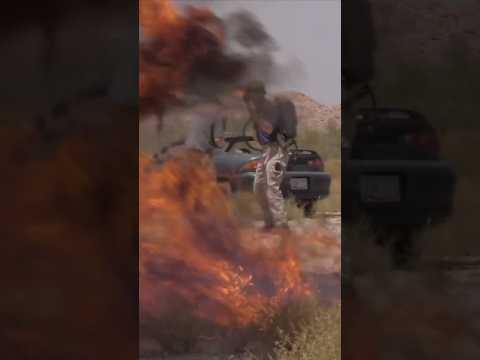
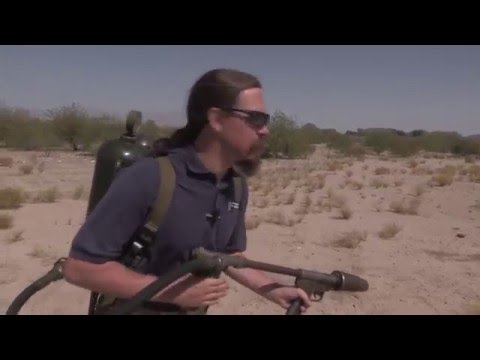
This video details the rapid evolution of US flamethrowers during World War II, moving from the unreliable M1 to the superior M2. The M1 was an emergency development, built in 90 days with off-the-shelf parts, suffering from poor reliability and combat effectiveness. Its shortcomings spurred immediate research, leading to the M2, which incorporated lessons learned from studying Allied and Axis flamethrowers.
This entry details the combat loadout and operational characteristics of the WWII Infantry Flamethrower, drawing on insights from Woody Williams, a Medal of Honor recipient and Iwo Jima survivor, as featured on the Shawn Ryan Show. It covers fuel capacity, burn time, the distinction from napalm, and the necessity of a secondary sidearm like the M1911 pistol. The information highlights the inherent risks and design considerations of this formidable weapon system.
This YouTube video focuses on the US M2/M2A1 Flamethrower, a significant weapon from World War II. Leveraging hashtags like #forgottenweapons, #m2, #ww2, #wwii, #flamethrower, and #napalm, the content likely delves into the history, design, and operational aspects of this unique historical firearm. Expect a discussion on its development and role in conflict, with a particular emphasis on its incendiary capabilities.
This entry details the operation of the WW2 American M2 Flamethrower, as demonstrated by expert Karl Kasarda on InRangeTV. The guide covers the basic live fire command and discharge sequence, highlighting the weapon's significant visual and auditory output. It emphasizes safe handling and operational commands essential for such a device.
This guide details the operational use of the M2 Flamethrower, drawing on the expertise of an Iwo Jima survivor and 5th Marine Division veteran. It covers fuel capacity, firing duration, the 'swoosh' technique, tank configuration, and the necessity of a .45 pistol as a sidearm due to the weapon's bulk. The information highlights critical vulnerabilities and operational context from WWII combat.
This entry details the M2 Flamethrower's role in World War II, specifically during the Battle of Iwo Jima, as discussed by Marine veteran Don Graves. It highlights the weapon's tactical application and the rigorous training involved for operators like Graves, who served with the 5th Marine Division. The content emphasizes the severe conditions and strategic importance of flamethrower units in close-quarters combat.
This entry details the experiences of a 98-year-old Marine veteran of the Battle of Iwo Jima, focusing on his use of the M2 Flamethrower. It includes insights into WWII combat tactics, the harsh realities of island hopping, and the specific weaponry employed. The content highlights the veteran's direct experience and expertise, offering a unique perspective on historical military operations.
This guide details the operation and key features of the US M2/M2A1 Flamethrower, a significant weapon from WWII through the Vietnam War. It covers its development, fuel system advantages with gelled fuel, safety mechanisms like rupture discs and vent caps, and the reliable pyrotechnic ignition. The guide emphasizes understanding the pressure regulation, hose construction, dual-trigger system, and the importance of quick-release straps for operator safety during live fire demonstrations. Instruction is provided by Ian McCollum, a recognized expert in historical military arms.
This guide details the maintenance, operation, and field resupply procedures for military flamethrowers, drawing on expert insights from Charlie Hobson. It covers operator-level maintenance, the importance of spare parts, logistical challenges of fuel and pressure bottle resupply, and safety considerations during operation. The information highlights the practical aspects of using these weapons in historical combat scenarios.
This guide details the safety drill and firing procedure for an M2 flamethrower, as demonstrated by Forgotten Weapons. It covers pre-operation checks, including a 50 PSI leak test, understanding of controls (front trigger for ignition, rear for fuel), and confirmation of safety relief systems. The procedure emphasizes a brief test shot to ensure proper function before sustained firing, with crucial safety warnings about wind and overall handling. Instruction is provided by an experienced individual from the Forgotten Weapons channel, known for their expertise in historical weaponry.
This video, titled '2-Gun: M2 Flamethrower', uses a cryptic description '...and it was all a dream.' Given the title, the content likely involves a demonstration or discussion of the M2 Flamethrower, possibly in a '2-Gun' scenario which could imply a competition or a pairing with another firearm. The dream-like description might suggest a surreal or humorous approach to the subject matter, or it could be a narrative framing device. Without further information, it's assumed to be a showcase of the M2 Flamethrower.
You've reached the end! 11 videos loaded.
Gun Laws by State
Read firearms regulations for all 50 states + D.C.
Find Gun Dealers
Search licensed FFL dealers near you.