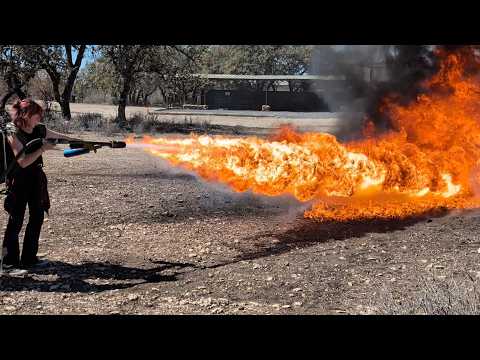
What Does a Flamethrower Carry in Combat?

Published on February 19, 2024
Duration: 0:52

This expert guide details the operational use of the M2 Flamethrower in combat, drawing from the experience of a 5th Marine Division veteran and Iwo Jima survivor. It covers fuel capacity, the importance of a sidearm, firing techniques for fuel conservation, and critical tank vulnerabilities. The information emphasizes the specialized nature and inherent risks of flamethrower deployment.

Quick Summary

The M2 Flamethrower carried five gallons of an oil and gasoline mixture, not napalm. It allowed for 6-7 short bursts, lasting about 15 seconds of continuous fire. Operators used a 'swoosh' technique, and a .45 caliber pistol was the standard sidearm due to the impracticality of carrying a rifle.

Chapters

  1. 00:00Becoming a Flamethrower Operator
  2. 00:12Flamethrower Fuel and Capacity
  3. 00:19Sidearm and Primary Weapon Choice
  4. 00:24Firing Duration and Technique
  5. 00:34Tank Configuration and Safety

Frequently Asked Questions

What was the primary mission of a flamethrower operator in combat?

The primary mission for a flamethrower operator, as explained by a veteran, was to neutralize enemy pillboxes. This involved direct engagement with fortified enemy positions using the flamethrower's incendiary capabilities.

What type of fuel did the M2 Flamethrower use, and what was its capacity?

The M2 Flamethrower carried five gallons of an oil and gasoline mixture. It's important to note that this was not napalm. The fuel capacity dictated the limited number of bursts available.

What sidearm was carried by flamethrower operators, and why?

Flamethrower operators typically carried a .45 caliber pistol as a sidearm. This was a practical choice because attempting to carry a full-sized rifle alongside the bulky flamethrower equipment was not feasible in combat.

How long did the fuel in an M2 Flamethrower last, and what firing technique was used?

The fuel in an M2 Flamethrower lasted for about 6 to 7 short bursts. Continuous trigger depression would empty the tanks in approximately 15 seconds. Operators utilized a 'swoosh' technique to manage fuel consumption.

More Tactical & Gear Videos You Might Like

More from Shawn Ryan Show

View all →