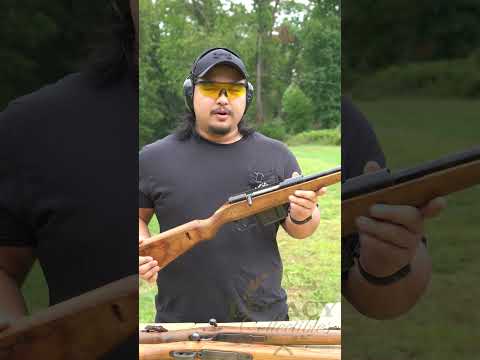
This video examines a rare late-war commercial K98k rifle produced in 1944, distinct from standard Wehrmacht issue. Instructor Ian McCollum details its unique markings, assembly by Fritz Langenham using reclaimed parts, and discusses theories for its production outside military contracts, suggesting use by factory guards or other institutions.
This video discusses the unusual presence of commercial military-pattern rifles in Germany in late 1944. These rifles were assembled by smaller shops outside the main factory system, often using reclaimed parts due to late-war manufacturing challenges. The example shown was assembled by Fritz Langenhan, a company known for its World War I .32 caliber pistols.
This guide details the key production variations observed in the Nanbu Type 14 pistol, as presented by Othais from C&Rsenal. It covers significant changes in the trigger guard, magazine retention, cocking piece, sights, and overall manufacturing quality between pre-war and late-war models. The analysis highlights historical manufacturing expedients and design evolutions.
This guide details how to examine Walther PPK pistols assembled by American GIs from parts found at the factory at the end of WWII. It covers identifying key features such as caliber, slide finish, frame material, and the significant absence of standard markings, highlighting these as characteristics of late-war, non-standard production. The information is presented with the authority of a recognized expert in historical firearms.
This video details how to identify special contract Walther PP and PPK pistols, distinguishing them from standard commercial models. Key indicators include slide and magazine numbering, specific Waffen proof marks (like Waffen 359 or Eagle 359), and variations in font styles. The presenter, a collector with extensive experience, explains how these markings denote contracts for the SS, Luftwaffe, SA, and police forces, offering insights into their historical context and rarity.
This video delves into the complexities of identifying late-war Walther PPK production, focusing on serial number variations, proof marks, and finishing techniques. The presenter, an experienced collector, highlights how to distinguish between standard production and potentially assembled or souvenir firearms from the WWII era, referencing expert books and personal database findings.
This video explores two exceptionally rare engraved Sauer 38h pistols, highlighting their potential as unissued presentation pieces or late-war factory items. The presenter, an experienced firearms instructor, notes the scarcity of engraved Sauers compared to Walthers and discusses features like late-war notches and the absence of proof marks, suggesting they were likely brought home by GIs as souvenirs.
This video provides a brief overview of the rare 1945 VG-1 rifle, a late-war German attempt at simplified firearm production. The rifle is characterized by its crude construction, including a barrel pressed into the receiver and a simple tube bolt. It utilizes standard K43 magazines. The presenter notes a crack in the stock, preventing them from firing the example.
This video showcases a collection of small-caliber German and Italian pistols, primarily from the Walther PP/PPK and Mauser lines, with a focus on their historical context and markings. The presenter, a Walther collector, details variations in production, specific agency markings (DRP, RFV, RJ, SS), and military acceptance stamps, highlighting rare features and collectible value. The review covers models ranging from early production to late-war examples, including specific details about finishes, grips, and accessories.
This video, presented by Tom Whiteman of Legacy Collectibles, addresses the misconception that Luger production ended in 1942. It provides an expert-level overview of late-war Lugers, focusing on identifying Mauser 'Black Widow' variants and Krieghoff production from 1943-1945. The authoritative tone and detailed knowledge of factory codes and historical variants highlight high expertise.
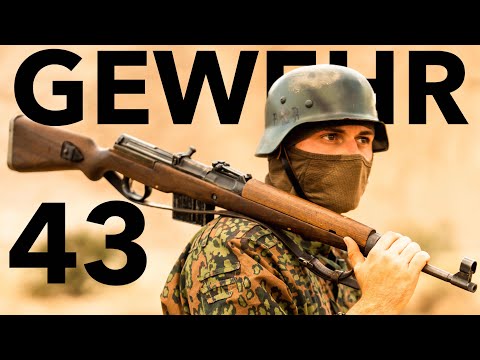
This expert-level entry delves into the Gewehr 43 (G.43), a semi-automatic rifle produced by Walther for Germany during WWII. It covers the G.43's technical specifications, design evolution from the G.41, and its production challenges due to late-war pressures. The analysis contrasts its technological superiority as an individual weapon against its limited impact on the war's outcome due to logistical issues and production scale compared to the Kar98k.
This guide details how to identify and analyze a late-war German Kar 98k, specifically a 'CE44' model. It covers identifying manufacturer codes, recognizing wartime production simplifications like stamped parts, understanding component sourcing through Waffenamt stamps, and assessing part matching common in surplus firearms. The information is presented with the authority of a recognized expert in historical firearms.
Gun Laws by State
Read firearms regulations for all 50 states + D.C.
Find Gun Dealers
Search licensed FFL dealers near you.