This video, presented by SHORTSHOT TONY, offers insights into firearm restrictions in California. It explains the 'stupid handgun roster' that limits the availability of new firearms and highlights exemptions for law enforcement. The video also touches on magazine capacity limits and provides advice for California gun owners.
This entry provides an expert overview of California's Assembly Bill 1263, an 'online parts ban' set to take effect in 2026. It details the strict transaction protocols, the implications for 3D printing and digital firearm code, and the impact on distributors like RSR Group. The analysis highlights concerns regarding law enforcement exemptions and potential constitutional challenges.
Colion Noir, an attorney and firearms expert, analyzes Colorado's Senate Bill 3, which proposes banning semi-automatic firearms with detachable magazines. He critiques the bill's premise, highlighting that magazine capacity is not the primary driver of mass shootings and that fixed magazines can pose safety risks. The analysis also touches on the legal strategy of anti-gun advocates and the implications of law enforcement exemptions.
Michigan Democrats are pushing Senate Bill 1134, which aims to ban firearms not colored black, brown, dark gray, dark green, silver, steel, or nickel. This bill, if passed, would criminalize the sale, transfer, manufacture, modification, and possession of firearms with 'deceptively colored' finishes like cow print, camo, or neon pink, classifying violations as misdemeanors. The bill includes exceptions for law enforcement and a grandfather clause for existing firearms, but its broad definition of 'covert firearms' and the potential for it to be challenged on constitutional grounds are significant points of discussion.
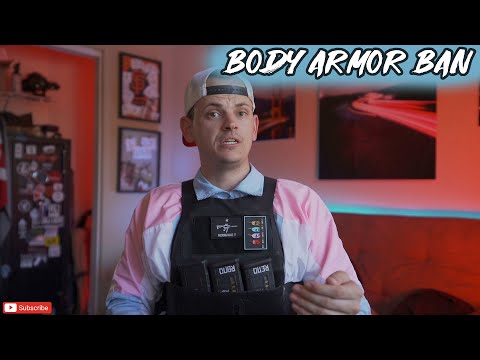
This video from Colion Noir discusses the implications of a proposed bill to ban body armor, particularly in the context of the Buffalo mass shooting. The speaker argues that such bans prioritize the safety of law enforcement over civilians and may infringe upon the right to self-defense. He critiques the rationale behind the ban, suggesting it's a measure for political leaders' safety rather than public well-being, and touches upon the Second Amendment's historical context regarding protection against tyranny.
This video discusses a San Francisco restaurant chain's decision to enforce a gun-free zone policy that includes law enforcement officers, leading to a dispute with the police union. The speaker argues that gun control laws often create a two-tiered system, exempting police and government officials. The incident highlights the tension between private business rights to set policies and the broader implications of gun control measures.
This video, presented by Attorney Anthony Miranda of Armed Scholar, provides an expert analysis of Illinois HB 3238, a bill proposing a ban on the purchase, sale, and possession of body armor for civilians. Miranda details the bill's provisions, including a registry for existing owners and limitations on use, while critically examining its constitutional implications under the Second Amendment, referencing landmark Supreme Court cases like Heller and Caetano. The analysis highlights the bill's exemptions for law enforcement and warns against potential overreach and the spread of such legislation.
The video discusses HR4568, a proposed bill that would ban the private ownership and possession of 'enhanced body armor,' defined as ballistic resistance meeting or exceeding Type III armor. The speaker argues this ban is illogical, citing that such armor is crucial for protection against rifle rounds like 5.56 and .223, and that the bill's grandfathering clause indicates a lack of genuine concern for public safety. The speaker emphasizes that body armor is a safety precaution, akin to a seatbelt, and that restricting its ownership contradicts arguments for defunding police or distrusting government actions.
This guide details California's ammunition laws as of July 1st, 2019, focusing on bringing ammunition into the state. It clarifies that California residents purchasing ammo out-of-state must use a licensed vendor for transfer, with a 50-round limit for returning hunters or competitors. Non-residents are generally exempt if they were not California residents at the time of purchase. Specific exemptions exist for FFLs, vendors, collectors, and law enforcement.
You've reached the end! 9 videos loaded.
Gun Laws by State
Read firearms regulations for all 50 states + D.C.
Find Gun Dealers
Search licensed FFL dealers near you.