This video focuses on the Gideon Optics Guardian LPVO, a low-power variable optic. The title highlights its affordable price point of $300, suggesting a review or evaluation of its capabilities for the budget-conscious shooter. The content is likely to cover its features, performance, and suitability for various shooting applications where an LPVO is beneficial, such as tactical carbines or hunting rifles.
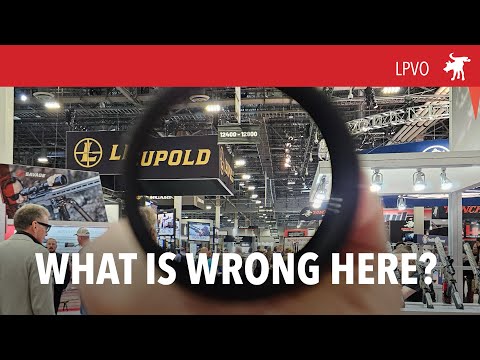
This guide details how to identify and understand a subtle but critical issue in Low Power Variable Optics (LPVOs): image alignment or 'image shift' at 1x magnification. It explains how to differentiate this from true 'fish-eye' distortion, the importance of proper diopter adjustment, and how to test for this anomaly. The guide also touches upon the technical reasons behind image shift, often related to optical centering and turret adjustments, as explained by industry experts.
This guide covers the basic installation and initial range testing of the AcuVista Surge 1-10x24 FFP LPVO. It emphasizes proper mounting, eye relief adjustment, and verifying the optic's features like magnification and turret adjustments. The review highlights the importance of testing at a shooting range to confirm performance and accuracy.
This video offers a satirical take on installing the budget-friendly Triton Ronin LPVO, highlighting its popularity and affordability. The speaker, with a background in gunsmithing as indicated by AGI apparel, humorously demonstrates a 'secure' mounting method using a power drill on a 12-gauge shotgun. The content touches on influencer mentions and the value proposition of the optic for its price point.
This video demonstrates the effectiveness of Low Power Variable Optics (LVPOs) compared to red dot sights for rifle shooting at 120 yards. The LVPO, specifically a Triton Orion 1-10x first focal plane optic, significantly improved accuracy, allowing for tighter groupings and better identification of misses.
The Leupold CQT (Close Quarters Tactical Optic) was a pioneering low power variable optic (LPVO) released in 2002, featuring a true 1x magnification. While innovative for its time, its limitations include a tight eyebox, lack of daylight-bright illumination, and a small objective lens. Despite its historical significance in the development of tactical optics, modern alternatives generally offer superior performance.
This video demonstrates a shooting drill focused on utilizing the magnification adjustment of a Low Power Variable Optic (LPVO). The drill progresses through standing, kneeling, and prone positions, emphasizing the use of the control hand to manipulate the optic's magnification. The instructor highlights the advantages gained by effectively working the magnification during dynamic shooting scenarios.
This YouTube video focuses on the "bezel view" of an optic, highlighting its visual aspect and perceived quality. The title specifically mentions "Clean Bezzle View" and uses fire and praise emojis to emphasize this. It strongly suggests a budget-friendly approach, with the tag "SUB $100" indicating an affordable price point. The inclusion of "#vectoroptics #scope #LPVO #budgetgear" clearly positions the video as a review or showcase of an affordable Low Power Variable Optic from Vector Optics, emphasizing its value for money.
This review of the EOTech Vudu 3-9x32 LPVO highlights its utility on AR-15 platforms. The optic features clear Japanese glass, an MOA reticle usable for holdoffs, and a daylight-bright illuminated center. While not a true BDC, its reticle hash marks can be zeroed for specific distances, offering versatility. The reviewer notes its compact size, aluminum forging construction, and smooth magnification adjustment.
This video tests the waterproof and fog-proof capabilities of the Monstrum Panzer 1-6x20 Low Power Variable Optic after being submerged in water for 24 hours. The optic was then subjected to temperature changes to check for fogging. The test concluded that the optic remained clear and functional, demonstrating its robustness.
This video discusses the Gideon Guardian LPVO, highlighting its clean reticle and 1-10x magnification. While suitable for civilian use requiring a durable optic, the instructor argues it's not ideal for special forces due to the extreme conditions they face, such as water resistance and overpressure requirements.
This guide explains the concept of Maximum Point Blank Range (MPBR) for effective rifle engagement. It details how to utilize optics like LPVOs and red dots with magnifiers to achieve 'point and shoot' accuracy out to approximately 300 yards. The information is presented with practical insights from an experienced instructor, covering zeroing strategies and their impact on MPBR.
Gun Laws by State
Read firearms regulations for all 50 states + D.C.
Find Gun Dealers
Search licensed FFL dealers near you.