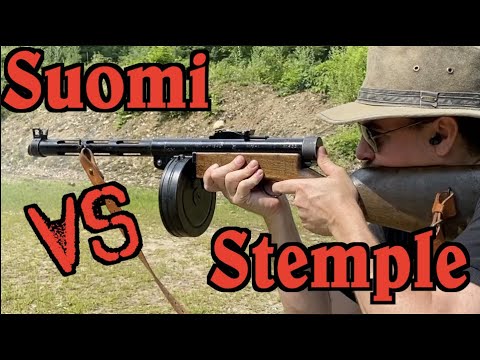
This video provides an expert-level comparison of the Danish Model 1941 Suomi and a Stemple 76/45 configured to mimic the Suomi. Ian McCollum, a recognized firearms expert, details the mechanical similarities and subtle physical differences, including receiver length. He demonstrates their performance in full-auto fire, noting the surprisingly similar handling and rate of fire despite the Stemple's modified receiver.
This video provides an expert-level review of the Danish M1941 Suomi, a licensed variant of the Finnish KP-31 submachine gun. Ian McCollum details its historical context, production by Madsen and Hovea, and key differences from the original Finnish model, including unique markings and stock ergonomics. The review highlights its scarcity and significance as a collector's item, drawing on detailed technical specifications and historical production data.
This video showcases the semi-automatic Madsen rifle manufactured by Midwest Metal Creations. The description highlights a shooting session with this specific firearm. The video also promotes the creator's Patreon page for "Guns of the World." The title and description are straightforward, focusing on the firearm itself and its operation.
This video segment from American Rifleman Television's "I Have This Old Gun" series focuses on the Madsen M1950 submachine gun. It delves into the history and development of this Danish-designed and manufactured firearm, highlighting its open-bolt operation. The content is presented by the NRA's American Rifleman, suggesting a focus on historical firearms and their significance.
This "outtakes" episode of Project Lightening offers a humorous behind-the-scenes look at filming historical machine guns. It highlights the challenges of operating WWI-era firearms like the Chauchat and BAR, dealing with range logistics, and the physical demands of handling heavy weapons such as the MG08/15. The episode also includes lighthearted studio banter about historical attire and the realities of long filming days.
This episode of Project Lightening evaluates the field strip ease of several WWI-era light machine guns. The MG 08/15 stands out with a perfect 5/5 score for its simple disassembly, while the B.A.R. M1918 is rated lowest at 1/5 due to complex, non-captive parts. Other guns like the Lewis, Hotchkiss, and Madsen fall in the middle, with varying challenges in reassembly.
This episode of Gun Gripes covers common range day frustrations, including manufacturing defects in early production firearms like the Savage MSR and Ruger Precision Rifle. It highlights how specific ammunition, such as Sig Sauer Elite Performance, can cause malfunctions with certain guns (Ruger LCP II). The discussion also delves into handload dangers like hang fires and case head separation, and the impact of ergonomics and trigger systems on shooting performance. Finally, it touches on diagnosing shooting errors through video analysis and the importance of understanding ballistics like twist rates for bullet stabilization.
This video showcases a scarce Danish-made Madsen copy of the AG-42B Ljungman rifle. The Madsen company produced approximately 50 of these rifles for military trials in various calibers. The featured rifle, along with a few others, was imported into the US and acquired by collectors. Mechanically identical to the Ljungman, the Madsen variant exhibits differences in ancillary details such as sights, bayonet lug, magazine, handguard, and charging knobs.
You've reached the end! 8 videos loaded.
Gun Laws by State
Read firearms regulations for all 50 states + D.C.
Find Gun Dealers
Search licensed FFL dealers near you.