This video features a shooting session with a historical Mauser 1914 pistol. Based on the title and description, the content focuses on the operation and performance of this classic firearm. It's likely to appeal to firearm enthusiasts interested in historical arms and shooting demonstrations.
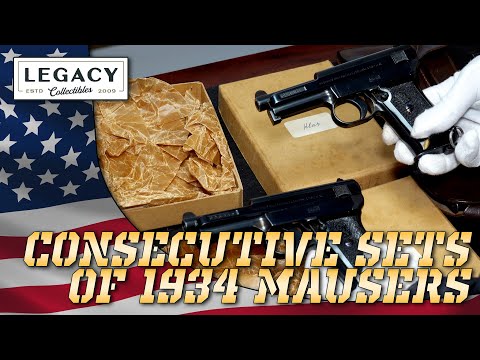
This video showcases two consecutively numbered Mauser 1934 pistols, highlighting their pristine condition and original packaging. It then transitions to discussing rare 1934 Navy Mausers, detailing their unique property markings, including the 'funky chicken' eagle over M stamp. The presenter educates viewers on the historical context, manufacturing variations between the 1914 and 1934 models, and the evolution of Navy markings through different eras.
This video focuses on the "Baby Mauser," specifically the Mauser 1914 pistol, as indicated by the title and description. The content involves shooting this antique firearm, suggesting a demonstration of its operation and performance. As an antique pistol, the video likely appeals to collectors, historical firearms enthusiasts, and those interested in vintage firearms in action.
This video showcases a collection of rare World War II and earlier era pistol rigs, focusing on Mauser, Sauer, Walther, and Bergmann firearms. The presenter, with apparent expertise, details how to identify specific models, assess their condition, and understand their historical context through proof marks and accompanying holsters. The emphasis is on the rarity of complete rigs and the unique markings that denote their service history with military or police units.
This video focuses on the Mauser 1914 pistol. As a historical firearm, the content likely involves an examination of its design, functionality, and potential historical significance. Viewers can expect to learn about its specifications, operation, and possibly its place in firearms history.
This video provides an informational overview of the historical Mauser 1914 pistol chambered in 7.65mm. The content emphasizes that the video is for informational purposes only, adheres to YouTube guidelines, and was filmed in a safe environment at a private gun range. It highlights the firearm as a pre-WW2, unmodified semi-automatic pistol with a magazine capacity of less than 10 rounds, and includes a responsible shooting disclaimer.
This video features a shooting demonstration of a historical Mauser 1914 pistol chambered in 7.65mm. The focus is on showcasing the firearm in action, highlighting its operation and perhaps its historical significance. The content is aimed at firearm enthusiasts interested in classic pistols and their performance.
This video provides a historical overview and technical examination of the Mauser HSC pistol, contrasting it with earlier Mauser designs like the 1914. It details the HSC's development, its adoption by various German military branches during WWII, and its unique features, including a hammer-fired action and distinctive Art Deco styling. A basic takedown procedure for the HSC is also demonstrated.
This guide details the installation and operation of a 4mm Zimmerstutzen conversion kit for the Mauser 1914 pistol, as demonstrated by Ian McCollum. The process involves a simple barrel swap to enable indoor parlor shooting with low-powered cartridges. It highlights the manual cycling required due to the cartridge's weakness and the historical context of such conversions for practice.
The Mauser 1914 is a compact 9x17mm Browning Court (also known as .380 ACP) semi-automatic pistol weighing 1.3 pounds and measuring just over six inches in length. It offers a comfortable grip for single-handed shooting and features a cocking indicator. Despite its weight, recoil is manageable, attributed to the full grip. The sights are described as tall and clean, aiding in quick realignment. The safety mechanism is noted as somewhat unnatural, with a push-down lever and a separate button for disengagement. The trigger is praised for its smooth action. While not achieving Mauser's ideal of a universal handgun, the 1914 served as a capable pocket pistol for both military personnel and civilians.
The Mauser 1914 pistol, chambered in .32 ACP, is a historically significant and well-engineered firearm often overlooked compared to Mauser's rifles. Despite its age, it features advanced mechanics like an automatic slide release and a striker-fired system with a cocked indicator. While the .32 ACP cartridge is considered underpowered today, the 1914 remains reliable and easy to field strip, making it a classic collectible.
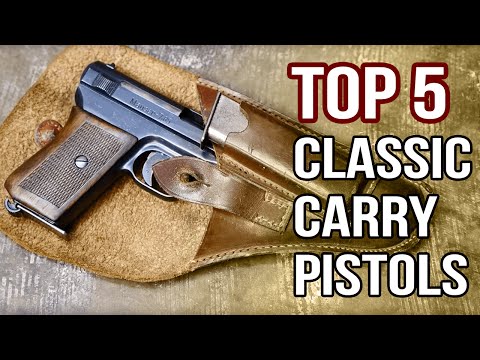
This review highlights five classic carry pistols produced before or around the 1920s, focusing on their historical significance, design innovations, and suitability for concealed carry. The FN Model 1900 pioneered the slide, the Colt 1903 offered a snag-free design, the Savage 1907 featured a double-stack magazine, the Mauser 1914 was known for its safety and ergonomics, and the Walther PP remains iconic with its decocker. These pistols represent key advancements in self-loading handgun technology.
Gun Laws by State
Read firearms regulations for all 50 states + D.C.
Find Gun Dealers
Search licensed FFL dealers near you.