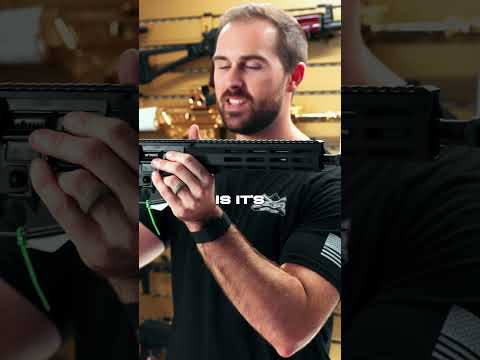
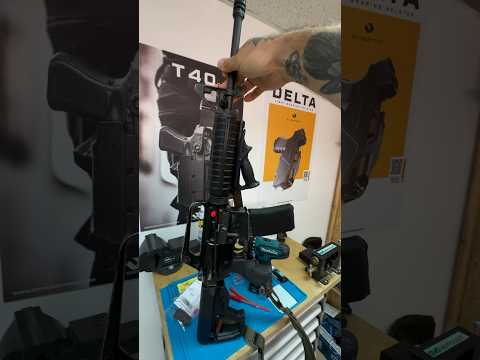
This video from Classic Firearms explains the meaning of forge markings found on AR-15 upper receivers. Instructors Matt and Jason clarify that these markings indicate the manufacturer of the raw forged aluminum blank, not necessarily the quality of the final product. They detail common forge marks like the keyhole (Cerro), splintered 'A' (Anchor Harvey), and square (BAFE), explaining that the machining process by the final manufacturer is the primary determinant of quality and adherence to mil-spec standards. While not a direct indicator of quality for the average consumer, forge markings can be valuable for collectors, clone enthusiasts, and for tracing material origins in case of defects.
This guide details the installation of the Atrius Drop-in Selector for AR-15 platforms. Ryan Spadafore, Founder and CEO of Atrius Development Group, highlights its compatibility with mil-spec fire control groups and its ability to add a third firing position. The process involves careful handling of internal components and ensuring proper alignment for enhanced shooting experience.
This guide, informed by an expert instructor, details the differences between AR-15 charging handles, from mil-spec to premium models. It covers material science (6061-T6 vs. 7075-T6 aluminum), functional upgrades like gas mitigation and ambidextrous controls, and provides insights from destructive testing. The analysis helps shooters understand the value proposition of higher-priced options for specific use cases like suppressed shooting.
This video showcases the Springfield Armory Defend Your Legacy Mil-Spec 1911 in .45 ACP through a live-fire demonstration. The reviewer, exhibiting proficiency and safe handling, highlights the firearm's classic features like checkered wood grips and 'MIL-SPEC' slide markings. The demonstration includes rapid fire strings and slow-motion analysis of the pistol's cycling, offering insights into its performance with Federal Ammunition.
This video, presented by Jared from GUNBROS, humorously explores the 'worst' AR-15 charging handle, identifying the standard GI-style as inferior due to its single-sided, difficult-to-manipulate design. It contrasts this with superior aftermarket options like the Geissele Super Charging Handle and Radian models, highlighting their ambidextrous, oversized levers for improved ergonomics and reliability. The content provides practical insights for AR-15 owners looking to upgrade their charging handle for better weapon manipulation.
This guide details how to customize the Palmetto State Armory 10.5-inch AR Pistol, focusing on accessory mounting using its Hex rail system and Mil-Spec compatibility. It covers utilizing M-LOK slots and the Picatinny top rail for various attachments, alongside the benefits of the SB Tactical adjustable brace. The information is presented with a professional tone, reflecting the authority of an official Palmetto State Armory representative.
This video explains the true meaning of 'Mil-Spec' in firearms, differentiating it from marketing hype. It details the historical development of Mil-Spec standards for the AR-15 platform, emphasizing compatibility and minimum acceptable quality rather than peak performance. The content highlights key differences between Mil-Spec and commercial parts, such as buffer tubes and triggers, and advises consumers to focus on materials and independent reviews over simple labeling.
The Remington 870 and Mossberg 590 are compared for home defense and tactical use. The Mossberg 590 passed the US Army's Mil-Spec 3443 test, while the Remington 870 is noted for hunting versatility. Key differences include the Mossberg's ambidextrous tang safety and open loading port versus the Remington's cross-bolt safety and spring-loaded lifter. Quality concerns are raised regarding Remington's 'Freedom Group' era models.
This video compares a "Mil-Spec" AR-15 pattern rifle with the Breek Arms Sledgehammer. The comparison likely focuses on upgrade potential, performance, and features between the two, prompting viewers to consider if an upgrade is worthwhile. It falls into the category of comparing firearm components or builds, evaluating aftermarket parts versus standard configurations.
This video details the rise and fall of Anderson Manufacturing, a significant player in the affordable AR-15 market. It covers their origins as a precision machine shop, their pivot to firearms manufacturing, their market dominance with the AM-15 'Poverty Pony' lower receiver, and their eventual acquisition by Ruger. The analysis highlights their strategy of accessibility and affordability in the firearms industry.
This YouTube video likely showcases a modification or upgrade being performed on an older IDF (Israel Defense Forces) M16 rifle. The title suggests a 'simple upgrade,' implying a practical enhancement rather than a complex build. The content could cover improving ergonomics, reliability, or perhaps adding accessories to modernize the classic M16 platform for contemporary use.
This YouTube Short explores why snipers often prefer lighter triggers over the standard Mil-Spec trigger. It likely delves into the advantages of a lighter trigger pull for precision shooting in tactical scenarios, potentially contrasting it with the durability and reliability of Mil-Spec components. The video directs viewers to other channels for more in-depth content on firearms.
Gun Laws by State
Read firearms regulations for all 50 states + D.C.
Find Gun Dealers
Search licensed FFL dealers near you.