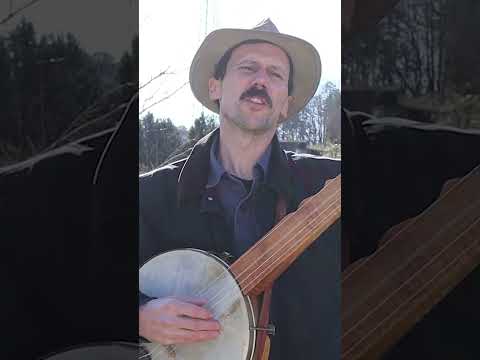
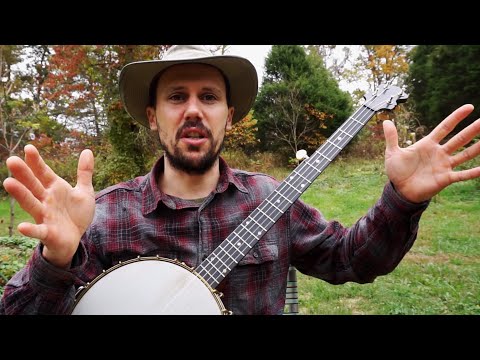
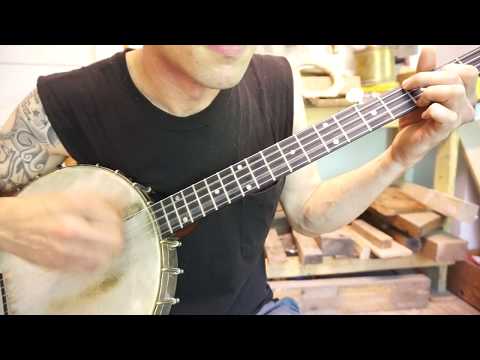
This video features Clifton Hicks performing "Bury Me Not on the Lone Prairie" on a fretless banjo. The performance highlights traditional clawhammer picking techniques and showcases the melancholic tone of Appalachian folk music. The content is primarily a musical performance rather than instructional.
This video features Clifton Hicks performing the traditional folk song "Brother Green" (also known as "The Dying Soldier"). Hicks learned the song from a 1920s recording by Rev. Buell Kazee. He plays an 1888 Thompson & Odell "The Luscomb" banjo tuned to a specific key and uses La Bella nylon strings and a Joel Hooks bridge. The lyrics describe a dying soldier who wishes to be laid to rest and for his wife and children to be informed of his impending death and his belief in salvation.
This YouTube video provides a banjo lesson for the traditional folk song "Last Gold Dollar" (also known as "Mole In the Ground"). The lesson focuses on a gCGCD tuning, a common open tuning in traditional banjo playing, often lowered to match the singer's voice. The description delves into the song's history, its connection to singer Orgus "Grandpa" Hudson, and a notable recording by Dock Boggs. It also highlights the tradition of singing while playing the banjo and explores various banjo playing styles and related musical traditions. The content is primarily educational for banjo players interested in old-time and folk music.
This YouTube video is a banjo lesson for the song "She's On the Road Somewhere," also known as "I've Got A Mule To Ride." The instructor, Clifton Hicks, demonstrates traditional two-finger (thumb lead) and overhand (clawhammer) banjo styles. The video provides historical context, mentioning influences from artists like Orgus "Grandpa" Hudson and the Carter and Ralph Stanley versions of the song. It also promotes various platforms for accessing tabs, merchandise, and other content from the instructor.
This YouTube video provides a traditional banjo lesson for the song "Boat's Up the River," learned from Ola Belle Reed. The creator, Clifton Hicks, demonstrates the tune on his 1888 Luscomb banjo, discussing tuning variations (gCGCD and f# D F# A D) and their interchangeability. He also offers multiple ways for viewers to support his work, including Patreon, Bandcamp, merchandise, and direct donations. The description is rich with keywords related to banjo playing styles, historical context, and a wide array of musical traditions and artists, suggesting a deep dive into folk and heritage music.
This video is a traditional banjo lesson focusing on Dock Boggs' song "Wise County Jail." The instructor, Clifton Hicks, demonstrates how to play the song using three different traditional banjo techniques: overhand (clawhammer), two-finger, and up-picking (Seeger style). He also discusses the historical context of the piece and its composer, Dock Boggs, who wrote it around 1928. The video utilizes the "Two-Finger C tuning" (gCGBD relative, fB♭FAC actual). Hicks also provides links for supporting his work through Patreon, Bandcamp, merchandise, PayPal, Venmo, Spotify, and iTunes. Hashtags used include #banjo, #folkmusic, and #history.
This video showcases a unique, unmarked banjo from the 1800s, possibly made by HC Nelson. The instrument features sand-shaded hardwood inlays depicting a sun and crescent moon on the peghead. The creator demonstrates its sound and playability, noting a slight neck warp. The banjo is tuned to gCGCC with medium-light nylon strings, including a wound 4th string. The video references various banjo playing styles like overhand, clawhammer, and two-finger, as well as historical and folk music traditions from Appalachia and beyond, with mentions of numerous influential old-time musicians and styles.
This YouTube video features a close-up demonstration of "German War" banjo playing, specifically focusing on up-picking techniques. The description highlights a variety of traditional and historical banjo styles, including overhand, clawhammer, two-finger, and thumb-lead. It delves into the history, anthropology, folklore, and musicology of banjo music, referencing its roots in southern Appalachian mountain music and early minstrel shows. The content also touches upon Afro-Caribbean, West African, Cajun, and zydeco influences, as well as Indigenous North American musical traditions. Numerous influential banjo players and musicians are mentioned throughout the description, providing historical context and influence.
This video showcases a close-up performance of the traditional folk tune "Cluck Old Hen" on the banjo. It delves into various banjo playing techniques, including overhand, two-finger, and frailing styles, referencing their historical roots in southern Appalachian mountain music and early minstrel shows. The description also touches upon broader musical history, folklore, and influences from Afro-Caribbean, West African, Cajun, Zydeco, Métis, Creole, Melungeon, and indigenous North American traditions. A comprehensive list of influential banjo players and musicians is provided, highlighting the rich heritage of this musical style.
This video features Clifton Hicks demonstrating various old-time banjo playing techniques, including clawhammer, overhand, two-finger, and thumb-lead styles. The content delves into the history and anthropology of this musical tradition, referencing figures like Roscoe Holcomb and exploring roots in southern Appalachian mountain music, early minstrel shows, and Afro-Caribbean influences. It also touches upon related musical traditions like Cajun, zydeco, and indigenous North American music. The video offers a close-up view of the banjo and its playing styles, with links to the artist's Patreon, Bandcamp, Spotify, iTunes, Venmo, and PayPal for further engagement and support.
This YouTube video, titled "Pretty Fair Damsel - Clawhammer Banjo Lesson (Morgan Sexton, Clarence Ashley)", focuses on teaching the clawhammer banjo style. The description highlights learning the tune "Pretty Fair Damsel" from recordings by Morgan Sexton and Tom Ashley, with a specific tuning (gCGCD). It also mentions various banjo playing styles, historical influences like minstrel shows and Afro-Caribbean traditions, and lists numerous influential old-time musicians. The content appears to be educational for banjo players interested in traditional Appalachian music and its historical roots.
This YouTube video features Clifton Hicks playing "Hand Me Down My Old Suitcase" on the banjo. The description delves into various banjo playing styles including overhand, clawhammer, two-finger, and thumb lead. It also explores historical and anthropological aspects of banjo music, touching upon Southern Appalachian mountain music, minstrel shows, and influences from Afro-Caribbean and West African traditions. The video lists numerous influential banjo players and traditions like Melungeon and indigenous North American music. Links for supporting the artist via Patreon, Bandcamp, Spotify, iTunes, Venmo, and PayPal are provided.
Gun Laws by State
Read firearms regulations for all 50 states + D.C.
Find Gun Dealers
Search licensed FFL dealers near you.