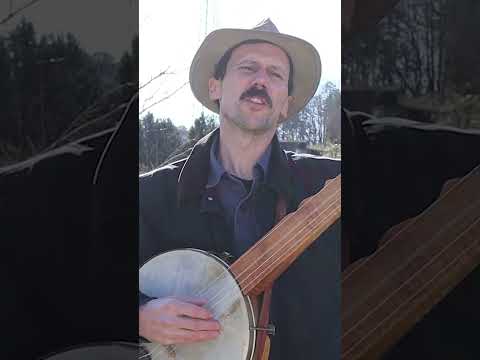
This video features Peter Rowan's 1996 song 'Ruby Ridge,' performed by Clifton Hicks. The song touches on themes of freedom in Idaho, a warning to law enforcement not to engage, and a plea for peace related to the Ruby Ridge incident. The performance highlights skilled banjo playing and clear vocals.
This video features Clifton Hicks performing 'The Cuckoo' on a fretless banjo by a campfire. The content focuses on a musical performance and the lyrical narrative of a traditional folk song, rather than instructional firearm content.
This video features Clifton Hicks performing "Bury Me Not on the Lone Prairie" on a fretless banjo. The performance highlights traditional clawhammer picking techniques and showcases the melancholic tone of Appalachian folk music. The content is primarily a musical performance rather than instructional.
This video features a musical performance of the folk song "Stagolee shot Billy, he shot him with his forty-four." The description details the historical inspiration for the song, which recounts the true story of Shelton "Stag" Lee shooting Billy Lyons in 1895. The performer, Clifton Hicks, plays an 1888 Thompson & Odell "The Luscomb" banjo tuned to gCGCD and draws lyrical inspiration from Mississippi John Hurt. The video also promotes various platforms for accessing tabs, exclusive content, music, and merchandise.
This video is a musical performance of the folk song "John Henry," likely featuring banjo. The description heavily promotes the creator's Patreon, highlighting exclusive content like tablature, photos, and forums. It also directs viewers to other platforms for courses, merchandise, streaming music, and donations. The content appears to be focused on traditional music and banjo performance.
This video features a performance of the folk song "East Virginia" played on an 1888 Luscomb banjo. The description provides links to the artist's Patreon, online courses, merchandise, and streaming services, encouraging viewers to support his work and access exclusive content, including tablature for the song. The artist, Clifton Hicks, is known for his banjo heritage content.
This YouTube video, titled "On the Road Somewhere" and also known as "Got a Mule to Ride" and "Bottled in Bond," features Clifton Hicks performing a traditional bawdy blues banjo song. The description highlights the song's origins among railroad workers, hobos, and in Appalachian camps. It directs viewers to various platforms for tablature, online courses, merchandise, streaming music, and donations, including Patreon, Banjo Heritage, Bandcamp, Spotify, iTunes, and PayPal. The video's content is entirely focused on traditional folk music and banjo performance, with no mention or relevance to firearms.
This YouTube video features Clifton Hicks performing an original banjo arrangement of the folk song "Cotton Eyed Joe." He explains the song's historical roots, dating back to enslaved Americans in the 1850s, with the first printed version appearing in 1882. Hicks learned the lyrics from Jerron Paxton and composed the arrangement in f♯DGAD tuning. He highlights his use of an 1890s S. S. Stewart "Thoroughbred" banjo and promotes his Patreon, website, and other platforms for tablature, courses, merchandise, and music. The description also includes the song's lyrics.
This YouTube video features Clifton Hicks performing the folk song "Sugar Hill." He learned the song from Matt Kinman and Josh Hayes in Watauga County, North Carolina, in the summer of 2008. Kinman, originally from Arizona, played the fiddle, and Hayes, from Wilkes County, played the banjo. The description also includes multiple links to Clifton Hicks' Patreon, SubscribeStar, Banjo Heritage website, Bandcamp, Spotify, iTunes, and PayPal for support and access to tablature, merchandise, and music.
This YouTube video features Clifton Hicks performing the folk song "Bury Me Not on the Lone Prairie." The description highlights the song's history, noting its origins as "The Ocean Buried" in 1839 and its evolution into cowboy versions appearing in the early 1900s. Hicks mentions being influenced by Carl T. Sprague's 1926 recording and a more recent, stripped-down rendition by Scottish banjoist Sam Shackleton. The video also promotes various platforms for accessing tablature, lessons, music, and merchandise related to banjo heritage.
This video features Clifton Hicks performing the folk song "Hills of Mexico," learned from a 1960s recording by Roscoe Holcomb. Hicks plays a 1910 Weymann Keystone State banjo tuned to fDGCD. The description also provides extensive links to his Patreon, Banjo Heritage website, online courses, merchandise, streaming platforms (Bandcamp, Spotify, iTunes), and donation options (PayPal, Venmo), as well as a YouTube channel membership. The video is tagged with his name, the Banjo Heritage brand, and relevant musical genres.
This YouTube video features a performance of the song "In the Pines," also known as "Where Did You Sleep Last Night." The artist, Clifton Hicks, plays a 1920s Slingerland banjo tuned to a custom open tuning. The description highlights various platforms where viewers can support the artist, including Patreon, SubscribeStar, Bandcamp, Spotify, iTunes, and PayPal/Venmo for donations. The video also promotes the "Banjo Heritage" online course, forums, and merchandise. While the title mentions Nirvana and Kurt Cobain in relation to the song's popular cover, the content itself is focused on traditional folk and bluegrass music performed on the banjo.
Gun Laws by State
Read firearms regulations for all 50 states + D.C.
Find Gun Dealers
Search licensed FFL dealers near you.