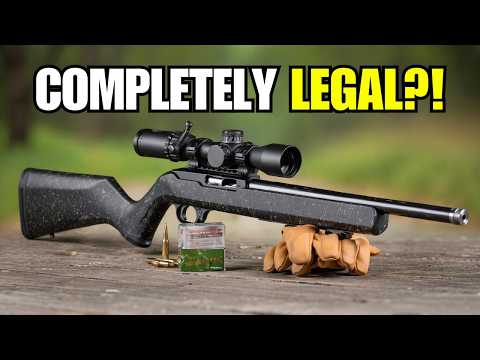
This video, presented by Ted from Line 45, details several categories of firearms that can be legally acquired without a federal background check or FFL transfer. It covers antique firearms manufactured before 1899, certain black powder muzzleloaders, and explains the nuances of 80% frames and home-built firearms. The discussion also extends to private in-state sales, inherited firearms, and the transfer of surplus and rimfire rifles, emphasizing the critical role of state laws in addition to federal regulations.
This video, hosted by Ted from Line45, details several categories of firearms that can be legally acquired without a federal background check or FFL transfer. It covers antique firearms manufactured before 1899, black powder muzzleloaders, certain unfinished 80% frames and lowers, homebuilt firearms for personal use, private in-state sales, inherited firearms, and surplus/rimfire rifles in same-state private transfers. The presenter emphasizes that state laws can be stricter than federal regulations, requiring viewers to verify local requirements.
This expert-level guide, presented by Line45, details firearms that can be legally acquired without a background check or FFL under federal law. It covers antique firearms, muzzleloaders, certain privately made firearms (post-2022 rule), private intrastate sales, and inherited firearms. The guide emphasizes the critical importance of understanding and complying with varying state laws, which can be significantly stricter than federal regulations.
This expert guide details 10 firearms legally purchasable without a background check in 2026, focusing on antique firearms manufactured before 1899 and modern muzzleloaders. The video, presented by a firearms instructor, emphasizes understanding federal exemptions for these categories, crucial for collectors and enthusiasts navigating firearm regulations. It covers iconic models like the Colt Single-Action Army and Winchester Model 1873, alongside various muzzleloading rifles and revolvers, highlighting their historical significance and legal status.
This video provides an expert-level historical overview of US Army firearms from the mid-19th century through the early 20th century, focusing on the transition from muzzle-loading rifle-muskets to early bolt-action designs. It details key models like the Springfield Model 1861, the Trapdoor Springfield, and the Krag-Jörgensen, explaining the technological advancements and military adoption processes. The presentation features insights from NRA Publications editors and museum curators, highlighting significant innovations such as the Minie ball and the impact of smokeless powder.
This video provides a practical guide for shooters looking to maintain proficiency amidst rising ammunition costs. The expert instructor recommends shifting to more affordable platforms like .22 LR rifles (specifically the Ruger 10/22), Pistol-Caliber Carbines (PCCs) in 9mm, and air rifles for cost-effective practice. The advice focuses on maximizing training opportunities by selecting firearms that offer a lower cost-per-round without sacrificing essential marksmanship skill development.
This video explains how certain firearms are exempt from federal paperwork requirements. It details three main categories: antique firearms manufactured before 1899, black powder and muzzleloading firearms, and specific reproductions of historical designs. The presenter emphasizes that state laws can override these federal exemptions and advises viewers to always verify local regulations.
This video humorously explores common customer misconceptions and myths encountered in a gun shop, as discussed by experienced staff at D'Boss Firearms. It covers topics ranging from firearm terminology and pop culture influences to legal nuances and gunsmithing boundaries, offering insights from professionals with direct industry experience.
This video explores why US soldiers in the mid-1860s primarily carried muzzle-loading single-shot rifles despite the existence of lever-action firearms like the Henry. The discussion highlights the limited adoption of lever guns by the Union Army, focusing on factors such as manufacturing availability, cost, perceived fragility, and a military philosophy that distrusted soldiers with excessive ammunition capacity. The expert analysis contrasts the slow loading process of muzzleloaders with the faster rate of fire of lever actions, ultimately concluding that while not hated, lever guns faced significant hurdles to widespread military adoption.
A New Jersey law, initially perceived as a ban on ghost guns, has been reinterpreted by legal experts to potentially ban any firearm lacking a serial number registered with a federally licensed manufacturer. This broad interpretation could encompass antique firearms, muzzleloaders, BB guns, and even modern imported firearms if their serial numbers are not traceable to an FFL. Violations are classified as serious crimes, comparable to sexual assault or robbery, with penalties including lengthy prison sentences and substantial fines.
This YouTube video is the second part of a Q&A session featuring Rob from BritishMuzzleLoaders and Othais. They answer questions submitted by patrons, often delving into extensive detail and tangents, leading to the video being split into two parts due to its length. The description encourages viewers to support the show through Patreon or Utreon and links to merchandise for sale. The content focuses on a deep dive into firearm-related topics, presented in an engaging, albeit sometimes rambling, conversational style.
This video from Exile Armory showcases a wide variety of firearms available for sale, including both new and used models. The presenter highlights numerous pistols, revolvers, rifles, and muzzleloaders from various manufacturers, detailing their specific features and prices. The inventory ranges from common handguns like Glocks and 1911s to specialized hunting rifles and tactical firearms.
Gun Laws by State
Read firearms regulations for all 50 states + D.C.
Find Gun Dealers
Search licensed FFL dealers near you.