This live stream features D'Boss Firearms and The King of Camo discussing various firearms, gear, and industry topics. They detail giveaway items including signed photos, sticker packs, a Morph headlamp, and a significant EDC Bugout Kit from The King of Camo. The conversation touches on firearm preferences, favorite camo patterns, and opinions on brands like Glock and PSA, while also addressing YouTube's content moderation policies.
This video breaks down the fundamental mechanics of firearm triggers, explaining the critical roles of the sear, hammer, and their pivot points. It emphasizes the importance of geometry, particularly the 90-degree tangent relationship at the sear's contact point, and how this applies to both rotating hammers and sliding strikers. The instructor also highlights the physics of pressure and area in trigger components and the key adjustments for engagement, overtravel, and weight.
This YouTube video, titled 'How it Works: Nagant 1877', promises to delve into the history of the Nagant 1877 firearm and showcase it in action. The description directs viewers to a linked video for demonstrations and further information, suggesting a comprehensive look at this historical firearm.
This video provides an expert-level demonstration of the Nagant M1895 revolver's operation, focusing on its unique gas-seal mechanism and handling. Misha, with high authority and practical expertise, showcases loading, single-action and double-action firing, and the distinctive forward-moving cylinder. The content is highly informative for those interested in historical firearms and their mechanics.
This documentary delves into the history and technical specifications of the Swedish Model 1887 and Norwegian Model 1893 Nagant revolvers. It details their development, adoption, mechanical features, and service life, highlighting the shared heritage and eventual divergence of these Scandinavian firearms. The video also touches upon ammunition variations and the revolvers' eventual replacement by semi-automatic pistols.
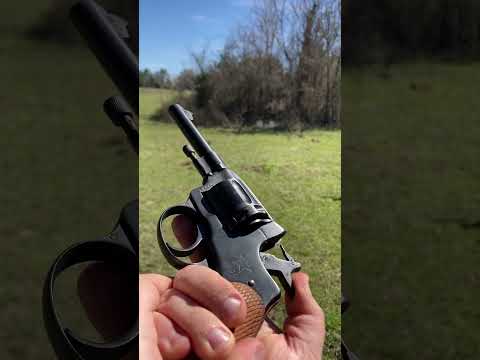
This YouTube video, titled "1895 Nagant Revolver Part 2," continues a series focusing on the 1895 Nagant Revolver, specifically mentioning a 1943 production model being shot. The description also includes a link to Part 1 of the series and several hashtags related to the firearm and its cultural relevance, including its appearance in the game PUBG. The content appears to be a practical demonstration and potentially a review of this historical handgun.
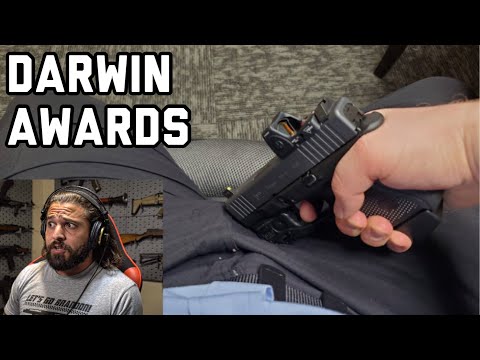
This entry analyzes firearm mishaps presented in a 'Darwin Awards' style, emphasizing critical safety lessons. Instructor Brandon Herrera, a recognized firearm manufacturer and commentator, uses real-world examples to illustrate the severe consequences of ignoring basic gun safety rules. The content serves as a cautionary guide, highlighting common errors in handling, trigger control, and the dangers of seeking online notoriety through unsafe practices.
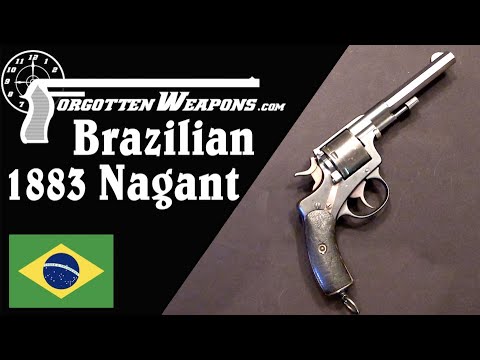
This review delves into the Brazilian Model 1883 Nagant revolver, highlighting its unique procurement history where a switch from Mauser to Nagant occurred due to quality concerns. The video emphasizes its 11mm Nagant caliber, interchangeable with .44 Henry Centerfire, and discusses variations in action type and markings. Expert analysis from Ian McCollum underscores the firearm's historical significance and long service life.
This episode of TGC News covers new product releases from Viridian (optics), Xtech Tactical (VP9 magazines), and Henry (side gate lever actions). It also discusses Dead Foot Arms' folding stock adapter for ARs, Ruger's financial downturn, and Adams Arms' relaunch. The host shares a personal review of a 1932 Nagant Revolver and addresses viewer questions on gun company communication and advocacy.
This video demonstrates the Nagant revolver, highlighting its exceptionally quiet operation. The presenter engages in a shooting exercise, emphasizing how the firearm's suppressed sound makes it difficult to pinpoint the shooter's location. The "yeet cannon 3.0" is also mentioned in a playful context.
This video offers an extensive tour of the Classic Firearms warehouse, showcasing a vast array of surplus and imported firearms. Hosts Sootch00 and Ben highlight specific models like the Beretta 92S, Zastava M57, CZ 50, and Star BM, discussing their calibers, origins, and unique import modifications. The tour also covers historical rifles, ammunition, accessories, and even modern firearm components, providing a comprehensive look at the surplus market.
This video features a shooter firing a 1895 Nagant Revolver, specifically a model manufactured in 1943. The description includes a link to a second part of the video. The provided hashtags indicate a focus on the Nagant revolver itself, its historical context, and its mention in popular media like PUBG, along with general gun collection and history themes.
Gun Laws by State
Read firearms regulations for all 50 states + D.C.
Find Gun Dealers
Search licensed FFL dealers near you.