This comprehensive lesson details the Japanese Type 99 Short Rifle, from its development and adoption of the 7.7mm cartridge to the progressive simplifications made during wartime production. It covers manufacturing locations, serial number systems, and the evolution of the rifle into 'last-ditch' variants, highlighting the trade-offs between mass production needs and original design intent. The instruction emphasizes the historical context and technical details of these iconic rifles.
This video provides an expert examination of a 'last-ditch' Japanese Type 30 Pole Bayonet from the end of WWII. Ian McCollum details its simplified manufacturing, lack of rifle lug, and lashing mechanism for pole mounting. The specimen is identified as Jinsen Arsenal marked, with production also noted at Mukden and Nagoya. The low-cost accessories, including a canvas frog and twine-wrapped wooden scabbard, are also discussed, along with its historical context and use in Pacific campaigns.
This comprehensive review of the Arisaka Type 99 Long Rifle, presented by Hickok45, offers an expert-level look at a significant WWII Japanese firearm. The video details its historical context, technical specifications including the 7.7x58mm caliber and bolt-action mechanism, and discusses variations like the 'long rifle' model and the significance of arsenal markings such as the Nagoya mark and the chrysanthemum. Hickok45's high authority level is evident in his deep understanding of production variations and historical nuances, providing valuable insights for collectors and enthusiasts.
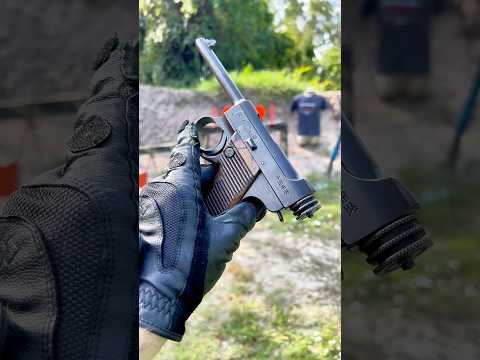
This video demonstrates the proper loading and firing technique for a 1943 Nagoya Arsenal Type 14 Nambu pistol. It highlights the unique rear-cocking bolt mechanism and safe operation during a live-fire demonstration at an outdoor range. The demonstration emphasizes careful handling and observation of the firearm's function.
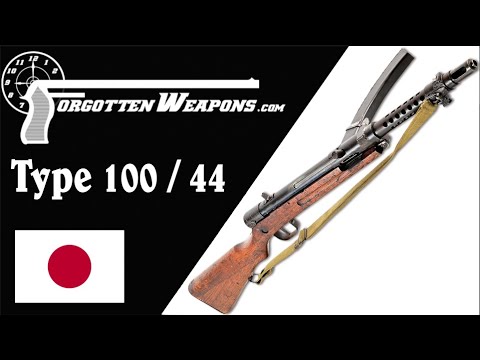
This guide details the field stripping process for the Japanese Type 100 SMG, as demonstrated by Ian McCollum. It covers the D-ring takedown mechanism for separating the receiver from the stock and accessing internal components. Proper safety precautions are emphasized throughout.
This guide details the operational techniques for the Japanese Type 94 37mm Antitank Gun, as explained by Ian McCollum of Forgotten Weapons. It covers the semi-automatic firing mechanism, crew roles, aiming procedures using the optical sight, and the use of traverse and elevation controls. The information is presented with a high level of authority, drawing on detailed mechanical explanations and historical context.
This guide provides an expert overview of the Japanese Type 95 Shin Gunto, a World War II NCO sword. It details the historical context, manufacturing evolution from early copper to later cast aluminum handles, and the transition to plain iron guards. The guide covers blade characteristics, arsenal markings, scabbard features including the locking mechanism, and the sword's symbolic role. It also touches upon late-war production simplifications due to material shortages.
This video provides an in-depth look at the development and features of the WW2 Japanese Type 99 sniper rifle, presented by Thom Whiteman of Legacy Collectibles. It details the evolution from the Type 38 and Type 97, highlighting improvements in optics and caliber, and discusses the historical context of Japanese sniper tactics and rifle production.
This "From the Vault" episode from Brownells details the Japanese Type 99 Arisaka rifle, the final development in their service rifle lineage. It highlights key differences from its predecessor, the Type 38, including the addition of a dust cover, anti-aircraft volley sights, a monopod, and protective ears for the front sight. The video also discusses the shift in caliber from 6.5mm to 7.7mm to better suit expansion needs and mentions the chrome-lined bore for durability in Pacific environments. The presenter, Keith, notes the rifle's historical significance and the craftsmanship of its production.
This comprehensive review delves into the Japanese Type 99 Arisaka WWII sniper rifle, offering insights from a recognized expert in military surplus firearms. It covers historical context, specific features like the Mauser-style action and unique optics, practical range testing with accuracy data, and collector value considerations. The assessment highlights the rifle's robust construction and addresses common myths surrounding its safety and quality.
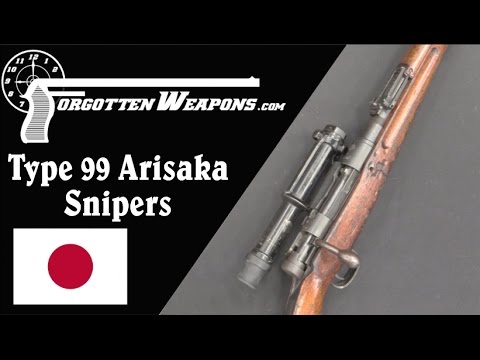
This entry details the identification and features of the Japanese Type 99 Arisaka sniper rifle, drawing on expert analysis from Ian McCollum of Forgotten Weapons. It covers key identifiers such as arsenal markings, scope mounts, bent bolt handles, anti-aircraft sights, and production variations between Nagoya and Kokura arsenals. The information is crucial for collectors and enthusiasts seeking to understand these historical firearms.
This guide details the disassembly procedure for the rare Japanese Type 100 Paratrooper rifle, focusing on its unique takedown mechanism and removable bolt handle. Expert instruction from Ian McCollum of Forgotten Weapons highlights the interrupted thread system and the process for separating the rifle into two halves for transport. It also covers the removal of the bolt handle, a feature designed for compactness during parachute jumps.
Gun Laws by State
Read firearms regulations for all 50 states + D.C.
Find Gun Dealers
Search licensed FFL dealers near you.