This video argues that the Second Amendment is fundamentally about individual sovereignty and the power dynamic between citizens and the state, not just hunting or sport. It highlights Russell Brand's perspective that the ability to defend oneself is a natural right that precedes government. The video contrasts the UK's disarmed populace with the US, suggesting that a disarmed citizenry is more susceptible to government overreach and helplessness.
This video, presented by William Kirk of Washington Gun Law TV, explores the concept of natural rights, specifically the right to self-preservation, as distinct from constitutional or statutory rights. It analyzes an amicus brief filed in Wolford v. Lopez, arguing that the Second Amendment codifies a pre-existing natural right to armed self-defense that government cannot infringe upon or condition. The discussion extends to property rights and the right to exclude, asserting that these are also natural rights that the state cannot arbitrarily override.
This video delves into the core principles of the Declaration of Independence, emphasizing the 1,337 words that articulate the philosophical basis for the United States' separation from Great Britain. It highlights the self-evident truths of equality, unalienable rights (Life, Liberty, and the Pursuit of Happiness), and the right of the people to alter or abolish destructive governments. The content serves as a foundational lesson on the historical and philosophical underpinnings of American governance and individual liberties.
Colion Noir provides an expert-level analysis of the Second Amendment, emphasizing its role as a restriction on government power rather than a grant of rights. He contrasts the founders' intent with historical and modern examples of authoritarian regimes that disarmed their populations, arguing that the Second Amendment is crucial for citizens to maintain freedom and defend against tyranny. The video also touches on the definition of 'well regulated' and the concept of the militia as ordinary citizens.
This video critically examines the concept of losing constitutional rights, particularly the right to self-defense, based on status or past actions. The speaker argues that historically, rights were only removed in very limited circumstances like incarceration or intoxication, not based on a 'prohibited status' like being a felon or an illegal immigrant. The core argument is that an unjust law does not negate natural rights, and the government's ability to arbitrarily create felonies could lead to the erosion of fundamental freedoms.
This video from Warrior Poet Society discusses a controversial ruling where a judge suggested illegal immigrants might have Second Amendment rights. The speaker, with an authoritative and experienced tone, argues against this interpretation, emphasizing that constitutional rights are exclusive to members of the political community defined by the US Constitution. The content highlights the tension between judicial interpretation and the speaker's view of national sovereignty and the rights afforded to citizens.
This video discusses the legal question of whether individuals residing in the U.S. unlawfully are afforded Second Amendment rights, referencing the case of United States v. Carbajal-Flores. The speaker explores arguments based on the definition of 'the people' in Heller and Bruen, contrasting it with the broader application of other constitutional rights to all individuals within U.S. jurisdiction. The discussion highlights the potential for this issue to reach the Supreme Court.
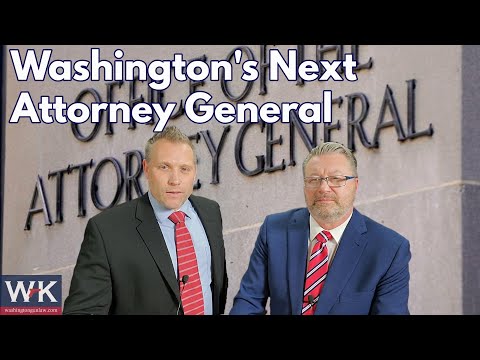
This video features an interview with Pete Serrano, a candidate for Washington State Attorney General. Serrano outlines his platform, emphasizing his commitment to enforcing constitutional laws, representing the people of Washington, and focusing on common ground rather than division. He criticizes current leadership for what he perceives as overreach and a focus on divisive issues, advocating for a return to principles of individual liberty and constitutional integrity.
This video, featuring insights from Steven Crowder, discusses the philosophical and financial implications of the Second Amendment. It argues that fundamental rights, particularly those related to self-defense and freedom from oppression, are not negotiable and cannot be bought or sold. The speaker emphasizes that these rights are what distinguish America from other nations and that their forfeiture reduces individuals to mere numbers.
This episode delves into the philosophical and ethical foundations of the right to self-defense. It explores its grounding in natural rights, drawing parallels to concepts like the right to life and self-sovereignty, and examines justifications through religious and Enlightenment perspectives. The discussion also tackles complex scenarios involving liability, causation, and the lesser evil principle, emphasizing that the right to self-defense is inherent and cannot be legislated away, though its application can be complex.
This video explores five core reasons behind the Second Amendment's creation, emphasizing its role in balancing federal and state power, protecting the natural right to self-defense, ensuring citizens possess technology equivalent to potential threats, and defending against both foreign invaders and domestic tyrants. The speaker argues that the amendment has been significantly limited from its original intent.
This video argues that the Second Amendment protects natural rights, not granted privileges, and serves as a critical check against government tyranny. The speaker emphasizes that citizens should possess "weapons of war" for self-defense and resistance, challenging common interpretations that limit firearms to sporting or self-defense against individuals. The content advocates for reclaiming the original intent of the Second Amendment, asserting that the right to bear arms is a fundamental barrier against oppression.
Gun Laws by State
Read firearms regulations for all 50 states + D.C.
Find Gun Dealers
Search licensed FFL dealers near you.