This video presents a blind test comparing Generation 2 (NNVT) and Generation 3 (L3) night vision tubes within identical AONTAC ANVB housings. The test aims to determine if Gen 2 can hold its own against Gen 3 for practical use cases, challenging the notion that high-end night vision is prohibitively expensive. The presenter, Kyle from 4MR Ranch, highlights the identical housings, optics (RPO 4.0 ultralight), and controlled camera settings to ensure a fair comparison. Despite initial expectations, the test reveals a surprisingly close performance, making it difficult to definitively distinguish between the two generations under various lighting conditions, including full moon and complete darkness.
This video provides a critical comparison between budget digital night vision devices, specifically those found on platforms like Temu, and higher-tier analog night vision. The speaker, demonstrating high practical expertise, highlights a significant flaw in cheap digital NVGs: their IR illuminators are excessively bright and easily detectable when viewed through analog systems. This makes them unsuitable for covert operations and potentially less effective for navigation than simpler tools.
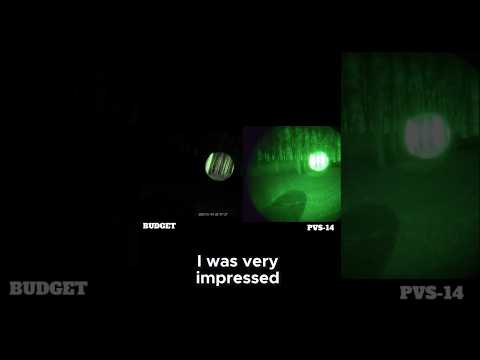
This guide details how to evaluate budget night vision devices, contrasting their performance with professional-grade equipment like the PVS-14. It highlights the critical tactical disadvantage of powerful IR illuminators on cheap units, which can compromise user position. The assessment concludes that for true situational awareness in darkness, professional gear or even the naked eye may be superior to low-cost digital alternatives.
This video aims to determine if budget-friendly night vision devices can perform adequately and how they compare to professional-grade equipment like the PVS-14. The creator highlights a specific budget night vision product with a discount code and mentions supporting the channel through various platforms including their website, Rumble, Greyhive, Telegram, and Locals. The video also lists specific gear used, such as a wireless microphone and lighting, and emphasizes safety protocols with firearms being handled by trained professionals at a private range.
This video reviews the Good Night Gear NVG 30 digital night vision monocular, positioning it as a budget-friendly option under $500. While not a replacement for high-end, professional-grade night vision, the NVG 30 is presented as a capable tool for recreational use, scanning, or as an entry-level device for those on a budget. The reviewer highlights its ability to record video, decent clarity for its price point, and reasonable battery life, while noting a slight digital delay and potential durability concerns with the housing and mount.
This YouTube video, titled "Digital vs Real Night Vision," from Basement Operator Company, focuses on a comparison between digital and traditional night vision technologies. The description highlights that the channel offers builds, discount codes, and merchandise. It also includes extensive social media links, contact information for business inquiries, and a disclaimer regarding firearm safety and the educational nature of the content. The creator emphasizes that they are not a gunsmith and that any imitation of acts shown is at the viewer's own risk. Affiliate links are also present, with a disclaimer about earning from qualifying purchases.
This review of the SiOnyx Opsin digital night vision monocular, presented by Hop, highlights its potential but ultimately finds it lacking for serious tactical applications. While it offers features like ROI mode and a broad spectral sensitivity, issues with latency, recording reliability, and short eye relief prevent it from surpassing analog night vision devices in performance and value for its price point.
This entry details the Infiray Jerry-31, a budget-friendly Chinese-made binocular night vision device. It highlights cost-saving measures like NNVT Gen 2+ tubes and smaller lenses, while acknowledging its value for depth perception compared to high-end monoculars. The review, presented by an expert in tactical gear, covers features, performance limitations, and market positioning.
This YouTube video from Basement Operator appears to be a review of a PVS-14 night vision monocular, specifically addressing whether a "knock-off" version is worth purchasing. The description highlights the channel's focus on firearm builds, discount codes, and merchandise, with links to their website and social media. The content is presented as educational and for entertainment, with a disclaimer about not being a gunsmith and not selling firearms. Affiliate links for Amazon are also included.
This video compares a sub-$100 civilian-grade night vision monocular with a military-grade PVS-14, highlighting their performance differences in low-light conditions. The PVS-14 offers superior clarity, range, and a wider field of view, providing a significant tactical advantage. The civilian model, while less expensive, has limitations in range and battery life but can still offer basic visibility for property observation.
This video presents a direct comparison between two night vision devices, the Photonis ECHO and 4G, focusing on their performance in challenging rural, low-light conditions with a clear, starry sky. The comparison involves mounting both devices side-by-side on a tripod for a direct visual assessment. The description highlights the setup and the environmental factors intended to test the capabilities of the night vision technology.
This guide details the operation of the AGM Asp-Micro TM160, a budget-friendly thermal monocular. It covers powering on, selecting thermal modes, using features like hot-spot marking and basic rangefinding, and recording capabilities. The video emphasizes that while thermal excels in contrast for detection, it has limitations for navigation and shooting due to lag and lack of terrain detail, making it best suited for static observation tasks. The speaker, an established gear reviewer, provides practical insights into its use cases and limitations.
Gun Laws by State
Read firearms regulations for all 50 states + D.C.
Find Gun Dealers
Search licensed FFL dealers near you.