Channel: @falconclaw_
The Falcon Claw PTT offers broad compatibility with most headsets, supporting both NATO and Belter wiring configurations. It features an onboard microphone and switchable down lead cables, allowing it to connect to various radios, including those with Kenwood plugs. Additionally, it supports Bluetooth connectivity for cellular-based communication apps like Discord, enabling features like ATAC notifications without a traditional radio.
The Falcon Claw Monocular (FCM) is presented as an ultra-durable, lightweight, and modular night vision solution. It features a high-durability aluminum housing, low-profile mounting, and is designed for seamless integration with thermal optics or as a dual-tube setup. The FCM boasts 2500+ FOM image intensifiers, simple controls, and exceptional ruggedness, capable of withstanding significant abuse including drops, impacts, and submersion up to 20 meters for 30 minutes (if serviced).
This five-day FalconClaw CQB course offers realistic close-quarters battle training in a highly simulated indoor facility. It's designed for military, law enforcement, security professionals, and civilians with prior experience, focusing on fundamentals through progressive drills and scenario-based exercises. The course emphasizes practical application derived from recent conflicts and extensive law enforcement experience, with direct instructor feedback and the use of AR-15 style rifles with marking rounds.
This video demonstrates the effectiveness of thermal optics against ghillie suits. The presenter highlights how a ghillie suit, while excellent for visual concealment, is easily defeated by thermal imaging. Thermal optics can detect a camouflaged individual almost instantly, regardless of visual clutter, making traditional camouflage significantly less effective against modern thermal detection methods.
This video compares the effectiveness of night vision (NVG) versus thermal optics in various tactical scenarios. The 'pro' with NVG and IR illumination is pitted against a 'noob' with a thermal device. Despite the NVG user's experience, the thermal device consistently provides a significant advantage in target acquisition and situational awareness, particularly in low-light and adverse conditions. The 'noob' with thermal proves highly effective, even against an experienced operator, highlighting the thermal's ease of use and superior performance in identifying heat signatures.
This video from FalconClaw promotes their training facility, the 'Team Room,' highlighting its comprehensive amenities including a dedicated training environment, weapons, instructors, and accommodation. They are seeking participants for upcoming courses, with dates to be announced in three weeks via their newsletter. The content emphasizes the complete package offered for tactical training enthusiasts.
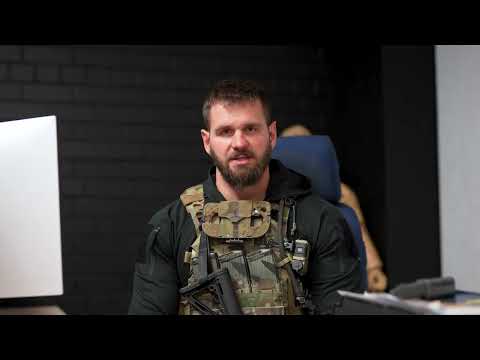
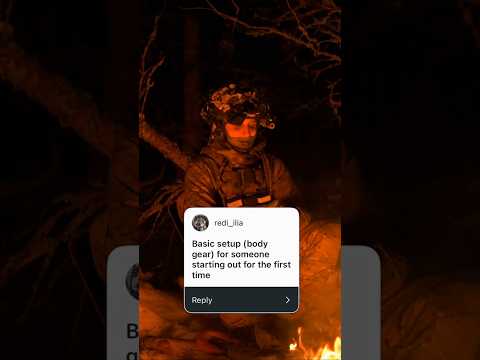
This video, from FalconClaw, addresses a viewer's question about basic 'body gear' for beginners. The instructor, Redi Ilia, emphasizes that 'body gear' is not a standard term and clarifies the different contexts for 'starting out,' ranging from military enlistment to hobbies like larping or citizen preparedness. The core advice is to invest in high-end gear for serious applications and consider cheaper options for recreational use, with a strong recommendation to prioritize proper footwear above all else.
This video presents the FalconClaw FC-B 1400+ as a budget-friendly night vision binocular option, highlighting its 1400 FOM performance through two distinct demonstrations. The speaker, demonstrating experienced authority, details the included accessories and pricing (3700€ + VAT for the full set). The content focuses on the practical application and performance of the night vision device in varying low-light conditions.
This guide details the installation and operation of the FalconClaw FC-B 1400+ dual-tube night vision binoculars. It covers mounting, power options, and articulation features. The video emphasizes the 'budget' aspect of this 1400 FOM device, offering expert insights into its performance in low-light conditions and its value proposition compared to higher-end models.
This guide details how various common items, including standard supermarket umbrellas, a compact tactical umbrella, and hunting blinds, can effectively block thermal signatures. The demonstration uses a thermal camera to show complete blockage, highlighting practical applications for stealth and counter-surveillance. Transparent umbrellas were noted as ineffective.
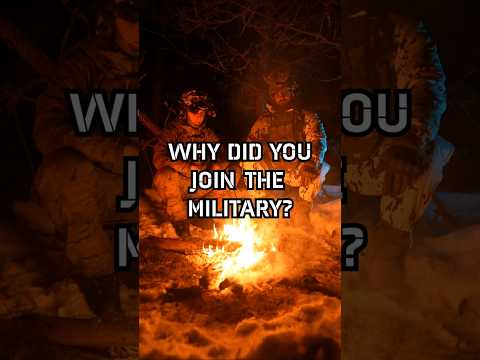
This video features a "Chair Talk" Q&A session where the speaker addresses the question of why they joined the military. They mention that this topic has been covered before and direct viewers to a previous video or podcast for a more in-depth answer. The visual context shows individuals in tactical gear by a campfire.
This guide details how to test DIY winter camouflage for Near Infrared (NIR) compatibility using night vision and thermal imaging. It explains how NIR reflection can make camouflage appear white and how thermal imaging detects heat signatures regardless of visual concealment. The content is presented by an experienced instructor, offering practical field testing insights.