This review from FalconClaw provides an expert look at their FC-B night vision binoculars, specifically comparing the 1400 FOM and 1800 FOM models. The instructor highlights that while higher FOM offers better resolution and less noise, performance can be similar in ample ambient light. In very low light conditions, the difference becomes more pronounced, with higher FOM yielding superior clarity. The 1400 FOM model is presented as a capable, albeit darker and noisier, option compared to its higher-spec counterpart.
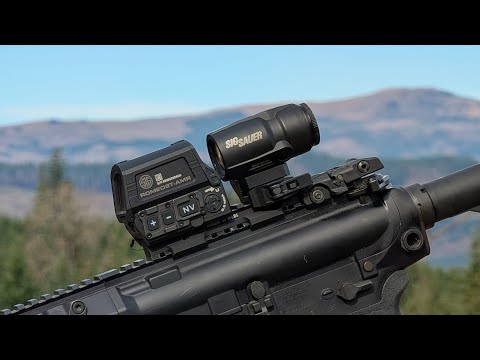
This video reviews the Sig Sauer Romeo 8 AMR red dot and Juliet 3 AMR magnifier, focusing on their Automatic Modified Reticle (AMR) system. The AMR system automatically switches reticle settings based on the magnifier's position, aiming to optimize performance for both unmagnified and magnified shooting. The reviewer discusses its features, performance in various lighting conditions, and potential limitations, particularly regarding magnifier compatibility and tint.
This video provides an expert-level assessment of the Zetnal Defense holographic optic and Griffin Armament Optimus 7 suppressor, conducted by professional tactical instructors at Bone Valley Industries. The optic demonstrated exceptional durability through extreme drop and impact testing, maintaining zero despite significant cosmetic damage. The suppressor was evaluated for its low back-pressure design and performance across various calibers.
This guide details how to evaluate budget night vision devices, contrasting their performance with professional-grade equipment like the PVS-14. It highlights the critical tactical disadvantage of powerful IR illuminators on cheap units, which can compromise user position. The assessment concludes that for true situational awareness in darkness, professional gear or even the naked eye may be superior to low-cost digital alternatives.
This video reviews the Sig Sauer M400 Tread V2 rifle and the Sig Romeo 8T AMR red dot with the new Juliet 3T magnifier. The reviewer highlights the rifle's competitive price point, shooting characteristics, and features like an ambidextrous safety and mag release. The standout feature is the red dot/magnifier combo's ability to automatically change reticles when the magnifier is flipped, offering distinct reticles for magnified and unmagnified use. The reviewer praises the Romeo 8T AMR's durability, night vision performance comparable to high-end EOTechs, and innovative features, positioning it as a potential market disruptor.
The Trijicon RCR is an enclosed version of the RMR, offering improved battery access and ease of cleaning. While it maintains RMR footprint compatibility and large adjustment buttons, it inherits some RMR drawbacks like lens distortion and a notch filter that feels dated compared to modern auto-on/off optics. Despite its high price and perceived obsolescence by some, its enclosed design and RMR compatibility make it a viable option for specific users, particularly those prioritizing American-made components or already invested in the RMR ecosystem.
This video reviews the Good Night Gear NVG 30 digital night vision monocular, positioning it as a budget-friendly option under $500. While not a replacement for high-end, professional-grade night vision, the NVG 30 is presented as a capable tool for recreational use, scanning, or as an entry-level device for those on a budget. The reviewer highlights its ability to record video, decent clarity for its price point, and reasonable battery life, while noting a slight digital delay and potential durability concerns with the housing and mount.
This video provides an expert-level comparison of high backpressure (traditional) suppressors and modern low backpressure (flow-through) designs, drawing on the authority of Brass Facts. It details the trade-offs in sound, flash, heat management, and cost, concluding that traditional suppressors still hold a valuable niche for specific applications, particularly where signature reduction is paramount.
This video presents a tier list of red dot sights, evaluating performance, value, and features. Key optics discussed include the Aimpoint T2 (S-tier for performance, debated for value), Holosun AEMS (B+/A- tier), and EOTech XPS3 (A-tier for glass and NV performance, but with battery life concerns). The discussion highlights trade-offs between cost, durability, reticle options, and specialized features like night vision compatibility.
The Night Fox Corsac 2 is a digital night vision binocular offering 1080p resolution and 3-hour battery life. It features a built-in rechargeable battery, unlike older models requiring AA batteries, and includes a 32GB card for video and audio recording. The device boasts a 4x magnification and a claimed 220-yard viewing range in darkness, with adjustable infrared settings for varying light conditions.
This review of the Sionyx OPSIN digital night vision device highlights its features and performance in low-light shooting scenarios. While offering advantages like color display and recording capabilities, the reviewer notes limitations in clarity compared to analog night vision, particularly in extremely dark conditions. The OPSIN is presented as a capable, albeit expensive, option for those seeking digital NVG technology with integrated features.
This video delves into the controversy surrounding the Lead & Steel Promethean LP1 red dot, primarily focusing on its perceived durability claims and the speaker's preference for night vision performance. The instructor critiques durability testing as unscientific, favoring optics like EOTech and Sig Sauer Romeo 8T for their NV capabilities. The discussion also explores the origins of red dots, suggesting many are sourced from Chinese manufacturers, with examples like Three EEOS, Fulca, and Sig Sauer's lower-end models.
Gun Laws by State
Read firearms regulations for all 50 states + D.C.
Find Gun Dealers
Search licensed FFL dealers near you.