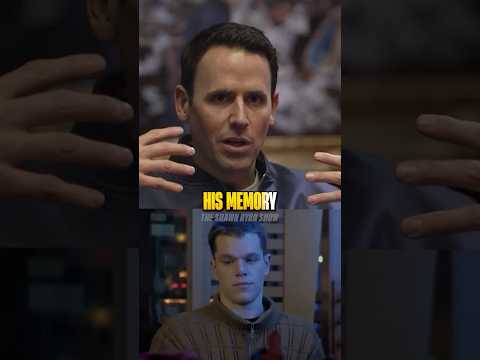
This entry explores the concept of hyper-concentrated situational awareness, drawing parallels between fictional characters like Jason Bourne and real-world skills possessed by mentalists and military operators. Host Shawn Ryan, a former Navy SEAL/CIA contractor, and guest Oz Pearlman, a professional mentalist, discuss how intense observation and rapid assessment of surroundings are crucial for survival and performance in high-stakes environments. The discussion highlights the cognitive processes involved in quickly analyzing people, objects, and environmental details, emphasizing its application beyond fictional narratives.
This video emphasizes practicing the estimation of distances and times as a critical component of situational awareness. It introduces the concepts of personal and protective bubbles, with the latter being a distance where an individual could be harmed before reacting. The importance of practicing time estimation under stress is highlighted, drawing a parallel to focusing on a front sight. Practical exercises for both distance and time estimation are suggested.
This video emphasizes training like you fight, drawing a parallel between competition targets and actual combat scenarios. It advocates for practicing with camouflage targets in environments that simulate battlefield conditions, such as wooded areas, rather than plain white targets in open fields. The core message aligns with sniper training principles, focusing on observation, teamwork, target acquisition, and rapid neutralization.
This video delves into the SALUTE reporting system, a crucial element of U.S. military training. It highlights how SALUTE, an acronym for Size, Activity, Location, Unit, Time, and Equipment, has been foundational for structured observation and reporting, influencing subsequent formats like SALT and SPOT reports. The description emphasizes its continued relevance in various combat environments, from traditional warfare to asymmetric and urban scenarios, underscoring its importance in developing essential observation skills.
This video details the SEALS (Stop, Look, Listen, Smell) patrolling technique, a crucial but often forgotten method for detecting enemy, friendly, or civilian presence during dismounted or mounted maneuvers. The instructor emphasizes the importance of halting movement to effectively utilize all senses for observation, identifying specific indicators for each sense, and concludes with the hand signal for completing the technique. The instruction is presented with practical examples and a focus on infantry-based tactics.
This guide details civilian reconnaissance techniques, emphasizing observation, information gathering, and intelligence reporting. It highlights the importance of training observational skills, using tools like binoculars and cameras effectively, and understanding military reporting standards like SALUTE. The video also touches on rifle setup for data collection and the benefits of standardization on the 5.56 platform for civilian logistics.
This video from Active Self Protection, featuring John Correia, emphasizes the abundance of opportunities to protect oneself from crime through keen observation and situational awareness. Correia, with high authority and 16 years of martial arts training, breaks down real-world scenarios, highlighting the dangers of distraction and isolation, particularly around vehicles. He stresses that while firearms are tools, empty-handed skills and preparedness are vital for effective self-defense in various situations.
This video, titled 'How to blend into a CROWD,' offers insights into situational awareness and blending techniques. While the description is minimal, the title suggests a focus on non-confrontational tactics and observation skills that could be relevant for personal safety or discreet movement in public spaces. The content likely explores methods for minimizing one's profile and avoiding unwanted attention.
This video from InRange TV focuses on the crucial skill of situational awareness, teaching viewers how to identify unusual elements within their surroundings. The description highlights viewer support through Patreon, indicating a community-driven channel that likely produces content relevant to firearms owners and those interested in personal safety. While no specific firearms or calibers are mentioned in the provided data, the channel's general focus on firearms suggests the content will be valuable for individuals seeking to enhance their safety and preparedness in various environments.
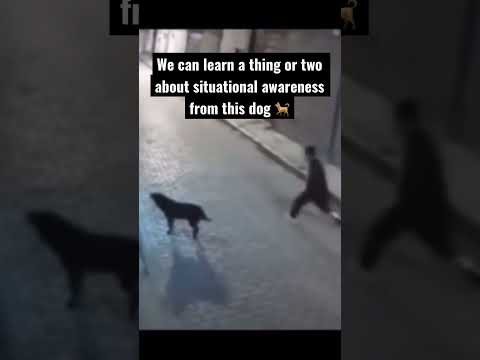
This video uses the concept of a dog practicing situational awareness as an analogy to highlight the importance of the same skill in humans, particularly in self-defense contexts. While the title and description don't explicitly mention firearms, the analogy strongly implies a connection to personal safety and the need to be aware of one's surroundings when carrying or potentially facing a threat. It emphasizes observation, anticipation, and understanding of the environment as key elements of preparedness.
This video introduces basic tracking techniques, emphasizing that it's a learned skill requiring patience and observation. Instructor Sue LaRue demonstrates how to use light to your advantage, measure footprints, and identify tracks in various terrains like gravel roads and grass. Key principles include drawing prints, using a tracking stick, and understanding environmental indicators to follow a trail effectively.
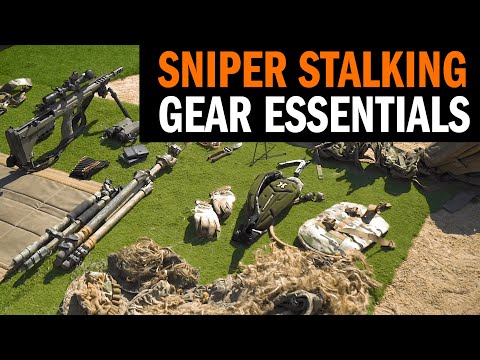
Navy SEAL Toshiro 'Tosh' Carrington details essential gear and techniques for sniper stalking and fieldcraft. The discussion emphasizes observation optics, appropriate weapon systems for different environments, and the importance of lightweight, adaptable gear. Tosh highlights camouflage, hydration, and protective equipment, stressing that effective fieldcraft relies on meticulous preparation and understanding environmental factors.
Gun Laws by State
Read firearms regulations for all 50 states + D.C.
Find Gun Dealers
Search licensed FFL dealers near you.