This analysis breaks down a critical self-defense incident where a clerk successfully defended against armed robbers using an AK-style rifle. It highlights the tactical decisions made, the effectiveness of rifle rounds, and crucial lessons learned regarding firearm staging versus on-body carry. The insights are presented with an authoritative tone, drawing from expert analysis of the event.
This video explores the discontinuation of the Heckler & Koch P2000, examining its origins as an offshoot of the USP line and its product improvements. The instructor details the P2000's features, including its ambidextrous controls, standard Picatinny rail, and interchangeable backstraps, contrasting them with the USP. A significant portion is dedicated to explaining the various trigger systems available for the USP and P2000, particularly the LEM (Law Enforcement Modification) trigger, highlighting its benefits for consistent trigger pull and accuracy. The video concludes by discussing the P2000's 'middle child syndrome,' overshadowed by the USP's retro appeal and the P30's modern features, leading to its discontinuation.
This video provides an overview of the H&K P30 pistol. The description primarily consists of affiliate links for 704 Gear knife deals, various 704Tactical social media and affiliate platforms (Amazon, Campsite, Rumble, Instagram, X, Patreon, YouTube), and a disclaimer about affiliate links and review products being sent for testing. The content focuses on a specific firearm model with supporting promotional links.
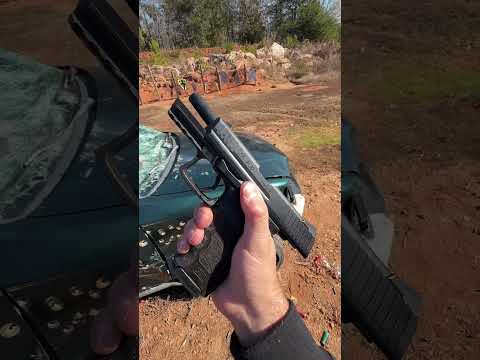
This YouTube video focuses on the Heckler & Koch P30 pistol, indicated by the title "H&K P30 FPV". While the description is minimal, the title suggests a visual presentation of the firearm, possibly from a first-person perspective (FPV). The analysis will leverage the title to infer relevant firearm and manufacturer tags. Additional tags will be generated based on common firearm topics and applications associated with a handgun of this type.
This video, presented by Team ASP, highlights the Heckler & Koch P30 pistol, emphasizing its reliability and accuracy, and suggesting it as a premier choice for "just in case" scenarios. The title refers to an applauded takedown effort by an officer in Geneva. The description also promotes ASP's Unlimited and Lite apps for ad-free viewing, exclusive content, and extensive firearms training, encouraging viewers to subscribe for early access, bonus material, and monthly seminars. They also mention an ankle medical kit from Mountain Man Medical and the ASP podcast.
This video showcases a dramatic incident where a bystander bravely attempts to intervene in a subway attack. The content is brought to you by Dark Star Gear, a manufacturer of high-quality AIWB holsters, with a specific mention of the Dark Star Gear Orion for the P30. Viewers are encouraged to subscribe to the ASP Unlimited App for ad-free viewing, early access, bonus content, training classes, and more, with availability on various streaming devices. A free ASP Lite App is also promoted for content not found on YouTube. The description includes links to news stories, raw video footage, and ASP's recommended products and sponsors. Limited-edition ASP T-shirts and seminar information are also provided.
This video, titled "Harrowing Encounter Leaves SDPD Sergeant Fighting For His Life," features the YouTube channel Team ASP. The description highlights the channel's appreciation for Heckler & Koch (HK) firearms, with John carrying a P30 daily due to its extreme reliability and accuracy. The video encourages viewers to consider an HK for their own preparedness. It also promotes the ASP Unlimited App for ad-free viewing, early access, bonus content, and full firearms training classes. Links to news stories related to the incident and ASP's sponsors and recommended products are provided.
This video analyzes a tragic officer-involved shooting where two officers lost their lives. It highlights the critical importance of practicing complex malfunction clearing drills, as a pistol malfunction proved fatal. The analysis also stresses the tactical disadvantage of pistols against rifles in high-risk situations and advocates for pistol-mounted optics to improve accuracy at distance.
This video from Team ASP features a discussion about a news story where a basketball argument escalated into a gunfight. The description highlights the presenter's appreciation for Heckler and Koch firearms, specifically mentioning the P30 model for its reliability and accuracy, posing the question of whether one should carry an HK for "just in case" scenarios. It also directs viewers to news stories, raw video footage, sponsor information, and a link to support ASP through Patron membership. The video emphasizes Attitude, Skills, and Plan.
This video analyzes a self-defense incident where a fitness coach successfully defended himself against multiple attackers using empty-handed skills and improvised weapons. The analysis highlights the importance of de-escalation and the effectiveness of tactical principles like the '5Ds+1' for weapon disarming. It also touches upon the HK VP9 pistol as a reliable self-defense tool.
This video announces the 'Vickers Guide: Heckler & Koch Volume 1,' focusing on HK handguns. It details plans for three volumes covering handguns, submachine guns, PDWs, rifles, machine guns, and special purpose weapons. The first volume features iconic HK handguns like the HK-4, P7, Mark 23, P9s, VP70, USP, P30, P2000, VP9, and HK45, with contributions from HK authority James Williamson and access to the HK Grey Room.
This video discusses a violent incident where an attacker overpowers a car salesman in Houston. The content strongly endorses Heckler & Koch firearms, specifically mentioning the P30 pistol for its reliability and accuracy, and encourages viewers to consider HK for self-defense. It also promotes ASP's extra channel for self-defense training and their merchandise store. The video uses "fair use" for commentary and news reporting.
Gun Laws by State
Read firearms regulations for all 50 states + D.C.
Find Gun Dealers
Search licensed FFL dealers near you.