This video demonstrates an extreme test of a punt gun, firing a 1lb lead ball through a 5,000-gallon pool. Scott from Kentucky Ballistics showcases safe handling of this large-bore firearm using a remote lanyard. The experiment highlights the immense power and water displacement capabilities of such a weapon, resulting in the complete destruction of the pool.
This video showcases "Buddy Ingram’s 25¢ DEVIL DANCE" performance at the Wilson County Tennessee State Fair, held at Fiddlers Grove Historic Village. The performance features Michael Klug and Conner Vlietstra on fiddle, Jordan Judkins on banjo, and Angela Wood on bass and percussion. The description highlights the "salacious twang" of a "mysterious African Jew’s harp."
This guide details the operation of the 'Fury' Punt Gun, a massive 150 lb firearm with a 9-foot overall length and a 6-foot barrel. Expert Scott from Kentucky Ballistics demonstrates its use with various projectiles, including carpet tacks, a 1 lb lead ball, and 00 buckshot, highlighting its destructive potential and extreme recoil (estimated at 800 lbs). The Punt Gun utilizes a percussion/black powder action, emphasizing historical firearm applications and extreme ballistic testing.
This entry details the 'Clockwork Basilisk' book set by Ben Nicholson, focusing on the early revolvers of Elisha Collier and Artemas Wheeler. It highlights their 1818 patent, predating Samuel Colt's, and the subsequent patent infringement trials. The set includes historical context, mechanical details, and a comprehensive catalog of surviving examples. The research involved extensive international archives, establishing the significance of Collier's work in early revolver development.
This video demonstrates a simulated turkey hunt using a traditional Pennsylvania-style long rifle, identified by Hickok45 as a muzzleloader. The demonstration highlights the firearm's operation, including the visual effect of black powder ignition, and concludes with a successful shot on a steel target. The content showcases the expertise of Hickok45 in handling and identifying historical firearms.
This video showcases an antique 1835 British shotgun, specifically highlighting its unique Birdseye Maple stock and the intricate details of its percussion lock mechanism. The presenter, a collector, provides an informative overview of the firearm's historical and aesthetic qualities, emphasizing its craftsmanship.
Ian McCollum of Forgotten Weapons provides an expert analysis of the Remington Revolving Rifle, detailing its design, historical context, and market failure. The video highlights Remington's cost-saving approach by repurposing existing revolver and rifle components, contrasting it with competitors like Colt. McCollum explains the technical aspects of its transition from percussion to rimfire cartridges and the unique reloading mechanism.
This episode of American Rifleman TV covers foundational shooting skills, including eye dominance and proper grip, with NRA Training Counselor Larry Quandahl. It features a review of the new Walther PDP Performance Duty Pistol, highlighting its improvements over the PPQ. The "I Have This Old Gun" segment delves into the history of the French "Tabatiere," a long-serving breechloader with origins possibly in the Napoleonic era, which evolved from flintlock to percussion and eventually to a breechloader. The video also provides details on where to watch full episodes and tune in for new ones.
This video from Brownells Gun Techs Keith Ford and Steve Ostrem showcases three distinct variants of the legendary LeMat revolver, discovered at Rock Island Auction Company. The "Grapeshot Revolver" is a massive, nine-shot firearm with a cylinder revolving around a 20-gauge smoothbore barrel. The video features an original muzzle-loading percussion model famously carried by Confederate generals Jeb Stuart and P.G.T. Beauregard, a Belgian-made pinfire model firing copper-cased cartridges, and a unique, all-centerfire cartridge LeMat-type revolver. The description highlights the historical significance of the LeMat, its production in France and Belgium, and its journey through the Union blockade, also noting its Steampunk aesthetic and potential use against supernatural threats.
This guide details the operation of the 1843 Side-Lever Hall Carbine, focusing on its unique breech-loading mechanism. The video, presented by an expert in historical firearms, demonstrates how to open the action by manipulating the side lever, load the .54 caliber cartridge, and close the breech. It also touches upon the carbine's historical significance and production details.
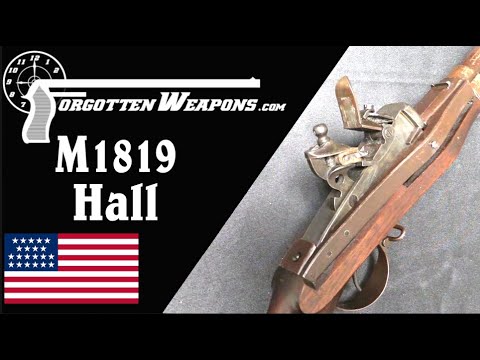
This guide details the disassembly and inspection of the Hall Model 1819 rifle, a groundbreaking firearm for its use of interchangeable parts and breech-loading mechanism. The video, presented by Ian McCollum of Forgotten Weapons, demonstrates how to remove the breech block assembly for cleaning and examination. McCollum, a recognized expert in historical firearms, highlights the rifle's historical significance in industrial manufacturing.
This video provides an expert look at a transitional English pepperbox revolver by James Beattie, presented by Ian McCollum of Forgotten Weapons. It highlights the firearm's unique design, bridging the gap between pepperboxes and true revolvers, and details features like its double-action mechanism, integrated loading lever, safety latch, and London proof marks. The discussion emphasizes the historical context of patent circumvention and the rarity of such high-quality transitional pieces.
Gun Laws by State
Read firearms regulations for all 50 states + D.C.
Find Gun Dealers
Search licensed FFL dealers near you.