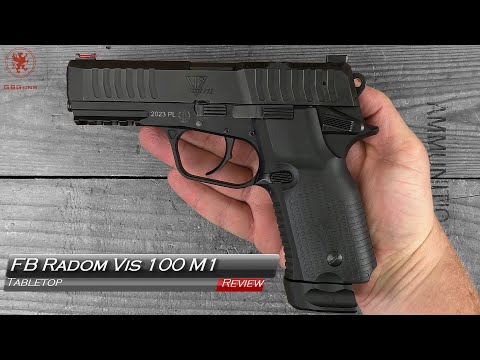
This "American Rifleman Television" segment focuses on the Polish Vis 35 Radom pistol, a significant sidearm developed just before World War II. The video details its origins, with designers Piotr Wilniewczyc and Jan Skrzypinski advocating for a domestic design over the initially considered Czech CZ vz.24. Despite a limited production run due to the German invasion in 1939, the Vis 35 is recognized as a top handgun of its era. The segment also features the Radom on the range and provides information on accessing more American Rifleman TV content and joining the NRA.
This video delves into the Mauser M1921 "Bolo" Mauser pistol. The description highlights its manufacturing period from 1920-1921 for commercial sale, followed by mass production from 1921-1930. It details the pistol's adoption by various military and paramilitary groups in the Baltic region, including Poles, Lithuanians, German Freikorps, and White Russians. Notably, the "Bolo" Mauser was also acquired in large numbers by the Bolshevik government and the Red Army, leading to its distinctive nickname. The description also points out its popularity for concealed carry due to its shorter barrel and smaller size.
This video focuses on the FB MSBS Grot, a modern rifle system. The title and description suggest a presentation or overview of this firearm, likely covering its features, design, and potential applications. As no further details are provided, the content is presumed to be an informational piece for firearm enthusiasts interested in the MSBS Grot.
This video features an unboxing of Cold War-era Polish 82mm mortar ammunition rounds. The content focuses on military ordnance and historical military hardware, with the title explicitly mentioning 'mortar' and related military terms. The unboxing likely showcases the physical characteristics and potential historical significance of these rounds.
The PT-83 is a rare, integrally suppressed prototype variant of Poland's P83 pistol, developed by Works 11. It features a unique automatic slide locking mechanism to reduce mechanical noise, requiring manual racking after each shot. The recoil spring is relocated beneath the suppressor, which also acts as a lock. Only about two dozen were produced before the project was abandoned.
This video offers an in-depth look at the manufacturing processes at Fabryka Broni 'Łucznik' in Radom, Poland. Expert Ian McCollum guides viewers through the production of modern firearms like the MSBS Grot and Beryl rifles, showcasing the evolution from historical methods to advanced CNC machining, hammer forging, and rigorous quality control. The tour highlights the precision engineering involved in creating components for military-grade weapons.
This YouTube Short focuses on the WW2 Polish Radom VIS 35 pistol, with a curious mention of "Naked Lady Grips?!" The title and description clearly indicate a discussion and visual presentation of this specific historical firearm. Given the short format and the attention-grabbing nature of the grip question, the video likely aims to showcase the pistol's features and perhaps delve into its history or unique aspects, appealing to WWII history buffs and firearm enthusiasts.
The RWGŁ-3 is a Polish tear gas launcher developed in the 1960s and standardized after 1970, utilizing an AKM receiver for production efficiency. It's a single-shot weapon designed to fire 7.62x39mm blank cartridges, which propel rifle grenades. The design omits the AK's gas system, requiring manual bolt cycling for operation and featuring a 10-round magazine with a spacer to prevent live ammunition.
The RWGL-1 is a unique hybrid riot control device developed in Poland, combining a Mosin-Nagant receiver with a PM-63 RAK machine pistol frame. It was designed to fire 7.62x39mm blanks for tear gas grenades, featuring a hidden 3-round magazine in the front grip. Safety features prevent firing live ammunition, and fewer than 100 were produced.
This video explores the fascinating Polish Radom Vis WZ35 pistol, a 9mm Luger firearm that shares design elements with iconic John Browning pistols like the Colt Model 1903, Browning GP35 (Hi-Power), and the 1911. Keith Ford from Brownells demonstrates the pistol's operation and highlights its innovative features, such as the captive recoil spring and hammer-drop safety. The description details the pistol's historical significance, noting its continued production for the German military during WWII and its status as the third most common sidearm in German service. Ford praises the Radom Vis WZ35 as an "elegant weapon from a more civilized age" and "the best sidearm of World War II."
This video compares five military surplus mess kits from the US, Germany, Italy, Poland, and Serbia. It highlights their affordability (under $20), durability, and unique features like hanging handles and nested components. While generally praised for value in survival or camping scenarios, potential downsides include damage and storage odors. Individual field tests are planned.
The Polish Vis 35, also known as the WZ 35 or P.35(p) under German occupation, is a highly regarded 9mm military pistol from WWII. It features a unique internal design, a grip safety, and a hammer-drop safety (decocker). Despite its historical significance and excellent ergonomics, it has three main production variants with differing features like take-down levers and stock cuts.
Gun Laws by State
Read firearms regulations for all 50 states + D.C.
Find Gun Dealers
Search licensed FFL dealers near you.