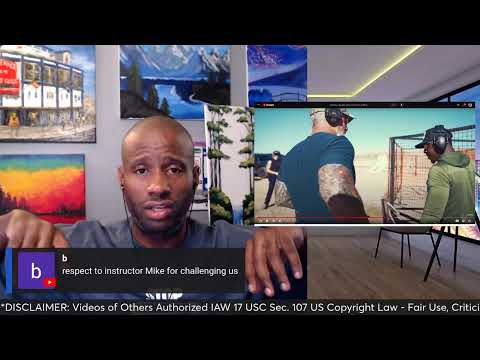
This video explores the age-old debate between theoretical knowledge gained from books versus practical, hands-on experience. It aims to provide a "quick reality check" by comparing what one might learn from studying firearms and tactics versus what can only be truly understood through direct engagement and application in real-world scenarios or on the range. The content likely contrasts book smarts with experience-based wisdom in a firearm context, emphasizing the importance of practical application.
This entry details a tactical approach to operating in high-stress environments, as explained by DJ Shipley of GBRS Group. It covers the pragmatic decision to forgo eye protection in certain CQB and vehicle-based scenarios to maintain focus and situational awareness, emphasizing a 'squint and send it' mentality. The content is derived from an expert with a Tier 1 Special Operations background.
Instruction from USPSA Grandmaster Mark Smith emphasizes the critical need for versatile shooting positions applicable to any barricade, not just those found on a training range. He warns against relying on specific range barricade geometries, like the double-knee position, which may fail in real-world scenarios. Smith advocates for a neutral shooting load for maximum adaptability across diverse environments.
This video details a two-day pistol class taught by Kyle Deour, emphasizing real-world application and process-oriented training over competitive metrics. The class integrated combatives, including empty-hand and knife techniques, with dynamic shooting drills. Instructors Ben Stoeger and Joel discuss Deour's background as a former Navy SEAL and his focus on practical skills, highlighting his open-mindedness to evolving training methodologies.
This video explores the practicality of the 'trifecta' of firearms (rifle, shotgun, pistol) in real-world applications beyond competition. The speaker, Eric from Iraqveteran8888, discusses how the choices made in 3-Gun competitions can translate to tactical scenarios, emphasizing that firearm selection should be mission-dependent and pragmatic. He highlights the importance of considering factors like portability, specific threats, and the role of firearms as tools.
This video argues against using .300 Blackout for general-purpose rifle needs, including home defense and "without rule of law" scenarios. The instructor emphasizes that professional infantry units do not widely adopt it, citing concerns about price per round, reduced effective range compared to 5.56mm, and critical issues with sustainment and resupply in combat. The video advocates for basing rifle caliber choices on what line infantry uses, prioritizing commonality, reliability, and effective engagement distances.
This video, featuring DJ Shipley from GBRS Group, details the critical technique of shoulder switching in Close Quarters Battle (CQB). Shipley, demonstrating high authority and expertise, emphasizes the importance of entering rooms on one's dominant side for maximum focus and proficiency, particularly in high-stakes, real-world scenarios. He advises against entering on the non-dominant side, contrasting this with simulation-based training.
This discussion highlights the difference between competition shooting skills (like those in USPSA) and real-world tactical application. It emphasizes that while competition hones hard skills, it doesn't always translate directly to self-defense scenarios. The debate centers on whether competition targets falling is the primary measure of practicality versus focusing on fundamental shooting skills and adapting to unpredictable real-world threats.
This video critically examines the application of competition shooting techniques to real-world self-defense scenarios. Instructor Mike argues that while competition shooting can improve speed and accuracy on a controlled range, it often fails to adequately train the brain for the unpredictable nature of actual threats. He emphasizes the importance of realistic training where targets fall and provide feedback, contrasting this with the 'two shots and move' mentality prevalent in some competition circles. The video advocates for training systems that simulate dynamic threat engagement and emphasize threat assessment over mere marksmanship perfection.
This video humorously highlights the disconnect between video game knowledge and real-world firearm operation, specifically concerning the 1911 pistol. It emphasizes that skills learned in games like Call of Duty do not translate to safe and effective handling of actual firearms, particularly regarding basic manipulations like slide racking and reloading. The interaction serves as a cautionary tale about the importance of proper training for real-world applications.
This video features Instructor Mike, a designated Firearms Instructor, offering a critical and satirical assessment of Detroit Urban Survival Training (DUST) techniques demonstrated by Dale Brown and BlackR@mb0 in Chicago. Mike questions the efficacy and safety of DUST's disarming methods, warning they could be lethal if attempted in a real situation. He challenges Brown to a direct demonstration in Detroit, highlighting a significant gap between theoretical self-defense and practical, safe application.
This video showcases a Low-Light Rifle & Pistol Course focused on real-world application shooting. It covers dynamic close- to mid-range engagements conducted in both day and night conditions, emphasizing shooter accountability for every round fired. The course appears to be designed for practical self-defense and tactical proficiency, highlighting the importance of training under challenging, low-visibility circumstances. The video also credits its producer and links to the training organization's website.
Gun Laws by State
Read firearms regulations for all 50 states + D.C.
Find Gun Dealers
Search licensed FFL dealers near you.