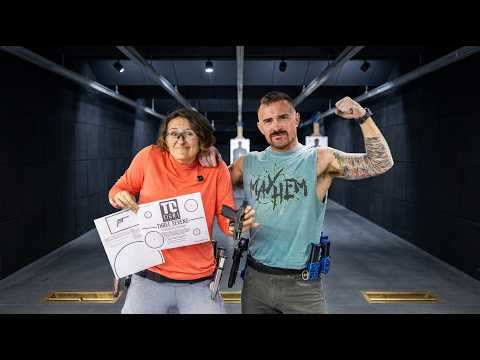
A Healthy Debate with Some Competition Shooters who Gave Instructor Mike that SMOKE!

Published on October 11, 2024
Duration: 14:47

This discussion highlights the difference between competition shooting skills (like those in USPSA) and real-world tactical application. It emphasizes that while competition hones hard skills, it doesn't always translate directly to self-defense scenarios. The debate centers on whether competition targets falling is the primary measure of practicality versus focusing on fundamental shooting skills and adapting to unpredictable real-world threats.

Quick Summary

Competition shooting, like USPSA, focuses on hard skills and hitting targets, often with specific rules. Real-world self-defense requires broader situational awareness, tactical decision-making, and adapting to unpredictable threats, which may not be covered in competition training. Over-reliance on a single, repetitive action without assessing the overall situation can be dangerous.

Chapters

  1. 00:01Competition Target Rules
  2. 00:18The Popper Problem
  3. 00:52Military Target Logic
  4. 01:18Critique of Competition Training
  5. 02:30Real-World Scenario vs. Mindset
  6. 03:11Tragic Outcome of Poor Training
  7. 03:42Concealed Carrier Scenario
  8. 04:55Creating a Confrontation Scenario
  9. 06:26Officer Preston's Decision
  10. 07:13Focus on Shooting vs. Pre-Shooting
  11. 08:13Disagreement on Training Philosophy
  12. 09:08Revisiting the Scenario
  13. 10:03Gun in Face Scenario Response
  14. 10:50Hard Skill vs. Scenario
  15. 11:13Training Fallacy
  16. 12:07USPSA vs. Real World
  17. 13:13Teaching Civilians
  18. 14:03Big Picture Change

Frequently Asked Questions

What is the main difference between competition shooting and real-world self-defense?

Competition shooting, like USPSA, focuses on hard skills and hitting targets, often with specific rules. Real-world self-defense requires broader situational awareness, tactical decision-making, and adapting to unpredictable threats, which may not be covered in competition training.

Why is training like 'pull, press, pull, press' potentially dangerous?

Over-reliance on a single, repetitive action without assessing the overall situation, such as being outnumbered or facing a dynamic threat, can be dangerous. It neglects critical thinking and adaptation, leading to poor decisions in high-stress scenarios.

Can competitive shooting skills directly translate to a gunfight?

Not always. While competitive shooting builds fundamental skills, some competition tactics can be tactically unsound in a real gunfight. The context and decision-making processes differ significantly between a controlled range environment and a chaotic, unpredictable real-world encounter.

What is the 'big picture change' discussed in firearms training?

The 'big picture change' refers to adapting training beyond just marksmanship. It involves developing tactical awareness, threat assessment, decision-making under stress, and understanding when to engage, disengage, or de-escalate, which are crucial for real-world survival.

Related News

All News →

More Training & Techniques Videos You Might Like

More from Instructor Mike

View all →