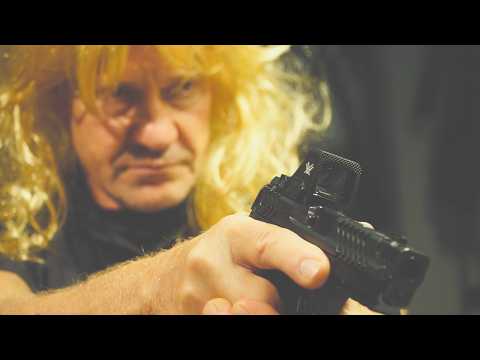
This guide, drawing on insights from professional firearms instructor Joel Park, focuses on the advantages of larger red dot optic windows for competitive shooting and general firearm proficiency. Park emphasizes that while fundamentals are crucial, larger windows provide a significant 'forgiveness factor,' aiding in faster target acquisition, especially during imperfect presentations or from difficult shooting positions. The guide also touches on the philosophy that 'fundamentals' evolve with skill, requiring higher standards as a shooter progresses.
This video reviews the top three pistol red dot optics based on extensive round counts and reliability testing. The instructor, Hwansik Kim, emphasizes durability, with a minimum standard of 50,000 rounds per unit. He compares the Trijicon SRO, Holosun 507 Comp, and Vortex Defender XL, detailing their performance, pros, and cons for different applications like concealed carry and competition.
This video discusses the practical implications of red dot optic window sizes on handguns. The speaker argues that while window size differences exist between optics like the Trijicon RMR Type 2 and RCR, they are often less critical than proper shooting technique. Solid fundamentals and training are emphasized as key to not losing the dot, with larger windows primarily offering a margin of error for presentation and compromised shooting positions.
This video debunks common misconceptions about red dot sight window sizes, specifically comparing the Trijicon RCR, RMR HD, and RMR Type 2. The instructor argues that the RMR's window is not as small as often claimed and that the window sizes across these Trijicon models are very similar, with minor differences in hood dimensions.
This video addresses the common issue of the red dot sight leaving the optic window during recoil. The instructor emphasizes that for many setups, especially smaller carry guns with hotter ammunition, the dot leaving the window is normal and not a sign of poor fundamentals. The focus should remain on target acquisition and trusting the dot to return, rather than trying to force it to stay visible. Larger optic windows can aid in faster sight acquisition on the draw but do not eliminate the phenomenon of the dot leaving the window under recoil.
This video uses a fairy tale narrative to illustrate the importance of selecting the correct size Vortex Defender red dot optic for different pistol platforms. It highlights how optic window size and dot visibility are crucial for fast target acquisition, especially for shooters with varying eyesight. The Defender CCW is suitable for micro-compacts, the Defender ST for mid-size pistols, and the Defender XL for full-size guns, offering progressively larger windows and features.
This video discusses user comments and initial impressions of the Atlas Titan and Athena pistols. Ben Stoeger, a recognized competitive shooter, provides insights into the firearms' performance, ergonomics, and value proposition. Key discussion points include the long wait times for Atlas firearms, the effectiveness of their trigger and safety mechanisms, and comparisons to other high-end 2011 platforms like Staccato. The video also touches on the RMR HD optic's features and price.
This video provides a comparative analysis of common pistol optic window sizes, including the new Aimpoint COA. It specifically mentions and compares several popular red dot sights from Aimpoint and Trijicon, such as the Aimpoint ACRO P-2, Aimpoint COA, Trijicon RMR HD, Trijicon SRO, Trijicon RMR06, Trijicon RCR, and Holosun EPS Carry. The video also includes links to TENICOR's shop and social media profiles.
This review covers the Vortex Defender-XL, the largest optic in the Defender series. It highlights its expansive window, integrated RMR-style serrations for racking, and shock-proof housing. The optic offers a choice between a 5 MOA or 8 MOA red dot, adjustable brightness, a lockout button, and auto-shutoff with saved settings. It includes a Picatinny rail mount and is drilled for DeltaPoint Pro footprint compatibility.
Instructor Vlad from Gun For Hire provides an expert overview of various pistol red dot sights, detailing their features, durability, and applications. He emphasizes the importance of proper mounting techniques and consistent training for effective use of these optics. The review covers popular models from Vortex, Leupold, Holosun, EOTech, and Trijicon, offering insights into their strengths and weaknesses for different shooting disciplines.
The Lead & Steel Pandora PB-3 is a closed-emitter micro red dot sight reviewed as a strong competitor to the Aimpoint Acro P2 and Steiner MPS. It features a significantly larger window than the Acro P2, offering improved target acquisition. The PB-3 is noted for its durability, astigmatism-friendly dot, and a 30,000+ hour runtime. It is compatible with the Acro P2 footprint and offers various mounting plate options.
This video provides an in-depth look at the Lead & Steel Pandora V1 pistol optic, highlighting its Acro footprint, larger window size compared to traditional Acro optics, and recessed controls for enhanced durability. The discussion covers its manufacturing origins, with the V2 planned for US production, and details its 3 MOA dot, with options for 6 MOA and a 1 MOA dot with a 45 MOA outer circle planned for the V2. The presenter notes its nuclear-bright illumination and discusses its lack of auto on/off functionality due to the manufacturer's distrust of accelerometers, opting for a constant-on system with a CR2032 battery offering approximately 50,000 hours of life.
You've reached the end! 12 videos loaded.
Gun Laws by State
Read firearms regulations for all 50 states + D.C.
Find Gun Dealers
Search licensed FFL dealers near you.