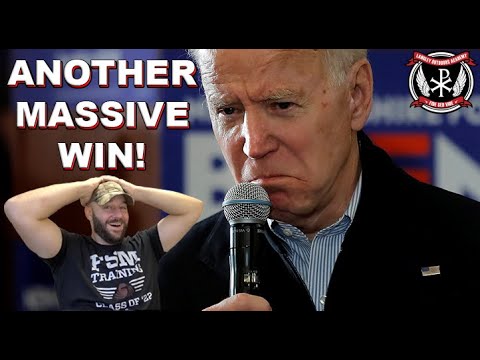
The Supreme Court has struck down Chevron deference, a significant legal shift that will impact how regulatory agencies interpret laws. This ruling means courts will no longer automatically defer to an agency's interpretation of ambiguous statutes. Instead, courts will now be responsible for determining the meaning of the law, potentially opening the door for challenges to long-standing regulations, particularly those affecting Second Amendment rights.
This video from 'One in the Chamber' discusses the upcoming Supreme Court case, Loper Bright Enterprises v. Raimondo, and its implications for the power of regulatory agencies. The description humorously connects this legal issue to fishing and gun rights, suggesting a discussion about federal overreach and its potential impact on Second Amendment freedoms. The video encourages viewers to join GOA and provides links to their social media pages.
This video features an expert analysis from Steven Lieberman, an attorney, discussing the implications of the Supreme Court's decision in Sackett v. EPA. The ruling significantly restricts the power of federal regulatory agencies like the EPA and ATF, emphasizing that regulations must originate from legislative bodies, not executive agencies. This principle is expected to impact Second Amendment rights by curtailing unconstitutional state laws and regulations.
This video analyzes a pattern of Supreme Court rulings potentially curtailing the power of executive bureaucracies, including the ATF. The speaker highlights the West Virginia v. EPA and Sackett v. EPA cases as precedents against agencies reinterpreting laws. The upcoming relitigation of Chevron deference is presented as a critical future event that could significantly limit the interpretive authority of agencies like the ATF, potentially impacting their ability to regulate firearms.
This video discusses the potential impact of a Supreme Court case, Chevron v. Natural Resources Defense Council, on the power of federal regulatory agencies like the ATF. The speaker, an experienced firearms instructor, explains how the concept of Chevron deference allows agencies to regulate through fiat, bypassing Congress, and how this has been used to enact rules affecting 2A technology such as bump stocks and braces. The case, brought by fishing companies, could significantly curtail agency power, potentially impacting gun rights.
The Supreme Court's decision in West Virginia v. EPA significantly limits the power of regulatory agencies, like the ATF, to create law through interpretation or rule-making without clear congressional delegation. This ruling establishes a precedent against executive overreach, particularly when agencies attempt to enact transformative changes or policies that Congress has not explicitly authorized. The decision emphasizes that major policy shifts must originate from Congress, not from executive branch interpretations of existing statutes.
This video discusses a recent Supreme Court decision impacting the EPA's regulatory authority, with significant potential implications for the ATF and Second Amendment rights. The ruling challenges the principle of Chevron deference, which allows agencies to interpret broad statutes and create regulations with the force of law without direct congressional approval. The speaker, a firearms enthusiast and commentator, highlights how this could curb the ATF's practice of issuing new rules on items like bump stocks and braces, which have historically led to confusion and potential legal jeopardy for law-abiding citizens. The decision may provide a stronger legal footing for challenges against arbitrary ATF rulings.
You've reached the end! 7 videos loaded.
Gun Laws by State
Read firearms regulations for all 50 states + D.C.
Find Gun Dealers
Search licensed FFL dealers near you.