This video provides an expert-level examination of an Iranian-produced copy of the Rheinmetall MG3 machine gun, tracing its lineage from the iconic MG42. Jonathan Ferguson of the Royal Armouries details the naming conventions, production history in Iran, and specific technical features that distinguish it as an MG3 variant. The analysis highlights key differences from the original MG42 and earlier MG1 variants, including internal components and external features, offering insights into its manufacturing and adoption by the Iranian military.
This video discusses the critical role of nitrocellulose in modern gunpowder production and highlights concerns about its supply chain control. The speaker explains that while civilian companies produce nitrocellulose for industrial uses like coatings, only the US military produces military-grade nitrocellulose, which is essential for propellants. A recent acquisition of a European nitrocellulose producer by Rheinmetall raises questions about the concentration of control over this vital component, potentially impacting civilian access to ammunition in the future.
This review details the Krieghoff prototype for the FG42 paratrooper rifle, a unique design that competed against Rheinmetall's winning entry. Key features include a bizarre wire stock for weight reduction and recoil absorption, a gas trap system instead of a traditional gas port, and a cable-operated charging handle. Despite its innovative elements, the Krieghoff design was ultimately not selected for production.
This video explores two unique Burmese-produced variants of the Heckler & Koch G3 rifle: the BA-64 and the BA-72 carbine. Ian McCollum details their historical context, production origins through a deal with Fritz Werner, and specific modifications made for Burmese military use. The presentation highlights the distinct features of each variant, including markings and design adaptations for local soldiers.
This video provides an expert-level overview of building an H&K G95K clone, detailing the differences between civilian and military variants like the MR223 and HK416. It covers specific components such as the HK-Key handguard, Rheinmetall VTAL laser, EOTech optics, and adjustable gas blocks, offering insights into the KSK's preferred configurations and technical specifications. The guide is presented by James Reeves and Martin, demonstrating high technical proficiency.
This video discusses the Steyr S2-200, a firearm developed in the context of post-WWI German arms development restrictions. It highlights how Rheinmetall's acquisition of Solothurn facilitated covert arms programs. Key features like the side-loading magazine, selector safety, and trigger mechanism, which bears resemblance to the MG34, are examined.
This guide details the disassembly of the MG-3 machine gun, focusing on the bolt assembly and feed cover. It highlights key differences from the MG-42, such as the spring-loaded feed cover and safety features on the bolt. The information is presented with high authority by Ian McCollum, a recognized expert in firearms history and mechanics.
This guide details the operation and historical context of the German 3.7cm PAK anti-tank gun, as presented by Ian McCollum of Forgotten Weapons. It covers the gun's mechanical operation, sighting, ammunition types, and its evolution and eventual obsolescence during WWII. The information is presented with high authority, drawing on detailed knowledge of German military nomenclature and historical context.
This guide details the field stripping process for the Portuguese M938 (MG-13) light machine gun, as demonstrated by Ian McCollum of Forgotten Weapons. It covers the removal of the top cover, bolt and carrier assembly, and barrel, highlighting key internal components like the recoil spring and the adjustable mainspring tension knob. The process emphasizes safe handling and understanding the weapon's unique mechanical features, including its closed-bolt firing and short-recoil operation.
This video provides an expert-level examination of an extremely rare pre-production FG-42 Type C, presented by Ian McCollum. It details the development timeline, design influences from the Lewis gun, and the political hurdles faced. Key features like the unique drum sight, milled receiver, smooth aluminum buttstock, and converted MAS-36 bayonet are highlighted, offering deep insights into early FG-42 variants and their historical context.
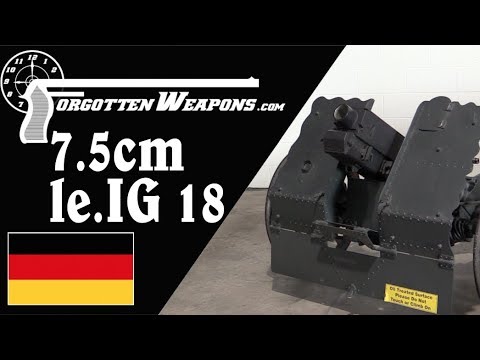
This guide details the operational techniques for the 7.5cm le.IG 18, a German light infantry gun developed by Rheinmetall. It covers understanding its unique break-action breech, traverse and elevation mechanisms, articulated shield, and mobility features. The guide emphasizes safe handling and operational performance, noting its role in providing close-range infantry support during WWII. Instruction is based on expert analysis of historical military technology.
This guide details the disassembly of the rare .32 ACP Dreyse Light Carbine, manufactured by Rheinmetall and designed by Louis Schmeisser. It highlights the simple blowback, striker-fired mechanism and the unique double-stack magazine. The video emphasizes historical context and practical handling, with expert insights from Ian McCollum.
Gun Laws by State
Read firearms regulations for all 50 states + D.C.
Find Gun Dealers
Search licensed FFL dealers near you.