This video critiques a tactical setup, specifically questioning the choice of a 9mm pistol for a scenario that the speaker believes warrants more power. The speaker contrasts this with their own setup, featuring a flamethrower mounted on a shotgun, emphasizing their preference for more potent solutions and better decision-making in tactical applications.
This video demonstrates a low-cost method for creating rudimentary body armor using common household materials: duct tape, a fiberglass welding blanket, and ceramic tiles. While not a substitute for certified ballistic protection, the creator tests its effectiveness against 9mm, .223, and 5.56 green tip ammunition, suggesting potential applications for shielding walls or non-critical areas.
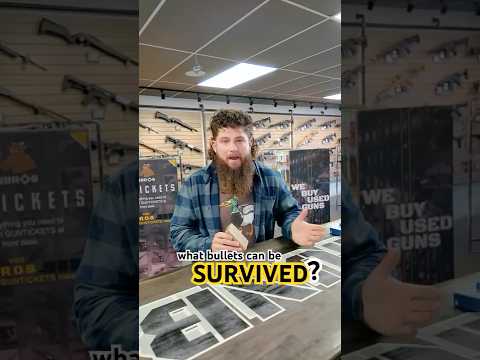
This video provides an expert assessment of the survivability of various calibers, including .22 LR, .40 S&W, 10mm Auto, .30-30 Winchester, and 00 Buckshot. The instructor, Jared, details the energy transfer and lethality of each round, noting the declining popularity of .40 S&W despite its effectiveness, the resurgence of 10mm, and the superior kinetic energy delivery of the .30-30 rifle round compared to handgun cartridges.
This video clarifies the distinction between Level 3 and Level 3+ body armor, emphasizing that '3+' is not an official NIJ standard but indicates enhanced threat protection. Predator Armor's Level 3 plate stops six rounds of 7.62x51mm M80 at 2780 ft/s, while their Level 3+ plate is engineered for higher velocity threats like 5.56mm M193 and 855 rounds exceeding 3000 ft/s, and even 300 Win Mag to a good extent. The video stresses that 'plus' offerings vary significantly between manufacturers.
This video tests a $35 Amazon weighted workout plate as a makeshift body armor solution. The plate, weighing 7.75 lbs, was subjected to various handgun and rifle calibers. While it successfully stopped numerous handgun rounds and even some rifle calibers like the .45-70 Government, it was penetrated by 5.56x45mm and 7.62x39mm rounds. The instructor notes its limitations, including potential backface deformation and the presence of exercise-specific holes, but acknowledges its surprising effectiveness for its low cost.
This video tests the ballistic resistance of a Chinese-made ballistic face shield against various handgun and rifle calibers. The shield is claimed to be rated for up to .44 Magnum. Testing reveals that while most projectiles ricochet or are stopped, significant deformation and fiber separation occur with repeated impacts, especially from higher-powered rounds. The shield ultimately fails against the .460 S&W Magnum.
This video demonstrates the performance of Level 3 body armor against common rifle rounds. It tests 5.56x45mm FMJ, 7.62x39mm FMJ, and 7.62x51mm NATO (.308 Winchester) rounds. The armor shows significant backface deformation with the 7.62x39mm and 308 rounds, indicating substantial force transfer, though it successfully stops all tested rounds.
This video provides a critical review of a $60 Level IV rifle plate purchased from Temu, manufactured by Shanghai Hongyanshun E-commerce Co., Ltd. The host, demonstrating high authority as a firearms reviewer, subjects the plate to rigorous testing with various calibers, including 5.56mm, 7.62x39mm, 6.5 Creedmoor, .308 Win, .300 Win Mag, and .338 Lapua Magnum. While the plate technically stops all rounds, it exhibits extreme backface deformation and significant damage, raising serious concerns about its protective capabilities and construction quality compared to professional-grade armor.
This guide details the testing of a budget-priced body armor plate, evaluating its performance against various calibers from .22 LR up to 6.5 Creedmoor. The Civilian Tactical host, an established tactical gear reviewer, demonstrates the plate's capabilities and limitations, highlighting significant backface deformation even when rounds are stopped. The testing involves multiple firearms including Volquartsen, Zastava, Glock, and CMMG models.
This video appears to test the ballistic resistance of Level 3A+ armor against multiple rounds of 6.5 Creedmoor ammunition. The title suggests an intense testing scenario, indicated by "Will Level 3A+ STOP 11 Rounds" and "*INSANE RESULTS*". The hashtags #fullautofriday, #civtac, and #pewpew further point to a firearms-focused content creator testing gear and likely showcasing firearms in action. The description provides a call to action to visit "civtac.club" for sponsor information and deals, implying a commercial or enthusiast-driven channel.
This video, titled 'Why M855 Sucks!', promises a discussion on the intricacies of M855 and M193 ammunition. Based on the title and description, the content likely delves into the performance, reliability, or perhaps perceived shortcomings of these common rifle rounds, potentially comparing them or explaining why one might be considered inferior. The presenter, Boondock Ballistician, uses their Instagram for further engagement.
This YouTube video, titled "Will Body Armor Survive THESE Rounds? #civtac #gun #shotgun", appears to be a test or demonstration of the effectiveness of body armor against various ammunition types. The title specifically mentions "civtac" (civilian tactical), "gun", and "shotgun", indicating a focus on personal protection and firearm-related testing. The content likely involves shooting different types of rounds at body armor to assess its protective capabilities.
Gun Laws by State
Read firearms regulations for all 50 states + D.C.
Find Gun Dealers
Search licensed FFL dealers near you.