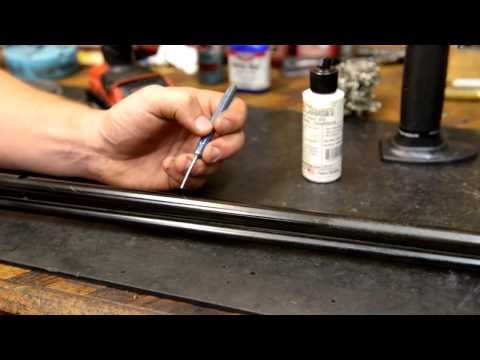
This guide details the comparison between hot and cold bluing techniques for firearms, as explained by experts Steve and Caleb from Brownells. Hot bluing offers superior durability and a better cosmetic finish due to its deep black oxide layer formed at high temperatures. Cold bluing, applied at lower temperatures, is less durable and primarily recommended for minor touch-ups on scratches and nicks to protect the metal, rather than for rebluing an entire firearm.
This guide, presented by Dave Timm, a professional firearms instructor, details how to repair scratches on AR-15 anodized aluminum receivers. It covers the necessary materials, surface preparation, the chemical application process using Birchwood Casey Aluminum Black, and finishing techniques to blend the repair. The instruction emphasizes proper degreasing and controlled heating for effective results.
This guide details the process of applying Birchwood Casey Perma Blue Paste for firearm metal finishing, as demonstrated by an experienced instructor from Kit Badger. It covers preparation, application, and post-application steps, emphasizing rust prevention for machined areas or worn finishes. The instructor highlights the paste's ease of use and effectiveness for DIY gunsmithing projects.
This guide details the process of cold bluing a firearm barrel, a technique primarily used for touching up small scratches and blemishes. It emphasizes meticulous surface preparation, including cleaning and light heating, followed by the application of cold bluing solutions like Birchwood Casey Perma Blue or Brownells Formula 44/40. The process concludes with neutralization and oiling to protect the new finish. Instruction is provided by an experienced gunsmith from Iraqveteran8888.
You've reached the end! 4 videos loaded.
Gun Laws by State
Read firearms regulations for all 50 states + D.C.
Find Gun Dealers
Search licensed FFL dealers near you.