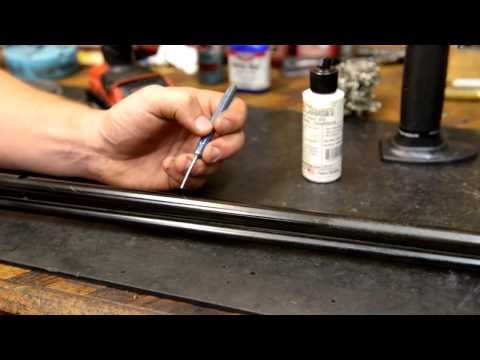
This guide details the application of Aluminum Black and Cold Blue chemicals for touching up scratches and worn finishes on firearm components. It emphasizes proper application techniques, the importance of cleaning and degreasing, and the necessity of washing off residual chemicals to prevent further corrosion. The video demonstrates how to address damage on both aluminum receivers and carbon steel barrels, highlighting that these are touch-up solutions rather than permanent refinishing methods.
This video provides an expert guide on identifying Russian captured and dipped firearms, primarily focusing on the P38 pistol. It details how to spot specific markings like the 'Russian X,' signs of the 'Russian dip' substance, and the impact on original finishes and sighting dots. The guide also covers the significance of import marks and internal component checks, such as the trigger spring, to determine if a firearm has been refinished or dipped.
This video from Brownells provides a practical demonstration of applying different cold blue products to firearms. Steve and Caleb highlight that results can vary based on the metal type and recommend specific products like Oxpho Blue, 44/40, and Dicropan T-4. They emphasize the importance of oiling and neutralizing the finish afterward, and suggest using 0000 steel wool for smoothing.
This guide details the process of cold bluing a firearm barrel, a technique primarily used for touching up small scratches and blemishes. It emphasizes meticulous surface preparation, including cleaning and light heating, followed by the application of cold bluing solutions like Birchwood Casey Perma Blue or Brownells Formula 44/40. The process concludes with neutralization and oiling to protect the new finish. Instruction is provided by an experienced gunsmith from Iraqveteran8888.
This guide details the process of removing the hammer spur on a Smith & Wesson revolver, a common modification for a snag-free draw during self-defense. Expert gunsmith Larry Potterfield demonstrates the use of specialized tools like a Dremel and Cratex wheels, emphasizing careful disassembly, precise cutting, and finishing with cold blue. The procedure requires advanced gunsmithing skills and attention to detail for a successful outcome.
This guide details the process of applying cold blue finishes to firearms, as demonstrated by Steve Ostrem, a technical expert from Brownells. It covers proper cleaning, product selection for full refinishing versus touch-ups, application techniques, and crucial neutralization steps to achieve a lasting finish. Proper surface preparation and understanding metal alloy reactions are emphasized for optimal results.
Larry Potterfield of MidwayUSA provides an expert guide on modifying a Smith & Wesson revolver by removing the hammer spur. This process, detailed with specific tool usage including rotary tools and finishing attachments, aims to improve handling and aesthetics. The guide emphasizes careful disassembly, precise modification, and proper reassembly with cold bluing for a professional finish.
Larry Potterfield, founder of MidwayUSA, demonstrates an expert technique for filling unsightly screw holes in firearms. This method involves preparing the hole with a chamfer tool, annealing and peening screws to fill the void, and then filing, polishing, and cold bluing the area for a seamless repair. This guide is suitable for intermediate gunsmiths looking to improve the aesthetics and value of their firearms.
You've reached the end! 8 videos loaded.
Gun Laws by State
Read firearms regulations for all 50 states + D.C.
Find Gun Dealers
Search licensed FFL dealers near you.