This video details Administrative Results' first experience competing in a USPSA Area 2 championship, highlighting the intense skill level of world-class competitors like Christian Sailer. It explains USPSA's core principles of speed and accuracy, the importance of strategic stage planning, and the complex scoring system. The speaker, a former law enforcement officer, emphasizes the value of dry fire practice and a dedicated competitive mindset for improvement.
This video provides expert advice from Joel Park on improving stage plan visualization and execution for competitive shooting, particularly USPSA. It emphasizes the importance of simple stage plans, detailed mental rehearsal, and consistent dry-fire practice to expand mental bandwidth and reduce hesitation during competition. The techniques discussed are applicable to any shooter looking to enhance their focus and recall under pressure.
This video documents a shooter's first USPSA match, highlighting the differences from IDPA, including increased movement and fewer restrictions on reloads. The shooter shares initial nervousness, the challenges of complex stages, and observations on trigger control affecting follow-up shots. Despite some difficulties, the overall experience is positive, emphasizing USPSA as a fun sport.
This video chronicles the speaker's first experience in a shooting competition, highlighting the learning curve and common challenges for new participants. Key takeaways include understanding competition divisions, prioritizing accurate hits over speed, adhering to safety rules like the 180-degree rule, and the importance of proactive ammunition management and fundamentals. The speaker emphasizes the welcoming nature of the shooting community and advises new shooters to seek guidance from match officials and fellow competitors.
This video demonstrates running a USPSA stage with an upgraded Canik Rival SFX competition pistol. The presenter highlights the benefits of a Freedom Smith trigger shoe, focusing on reduced pre-travel and overtravel, which aids in faster shooting. The video includes multiple stage runs, analysis of hit factors, and discussion on balancing speed and accuracy in competition.
This video details the experience of a first-time sanctioned IDPA competition shooter at the 2025 Walker's Texas State IDPA Championship. It breaks down common competition penalties like Points Down (PD), Penalties (PEN), and Non-Threats (NT), explaining their time implications. The shooter shares insights on stage strategy, balancing speed with accuracy, and the importance of thorough stage walkthroughs, highlighting personal learning experiences with specific stage challenges.
This guide outlines the essential information for new USPSA competitors, drawing from the expertise of a former Match Director. It covers match registration via Practiscore, understanding divisions, cold range rules, safety commands, scoring, and recommended gear. The emphasis is on safe participation and learning the sport's nuances.
This video demonstrates expert-level stage planning for USPSA 3-Gun competitions. The instructor emphasizes arriving early to walk stages, visualize the course of fire, and develop a strategic plan. Key techniques include efficient firearm transitions and selecting the optimal firearm for specific target arrays to maximize speed and accuracy.
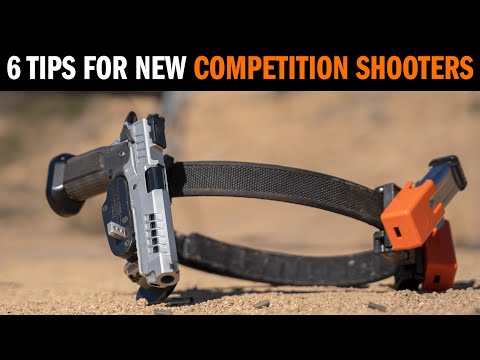
This guide, presented by Myles from Tactical Hyve, offers six essential tips for new competition shooters, drawing from his experience in USPSA. Key advice includes prioritizing safety, focusing on accuracy over speed, not worrying about scores, avoiding gear obsession, walking the stage, and squading with experienced shooters. The instruction emphasizes a foundational approach to building skills and enjoying the sport.
This episode of Practical Shooting After Dark features a discussion on crucial shooting techniques. Joel discusses the importance of directing vision during stages, emphasizing leading with the eyes and allowing sights to follow. Mr. Kim and Mr. Park delve into consistent reloading, focusing on the magwell angle and grip orientation to ensure smooth magazine insertion, especially during movement. Ben discusses the correlation between draw speed and overall stage speed, highlighting the importance of consistent, accurate draws over simply the fastest possible draw. The conversation also touches on the impact of social media and live streams in the shooting community and the value of self-imposed training consequences.
This episode of Practical Shooting After Dark features Ben Stoeger, Joel Park, and Professor Kim discussing practical shooting techniques and training methodologies. Ben highlights the utility of the iPhone 15 Pro's ultra-wide camera for recording practice sessions, emphasizing its ability to capture head-to-toe views and entire shooting bays for detailed analysis. Professor Kim discusses the importance of off-season physical conditioning, focusing on balancing muscle groups to prevent common shooter injuries like elbow and shoulder issues, and mentions upcoming PSTD content on this topic. Joel Park elaborates on the critical aspect of physical walkthroughs during competition stages, stressing the need to rehearse body mechanics and movement, not just target memorization, to optimize performance and avoid unnecessary time loss.
This episode of Practical Shooting After Dark discusses the IPSC Nationals match, focusing on its differences from USPSA, gear requirements, and strategic considerations for competitors. Ben Stoeger and guests analyze the match's unique attendance, rule variations (especially regarding equipment and magazine capacity), and the difficulty of stages, often influenced by the venue. They also touch upon the value of cross-division training and the importance of self-awareness in stage planning and execution.
Gun Laws by State
Read firearms regulations for all 50 states + D.C.
Find Gun Dealers
Search licensed FFL dealers near you.