This video provides a detailed ballistic gel test comparing Federal Premium HST 9mm 124-grain standard pressure and +P ammunition. The test includes velocity readings, penetration depth, and expansion measurements after passing through a heavy clothing barrier. The instructor, experienced in firearms testing, demonstrates the performance of both ammunition types, concluding that both perform exceptionally well for self-defense.
This video provides a detailed ballistic gel test and review of Fiocchi Hyperformance 9mm 115-grain standard pressure ammunition loaded with the XTP projectile. The instructor, with clear expertise in firearms testing, analyzes velocity data from two different barrel lengths (Canik MC9 and Glock G17) and evaluates terminal performance in ballistic gel, including expansion, penetration, and projectile recovery. The review highlights the ammunition's consistent performance and effectiveness for its class.
This review tests CCI Blazer 9mm JHP ammunition through two different barrel lengths (3.1" and 4.5"). While the ammunition met advertised velocities from the longer barrel, its performance in ballistic gel was deemed poor, with significant over-penetration and lack of reliable expansion from the shorter barrel. The reviewer concludes that despite its price point, it does not offer good value or performance compared to other options.
This video provides a detailed ballistic gel test and review of 4140 Armory's 124-grain 9mm standard pressure defensive ammunition. The reviewer, highly confident in identifying the projectile as a Speer Gold Dot, analyzes velocity, penetration, and expansion through a heavy clothing barrier using two different barrel lengths (Canik MC9 and Glock 17 Gen 4). The results demonstrate consistent and effective performance, particularly in expansion and energy transfer, making it a strong contender for self-defense.
This video details a ballistic gel test of Black Hills Ammunition's 124-grain standard pressure 9mm rounds fired from a Canik Mete MC9 (3.1-inch barrel) and a Glock 17 (4.5-inch barrel). The test measured velocity, penetration, and expansion, providing data for each firearm and barrel length. The instructor assesses the ammunition's performance as adequate but not exceptional.
This video tests Grizzly 9mm 124-grain JHP standard pressure ammunition using gel blocks and a chronograph. The test reveals that standard pressure 124-grain JHP ammunition, particularly with XTP projectiles, may struggle to achieve adequate velocity for consistent expansion and performance, especially from shorter barrels. The instructor emphasizes the importance of 'spicy' loads for reliable 9mm self-defense performance.
This video details a ballistic gel test of Federal Premium HST 230-grain .45 ACP ammunition, both standard pressure and +P, fired from a short-barreled Glock 30. The test aimed to evaluate expansion and performance characteristics, particularly at velocities achievable from shorter barrels. Results indicated that velocities around 800 feet per second are near the minimum threshold for proper HST expansion, with performance being inconsistent across different rounds.
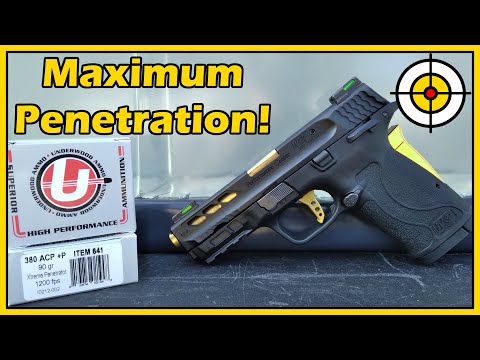
This video details a ballistic gel test of Underwood Xtreme Penetrator ammunition in .380 ACP, comparing standard pressure and +P variants fired from an M&P Shield EZ. The test measured velocity and penetration, revealing impressive performance for both loads, with the standard pressure slightly outperforming the +P in depth. The solid copper projectiles maintained their integrity and created significant wound channels.
This video conducts a ballistic gel test comparing Underwood's Xtreme Defender .380 Standard Pressure and +P ammunition fired from an M&P Performance Center Shield EZ. The test measures velocity and penetration, highlighting the performance differences between the two loads. The presenter, an experienced firearms instructor, notes the effectiveness of both rounds for self-defense.
This video compares Speer Gold Dot 9mm standard pressure and +P ammunition using a Taurus GX4 pistol and ballistic gel. The test reveals a 61 feet per second velocity difference favoring the +P, resulting in slightly more expansion and less penetration (16 inches vs. 17.5 inches). Despite the velocity increase, the instructor notes similar wound channels and concludes that the increased recoil, report, and muzzle flash of the +P may not be worth the marginal gains, favoring the standard pressure for its more manageable shooting characteristics.
You've reached the end! 10 videos loaded.
Gun Laws by State
Read firearms regulations for all 50 states + D.C.
Find Gun Dealers
Search licensed FFL dealers near you.