
Videos tagged with Standing Armies
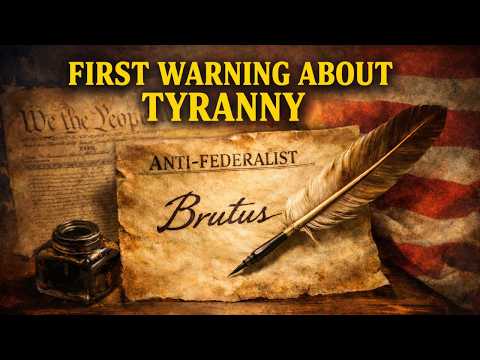
This video explores Anti-Federalist No. 1, highlighting its critique of the proposed US Constitution and its prediction of government overreach. The speaker emphasizes how these arguments directly influenced the creation of the Bill of Rights, including the Second Amendment, by raising concerns about centralized power, standing armies, and the protection of individual liberties. The analysis connects historical fears to contemporary debates about constitutional interpretation and the balance of power.
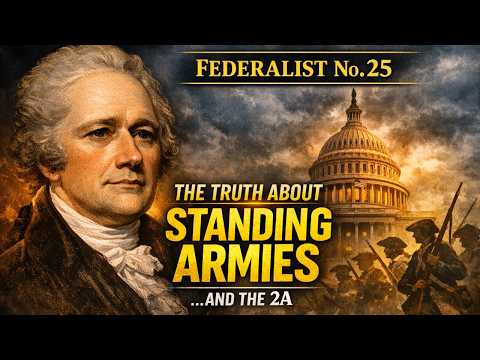
This video, featuring an experienced speaker, delves into Federalist No. 25, analyzing Alexander Hamilton's arguments on national defense and the dangers of overly restrictive limitations on military size. It connects historical debates to modern interpretations of the Second Amendment, emphasizing that true security relies on structural checks and balances, not just paper restrictions. The speaker highlights the importance of the people's capacity to resist force and the legislative control over military funding as crucial safeguards against government overreach.
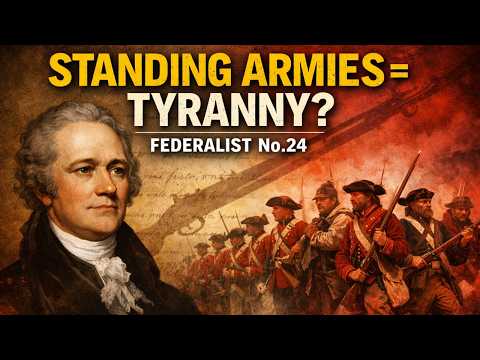
This video, presented by an experienced instructor from Guns & Gadgets, delves into Federalist No. 24, authored by Alexander Hamilton. It explores the historical context and rationale behind the Second Amendment, emphasizing the founders' concerns about standing armies in peacetime and the importance of an armed populace to counterbalance federal power. The discussion highlights the ongoing tension between national security needs and individual liberties.

This video, presented by Jared of Guns & Gadgets, offers a serious and educational analysis of Federalist Paper 18, written by James Madison. It draws parallels between historical Greek confederacies and modern interpretations of the Second Amendment, emphasizing Madison's warnings about centralized power, the necessity of deterrence against oppression, and the dangers of using 'public safety' as a pretext for infringing on rights. The host's high authority level is evident in his detailed historical and legal interpretation.

This video analyzes Federalist No. 16, authored by Alexander Hamilton, to illustrate the dangers of governmental impotence and the necessity of direct enforcement of laws on individuals. The host argues that when governments fail to enforce laws peacefully, coercion becomes the default, and a weak central government can increase the likelihood of conflict. The Second Amendment is presented as a crucial component of an 'anti-coercion ecosystem,' preventing the government from holding a monopoly on force and thus safeguarding liberty.

This video breaks down Federalist No. 14, authored by James Madison, to explain how the founders envisioned a large republic functioning without excessive centralized control or reliance on standing armies. The speaker, Jared, connects Madison's arguments about scale and governance to modern debates surrounding Second Amendment rights, suggesting that claims of societal complexity are often used to justify increased government power and restrict individual liberties. The analysis highlights the Second Amendment as a structural safeguard ensuring citizens retain leverage against potential government overreach.

This video, presented by Guns & Gadgets, offers a serious and cautionary analysis of Federalist No. 8 by Alexander Hamilton. The speaker, identified as an established commentator on constitutional rights, explains how constant fear of conflict can condition a free people to accept a militarized government. The content emphasizes the historical context of the Second Amendment as a safeguard against standing armies and government overreach, warning that perpetual crisis leads to perpetual power and the erosion of liberty.

This video delves into the historical context of the Second Amendment, drawing heavily from the Federalist Papers. It highlights arguments by Alexander Hamilton and James Madison regarding the necessity of an armed populace as a check against potential government overreach and tyranny. The discussion emphasizes the founders' views on militias and the right to self-defense as fundamental to liberty.


You've reached the end! 11 videos loaded.