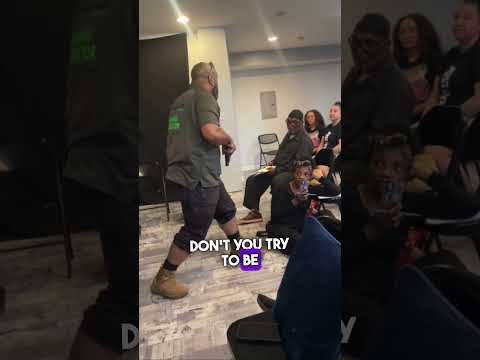
This video details a critical self-defense incident involving an 11-year-old boy who used a 9mm handgun against a home intruder. Expert analysis from Colion Noir emphasizes the importance of training, the psychological impact of adrenaline, and the legal nuances of defensive gun use, particularly when a child is involved. The narrative highlights how preparation and discipline can be life-saving, contrasting it with an intruder's underestimation of the situation.
Instructor Mike, a Force Science Analyst and Anger Management Specialist, provides an analytical breakdown of the Minnesota ICE shooting. He argues the incident was an 'amygdala hijack' driven by extreme stress, leading to instinctual reactions overriding conscious intent for both the officer and the driver. The analysis emphasizes understanding the psychological and cognitive factors at play during high-stress encounters.
This video from Active Self Protection, featuring John Correia and Stephannie Weidner, analyzes a real-life robbery incident to illustrate fight-or-flight responses and the importance of situational awareness and training. It highlights how individuals react differently under stress and emphasizes the benefits of proactive preparation, such as 'staging' a firearm, to improve defensive outcomes. The analysis also touches on tactical considerations for armed citizens facing threats.
This video emphasizes that the decision to stop shooting originates from the brain's processing of stimuli, not from conscious human thought. Effective firearms training in 2024 should focus on stimulating the brain to initiate the stop command, rather than relying on the shooter's self-directed decision to cease firing. The core principle is that the body cannot act in a way the brain has not first processed.
This analysis from Active Self Protection, featuring John Correia, examines a critical incident involving Sergeant Roberts of the Okaloosa County Sheriff's Office. The video highlights the impact of extreme fatigue on officer performance, with Sergeant Roberts being 15 hours into her shift when responding to a 'shots fired' call. The analysis references a 44-page internal investigation report, emphasizing the objective evidence and reliable source that prompted her engagement.
This video details an incident where a Florida deputy mistook a falling acorn for gunshots, leading him to fire his weapon at his patrol car. The analysis highlights the critical importance of situational awareness and stress management in law enforcement. It also touches upon the internal investigation process and the concept of 'objectively reasonable' use of force.
This video discusses the legal ramifications of not calling the police after a self-defense incident. A criminal defense attorney explains that while not calling the police doesn't automatically mean guilt, it significantly complicates a defense. The reasons for not calling, such as an unsafe scene or panic, are crucial factors in how a jury might perceive the situation.
This video analyzes a critical incident where officers responding to a burglary call were met with a domestic situation, culminating in a negligent discharge. The analysis, presented by John Correia and Mike Willever, highlights the importance of firearm safety, understanding stress responses like the 'parasympathetic squeeze,' and the legal implications of post-incident statements. It emphasizes that the discharge was unintentional, evidenced by the officer's reaction, and underscores the need for careful trigger finger discipline.
This video analyzes a nail shop robbery scenario, highlighting the critical impact of stress and tunnel vision during a violent encounter. The instructor emphasizes that individuals may not perceive threats or react as expected under duress, as demonstrated by a person unexpectedly rising and being shot. The analysis underscores the importance of situational awareness and avoiding heroic actions in such high-stress situations.
This video from Locs N Load Firearm Reviews provides an educational overview of the physiological effects of adrenaline and endorphins during a self-defense shooting. It details how these stress responses can impact manual dexterity, perception (tunnel vision, auditory exclusion, slow motion), memory, and potentially lead to false memories. The instructor emphasizes that these are natural survival reflexes and understanding them can help individuals manage their response during a high-stress event.
This video, presented by Brian Lanckiewicz and referencing 'Columbia War Machine style,' aims to teach viewers how to handle stress. The description outlines a two-step process: watching related videos and renting a 'Columbia War Machine gun.' It promises to demonstrate Brian's methods of handling stressful situations compared to others. While the core topic is stress management, the inclusion of firearms as a tool or element within this context is emphasized.
This video, presented by Instructor Mike, critically examines concealed carry methods for women, focusing on the practicality and safety of thigh holsters. It emphasizes that carrying a firearm is a frequent activity, while drawing is rare, highlighting the importance of comfort and natural movement during everyday tasks and high-stress situations. The instructor warns against potential burns from hot barrels and advises prioritizing functional self-defense over aesthetics.
Gun Laws by State
Read firearms regulations for all 50 states + D.C.
Find Gun Dealers
Search licensed FFL dealers near you.