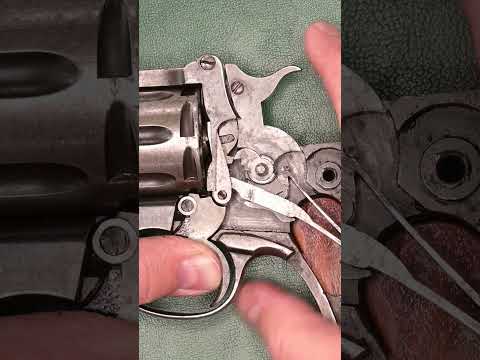
This guide provides an overview of the mechanical operation of the Mexican 1893 Pieper revolver, drawing from expert analysis. It details the unique gas seal system, the function of the inertia lock for recoil management, and the specialized trigger 'dog' and rebound system. The instruction emphasizes understanding the internal timing and components, offering insights comparable to those from a seasoned firearms instructor.
This guide details the operation and loading procedure for the Moore Revolver, a historical single-action handgun. It covers the unique swing-out cylinder mechanism, the hidden ejector rod, and the half-cock safety feature. The presenter, demonstrating high authority, emphasizes proper handling and the advanced design for its era.
This guide details the safe loading, firing, and unloading procedures for the NAA Sentinel .22 WMR mini-revolver, as demonstrated by Misha. It highlights the firearm's single-action operation and its unique swing-out cylinder, a feature not common on all NAA mini-revolvers. Proper handling and safety checks are emphasized throughout the process.
This video provides an in-depth review of the Smith & Wesson Model 10, a reissue of the iconic 38 Hand Ejector. The presenter highlights its historical significance, manufacturing longevity since 1889, and the return to its classic configuration with modern metallurgical improvements. Key features discussed include the pencil barrel, half-moon front sight, square butt, beautiful bluing, and the inclusion of a transfer bar safety for enhanced modern safety. The review also touches upon the history of swing-out cylinder revolvers, the development of the 38 Special cartridge, and the Model 10's widespread adoption by law enforcement and military.
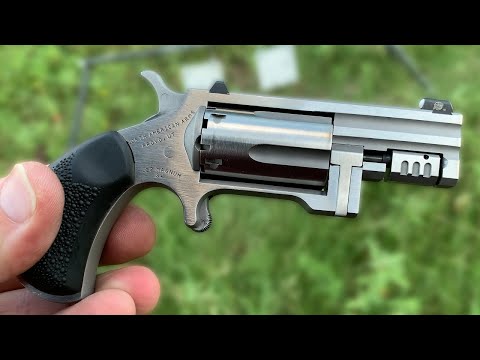
This video showcases two new items from North American Arms: a 50th Anniversary Gold Belt Buckle designed for .22 LR with pearl grips, and the Sentinel pistol. The Sentinel, released last year, is presented as a more practical everyday carry option with a square barrel, black pebble rubber grip, and a swing-out cylinder for easy reloading. It also features a tritium front sight and is noted for its pocket or belt carry suitability.
This video traces the historical development of revolvers, beginning with Samuel Colt's innovations in the 1830s and progressing through key advancements like the metallic cartridge, the bore-through cylinder, and various loading mechanisms. It highlights the evolution from black powder cap-and-ball revolvers to modern designs, discussing the impact of patents and competition on firearm design. The presenters also touch on the tactical advantages of revolvers and showcase contemporary examples like the Zastava M83.
This guide details the operation of the swing-out cylinder mechanism on the North American Arms (NAA) Sentinel 22 Magnum, a key feature for easier reloading compared to older NAA models. The review highlights the Sentinel's compact size, safety features like hammer-cylinder lockup, and surprising accuracy for its class. Sootch00, a respected firearms reviewer, provides an in-depth look at its design, performance, and comparisons to other micro-firearms.
This review from Nightwood Guns, featuring Brett, provides an expert look at the North American Arms Sentinel .22 Magnum mini-revolver. It highlights the practical advantages of its swing-out cylinder, inherent safety features, and concealability, positioning it as a viable backup firearm or primary option for those unable to carry larger guns. The review also candidly discusses its limitations, such as single-action operation and potential ammunition issues.
This video provides a demonstration of the North American Arms (NAA) Sentinel .22 Magnum mini-revolver. It highlights the firearm's compact size, single-action operation, and the functional improvement of its swing-out cylinder with an integrated ejector rod for faster reloading compared to older NAA models. The demonstration includes live fire and a close-up look at the mechanical features, showcasing proficient handling and safe operation by the presenter.
This video establishes a unified lexicon for revolver terminology, addressing the historical inconsistency in naming parts. The instructor, an apparent expert in firearms history and mechanics, meticulously defines components from basic actions (single/double) and frame types to intricate lockwork mechanisms like the 'dog', 'sprag', and 'transfer arm'. It also covers cylinder indexing, safety features, and loading/unloading systems, aiming to make revolver comparisons and discussions more consistent and understandable for enthusiasts.
This video provides an expert-level unboxing and live-fire demonstration of the North American Arms (NAA) Sentinel micro revolver in .22 WMR. The reviewer, identified as a Firearms Enthusiast/Reviewer with expertise in safe handling and proficient loading, showcases the firearm's features, including its stainless steel finish, swing-out cylinder, and rubberized bird's head grips. The demonstration includes loading CCI .22 WMR Maxi-Mag ammunition and live fire at an outdoor range, highlighting recoil management and functional reliability of this micro-compact firearm.
This video ranks revolvers used during World War I, evaluating them based on action type, ergonomics, reliability, and cartridge effectiveness. It highlights the decline of single-action revolvers and the rise of more modern designs like the Colt and Smith & Wesson 1917 models, which utilized .45 ACP with moon clips for rapid reloading. The presenters, experienced firearms enthusiasts, provide detailed critiques of each model, from the poorly made Romanian 1915 to the highly regarded top-tier revolvers.
Gun Laws by State
Read firearms regulations for all 50 states + D.C.
Find Gun Dealers
Search licensed FFL dealers near you.