This guide details the field stripping process for the Swiss LMG-25 light machine gun, as demonstrated by Ian McCollum. It covers the removal of the barrel and bolt assembly for cleaning or maintenance. The video also highlights the unique toggle-lock action and the importance of the API system.
This guide details the unique loading and ejection process of the Swiss 1878 revolver, highlighting its manual cylinder indexing and specialized ejector system. The video emphasizes the firearm's mechanical intricacies, as explained by an expert with high authority.
This video provides an in-depth look at the Swiss Luger 06/29, featuring hands-on shooting impressions and historical context. The presenter highlights the firearm's robust construction, surprisingly good shooting characteristics, and unique toggle-delayed blowback action. It's presented as a historically significant and enjoyable piece of engineering, offering a different perspective from modern polymer handguns.
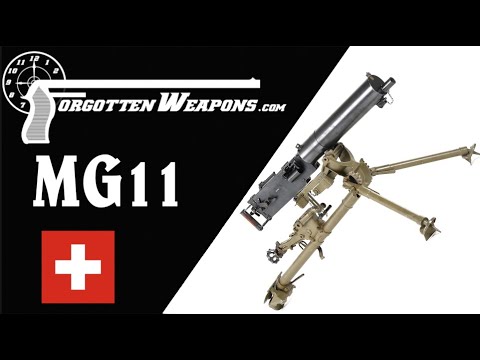
This guide details the setup and operation of the Swiss MG11 Maxim Gun, considered by some to be the finest Maxim variant. It covers the complex tripod setup, weapon mounting, and features like the one-handed trigger and specialized optics. The video also touches on the gun's history, modernization, and eventual replacement. Instruction is provided by Ian McCollum, demonstrating high expertise in historical firearms.
This guide details the unique loading and operation of the K31 Swiss straight-pull rifle, including accessing the hidden soldier tag and utilizing stripper clips for its 6-round magazine. Expert instruction covers the mechanics of the straight-pull action and its ring-style safety. Proper handling and safety protocols are emphasized for this historical military surplus firearm.
This video provides a detailed historical and technical overview of the Swiss Revolver of 1878. It covers the design's evolution from earlier models like the Chamelot-Delvigne, the influence of inventors like Jean Warnant, and the final specifications adopted by the Swiss military. The presentation includes a thorough examination of the revolver's unique action, its single-action/double-action capabilities, the rebounding hammer mechanism, and its manual ejector system, highlighting its mechanical simplicity and reliability.
This video details the history and technical aspects of the Swiss Luger 1900, the original Luger pistol. It covers the design evolution from Hugo Borchardt's C93, the contributions of Georg Luger, and the pistol's adoption by Switzerland. The video provides an in-depth look at its toggle-lock mechanism, unique features, and the trials it underwent, offering a comprehensive understanding of this seminal firearm.
This guide details the field stripping process for the Swiss Reibel M31 machine gun, as demonstrated by Ian McCollum. It covers the removal of the back plate, recoil spring, bolt and operating rod assembly, feed block, and sear. The Reibel M31 is a French-designed weapon modified by Switzerland for armored vehicles, featuring a gas-operated tilting bolt action and a 150-round drum magazine.
This video explores the rich history of Swiss military small arms, focusing on their unique engineering philosophy driven by neutrality. It details the evolution of Swiss rifles from the Vetterli repeating action to the advanced straight-pull Schmidt-Rubin designs like the K31, highlighting their exceptional quality and accuracy. The handgun lineage is also covered, from early revolvers and Lugers to the renowned SIG P210 and modern P220.
This video details the five variations of the Swiss military SIG P-49 (P210) pistol, highlighting changes in finish, grips, magazines, and safety features. Early models lacked a half-cock notch, a common issue addressed in later production. The evolution also covers magazine types and the distinctive M49 holster with its modified closure.
This guide details the field stripping process for the W+F Bern P43 prototype, highlighting its similarities and differences with the FN Browning High Power. It emphasizes the importance of safety during disassembly and provides insights into the design evolution of Swiss military pistols. The information is presented with the authority of a recognized firearms expert.
This video explores the Swiss N33 prototype semi-automatic rifle, developed between WWI and WWII. The N33 is notable for its open-bolt firing mechanism, a feature usually found on light machine guns, which can impact accuracy due to the delay between trigger pull and firing. The rifle was produced in various calibers but never saw widespread production. The video touches on its historical context and technical characteristics.
Gun Laws by State
Read firearms regulations for all 50 states + D.C.
Find Gun Dealers
Search licensed FFL dealers near you.