This video provides an expert-level guide to understanding and analyzing ballistic gel tests. It details the limitations of gel compared to living tissue, the environmental sensitivities of gel testing (especially temperature), and the differences between organic and synthetic gel blocks. The instructor emphasizes proper calibration techniques and outlines key metrics for assessing projectile performance, including penetration depth, cavity diameter, neck length, trajectory, and fragment analysis through dissection.
This video critically examines the 8.6 Blackout cartridge, questioning its purported advantages, particularly the emphasis on a 1:3 twist rate. The presenter argues that while the cartridge offers more energy than 300 Blackout, its significant bullet drop and limited effective range make it less ideal for hunting compared to other alternatives. The analysis delves into the physics of rotational energy, suggesting its contribution to terminal ballistics is often overstated and that faster twist rates can lead to increased barrel and component wear.
This video from Lucky Gunner Ammo delves into the critical aspects of terminal ballistics, explaining how projectiles behave upon impact. It highlights the significant performance differences between rifle and pistol rounds, emphasizing factors like permanent and temporary cavity formation, bullet deformation, and fragmentation. The content is presented with a focus on practical application for defensive shooting scenarios.
This expert-level review from Wilson Combat details the impressive terminal ballistics of the Lehigh Defense 32 grain Controlled Chaos 5.56mm bullet. High-speed footage demonstrates extreme expansion and significant energy transfer within a ballistic gel block, showcasing 99% mass retention and minimal over-penetration. The analysis highlights its suitability for self-defense and hunting applications.
This video provides an expert-level review and ballistic gel test of Black Rambo 9mm JHP ammunition, comparing it against Hornady Critical Defense. The host, GHG Hussle, demonstrates practical range experience by using industry-standard Clear Ballistics gel to analyze terminal performance. The comparison focuses on bullet expansion, penetration, and temporary wound cavity size, offering insights into the effectiveness of Black Rambo as a defensive ammunition option.
This video tests Wolf 55gr SP 5.45x39mm ammunition through ballistic gelatin, finding it barely meets the 12-inch penetration minimum for vital organs. While it expands and fragments, its performance is considered mediocre compared to 5.56x45mm options, making it a borderline choice for defense or hunting in a caliber with limited high-performance ammunition.
This video presents a gel test of Gorilla Ammunition's 110gr Controlled Chaos load in .300 AAC Blackout, manufactured by Lehigh Defense. The instructor notes the bullet's design aims for fragmentation, creating significant disruption. While penetration was deeper than some standards, the instructor argues it's preferable to insufficient penetration for vital organ reach. The test indicates the load is adequate for defensive use, though other .300 AAC loads may offer superior performance.
This video details a reduced velocity gel test of the Army's M80A1 7.62mm bullet, fired from a 300 Blackout case using an 8-inch AR-15 upper. Despite the lower velocity (around 1700 FPS), the M80A1 demonstrated significant fragmentation and created a substantial temporary stretch cavity, with the penetrator exiting at 14.2 inches. The instructor notes this performance is excellent for rifle bullets at such speeds and anticipates similar testing for the Mk 319.
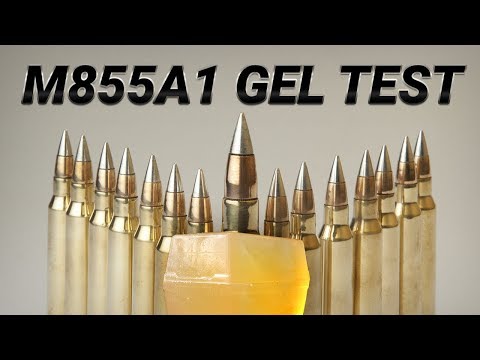
This video details a reduced velocity gel test of the M855A1 EPR round fired from a 10.5-inch barrel with a 1:7 twist, using 21.5 grains of RL15 powder. The test, conducted by Andrew from ARFCOM News, measures penetration depth, temporary cavity size, and fragmentation at a recorded velocity of 1,988 FPS. The results demonstrate the M855A1's effectiveness even at lower velocities, highlighting its performance against tissue and intermediate barriers.
This video presents a ballistic gel test of Lehigh Defense's 45-grain Controlled Chaos ammunition fired from an 18-inch AR-15 upper. The instructor, while expressing personal skepticism about Lehigh's product design philosophy, focuses on objective observations. The test reveals significant fragmentation, a large temporary cavity, and deep penetration, with the core reaching 23.5 and 24.5 inches in two shots. The instructor notes the fragmentation deviates from the main wound track and compares the terminal performance to M855A1.
This video details a ballistic gel test of MK318 SOST ammunition fired at a reduced velocity. The test aimed to replicate previous M855A1 testing by loading the MK318 over 21.5 grains of RL 15 and firing it from a 14.5-inch M4-style rifle. The results showed significant fragmentation and disruption, with the bullet core recovered after penetrating multiple gel blocks. The speaker estimates the reduced velocity to be around 2450 feet per second, consistent with fragmentation thresholds for this ammunition.
This video presents a gel test of Brown Bear 55gr Soft Point 223 Remington ammunition fired from a 16-inch Rock River carbine with a 1:9 twist. The test reveals significant disruption and fragmentation, with the core retaining its jacket. While the performance is deemed decent for its price point, the instructor advises against it as primary home defense due to potential quality control issues with Russian steel-case ammunition and its tendency to not obturate as well as brass-cased rounds.
Gun Laws by State
Read firearms regulations for all 50 states + D.C.
Find Gun Dealers
Search licensed FFL dealers near you.