This guide details the operation of the unique ring-style safety mechanism on the Swiss K11 rifle, a design evolved from the 1889 Gewehr and preceding the Karabiner 31. It covers both the standard, deliberate engagement and disengagement, as well as a practical 'shortcut' method for one-handed operation, offering insights from an expert in historical military small arms.
This video provides an in-depth look at the extremely rare 2.7mm Kolibri pistol, designed by Franz Pfannl. It details the pistol's unique status as the smallest centerfire cartridge firearm, its historical context around WWI, and its technical specifications, including projectile weight, muzzle velocity, and energy. The presentation also covers the pistol's accessories and its limited production run.
This video provides an in-depth look at the Burton 1917 LMR, often considered America's first assault rifle. Ian McCollum details its unique features, including the dual magazine system and dual trigger for select-fire capability, highlighting its advanced design for its era.
This video showcases four of the presenter's oldest firearms. It features a Luger pistol, a M1 Carbine, and a Mosin-Nagant rifle, with a focus on their historical context and the presenter's personal impressions. The presenter notes the difficulty in aiming the Luger and expresses strong affection for the M1 Carbine, highlighting its satisfactory feel. The Mosin-Nagant is discussed in terms of its ammunition availability and satisfying bolt-action feel.
This video provides an in-depth look at the Beardmore-Farquhar machine gun, a largely forgotten lightweight weapon developed in Britain. Curatorial Assistant Joe Ford details its design principles, historical context as a competitor to the Lewis gun, and extensive testing phases throughout the 1920s and 1930s. The video includes a detailed disassembly, highlighting the unique gas-operated, spring-compression mechanism and common issues like poor accuracy, stoppages, and component fragility, ultimately explaining why it never saw widespread service.
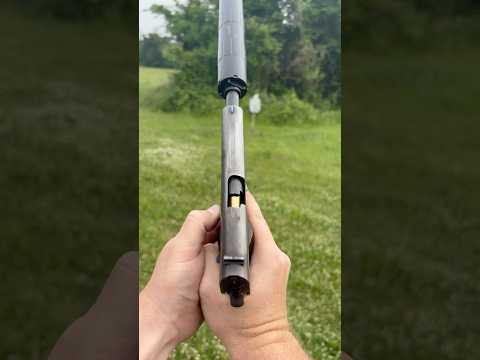
This video demonstrates the process of attaching a modern suppressor to an original WWI-era Colt 1911 and conducting a live-fire demonstration. The instructor, Misha, showcases safe handling of the vintage firearm, proper suppressor installation, and controlled rapid fire. The demonstration highlights the compatibility of modern accessories with historical firearms, offering insights into their practical application.
This guide details the inspection and live-fire exercise of a WWI-era Colt 1911, as presented by Misha, a firearms collector and historian. It covers identifying historical markings, loading Winchester Super X .45 Auto ammunition, and safely engaging targets at an outdoor range, emphasizing the firearm's mechanical operation and historical significance.
This expert guide from Forgotten Weapons details the operation and shooting experience of the rare British Farquhar-Hill rifle. Instructor Ian highlights its unique semi-automatic action, drum magazine loading mechanism, and surprising gentle recoil, attributing it to a dual spring system. The rifle, chambered in .303 British, saw limited use by the British Air Corps in WWI.
This video provides an expert overview of the Colt 1911, detailing its specifications, operation, and historical significance. The presenter, from the specialized historical firearms channel C&Rsenal, highlights the pistol's semi-automatic, short recoil action, its 2.4 lbs weight, and 8.5-inch length. Key operational aspects like loading a 7-round .45 ACP magazine, the trigger's characteristics, and safety features ('cocked and locked' carry) are explained. The 1911 is recognized as an iconic and effective handgun for its era.
This video showcases the rare German Haeussler patent pistol, developed around 1915 by Adlerwaffenwerke. While resembling a Luger P08, it features distinct design elements like a Borchardt C-93-inspired rear hump and a simpler blowback operation instead of the Luger's toggle system. Chambered in a proprietary 7.25mm cartridge, it was intended as an improvement over the Luger. The video highlights its unique features, including the operating handle, rear sight, magazine release, thumb safety, and the eagle relief on the grips. Despite its rarity and interesting design, estimated production was only around 100 units, with ammunition production likely hampered by WWI. The example shown is in good condition with approximately 75% of its original finish.
This guide details the operation and sight adjustment of the historical Artillery Luger, a 9mm WWI-era pistol. It covers the unique spin drift compensation mechanism of the rear sight, the 8-round magazine, and the use of the shoulder stock. The information is presented with the authority of a firearms instructor, highlighting practical aspects and historical context.
This guide details the process of loading and firing the WWI-era Smith & Wesson Model 1917 revolver, as demonstrated by Hickok45. It covers the use of moon clips for .45 ACP ammunition and the basic shooting sequence. The instruction emphasizes safe handling and operation of this historical firearm.
Gun Laws by State
Read firearms regulations for all 50 states + D.C.
Find Gun Dealers
Search licensed FFL dealers near you.