This video discusses how specific ammunition choices can lead to legal trouble, including felony charges. It highlights that possessing armor-piercing ammunition is illegal in some states like Kentucky. Furthermore, the speaker warns that using certain types of ammunition, particularly those marketed as highly destructive like 'Zombie Killer' rounds, could be interpreted by judges as intent to cause excessive harm, potentially leading to murder charges even in a self-defense scenario. The advice is to choose sensible, standard self-defense ammunition and be aware of state laws and judicial interpretations.
This video discusses how the type of ammunition used for self-defense can lead to legal trouble, potentially resulting in murder charges. It highlights state-specific laws prohibiting certain ammunition types, like armor-piercing rounds in Kentucky, and the judicial interpretation of 'highly destructive' or 'novelty' ammunition, such as 'zombie killer' rounds, as evidence of intent to cause excessive harm. The speaker advises choosing sensible, standard self-defense ammunition with neutral packaging to avoid such legal pitfalls.
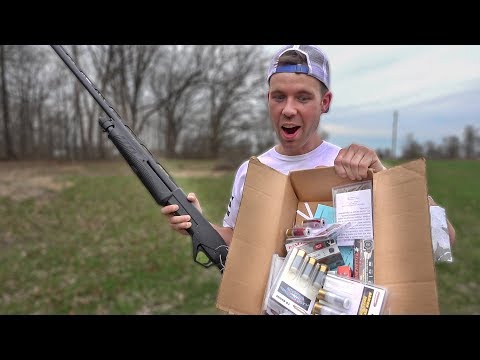
This video tests the effectiveness of various exotic 12 gauge shotgun ammunition types against an industrial metal door and watermelons. The host, using a Benelli Supernova, demonstrates the impact of rounds like the 'Zombie Killer' (copper shot, #4 buck, powdered slug), 'Bolo' (two connected buckshot pellets), 'Terminator' (hollow core slug with birdshot), 'Triple Doom' (buckshot, birdshot, slug), standard 00 Buck, 1 oz hollow point slug, 'Armor Piercing Incendiary' slug, and the 'Exploder' slug. While some rounds showed significant penetration and damage, others were less effective, highlighting the varied performance characteristics of specialized shotgun loads.
You've reached the end! 3 videos loaded.
Gun Laws by State
Read firearms regulations for all 50 states + D.C.
Find Gun Dealers
Search licensed FFL dealers near you.