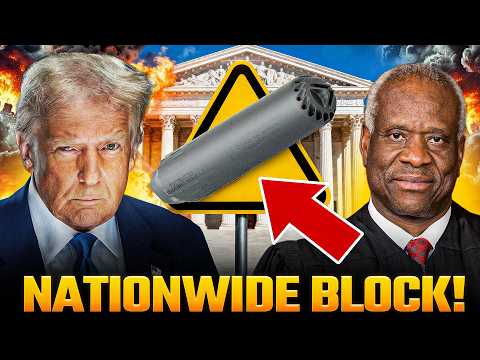
BREAKING--ATF PANICKING: DOJ Files "Whiny" Brief to Supreme Court Begging it to Overlook Federal Law

Published on August 3, 2023
Duration: 2:35

The Department of Justice has filed a reply brief with the Supreme Court seeking emergency relief to implement its 'ghost gun' regulation. The regulation targets frames, receivers, and parts thereof, which the DOJ argues are necessary to prevent the anonymous acquisition of gun parts. The speaker criticizes this brief as 'whining,' asserting that the DOJ should address Congress to change laws rather than circumvent existing ones and that the term 'ghost gun' is a political propaganda term for unserialized firearms.

Quick Summary

The Department of Justice has filed a brief with the Supreme Court seeking to implement its 'ghost gun' regulation, which targets frames and receivers. Critics argue this filing is a 'whiny' attempt to bypass federal law and the Second Amendment, and that the DOJ should instead pursue legislative changes through Congress.

Chapters

  1. 00:00Breaking News: DOJ Supreme Court Brief
  2. 00:21DOJ's 'Ghost Gun' Regulation Argument
  3. 00:43Critique of DOJ's 'Whiny' Brief
  4. 01:09Second Amendment and Anonymous Parts
  5. 01:24DOJ Calls Definition Debate 'Quibbling'
  6. 01:37Defining 'Ghost Guns' and PMFs
  7. 01:57Complaints About the Rule of Lenity
  8. 02:12Subscribe to The Four Boxes Diner

Frequently Asked Questions

What is the core issue with the DOJ's recent Supreme Court filing regarding 'ghost guns'?

The DOJ filed a brief seeking emergency relief to implement its 'ghost gun' regulation, which targets frames, receivers, and parts. Critics argue this brief is a 'whiny' attempt to bypass federal law and the Second Amendment, urging the court to stay a Fifth Circuit decision that favored gun rights.

How does the DOJ's brief address the definition of 'ghost guns'?

The DOJ's brief dismisses the debate over defining 'ghost guns' as 'quibbling.' The speaker counters that 'ghost gun' is a propaganda term for unserialized firearms, and the regulation specifically targets privately made firearms (PMFs).

What is the 'Rule of Lenity' and why is it relevant to the DOJ's brief?

The Rule of Lenity states that any ambiguity in a law with criminal implications must be resolved in favor of the citizen and against the government. The DOJ's brief complains about its application, suggesting they prefer interpretations that favor government enforcement over individual rights.

What is the speaker's proposed alternative for the DOJ regarding 'ghost gun' regulations?

The speaker suggests that if the Department of Justice disagrees with current federal laws concerning firearm manufacturing, they should engage with Congress to change those laws. They argue that attempting to implement regulations that may conflict with the Second Amendment through court filings is an inappropriate approach.

Related News

All News →

More 2nd Amendment & Law Videos You Might Like

More from The Four Boxes Diner

View all →