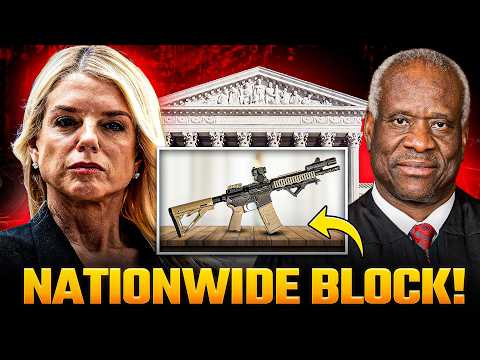
BREAKING!!! Immediate Nationwide Block of ATF Short Barreled Rifle & Pistol Brace Rule! Now What?

Published on July 30, 2024
Duration: 9:38

This video provides an expert-level analysis of the legal challenges surrounding the ATF's pistol brace rule, focusing on the implications of the Mock v. Garland decision and the ATF's subsequent arguments leveraging the Supreme Court's Rahimi decision. The speaker, an expert in firearms law, breaks down the legal strategies employed by both the ATF and plaintiffs, highlighting the complexities of Second Amendment jurisprudence and regulatory overreach. The content is crucial for understanding the current landscape of firearm regulations concerning pistol braces and SBRs.
Quick Summary

The ATF's pistol brace rule was struck down as invalid by Judge Reed O'Connor in the Northern District of Texas due to APA violations. The ATF is now leveraging the Supreme Court's *Rahimi* decision to argue that the rule is consistent with historical firearm regulation principles and that challenges must be specific to the firearm, not hypothetical.

Chapters

  1. 00:00ATF's New Legal Strategy on SBR Rules
  2. 00:47ATF Legal Losses & Pistol Brace Rule Protection
  3. 01:16Mock v. Garland Decision & Pistol Brace Rule Invalidation
  4. 02:32Pistol Brace Rule Appeal Status
  5. 03:21ATF's Rahimi Argument Strategy
  6. 04:28ATF's 'Dangerous and Unusual' Argument
  7. 04:54Rahimi on Facial Challenges
  8. 05:28SBR Regulations Under Rahimi
  9. 05:56Injunctions and Rahimi Lessons
  10. 06:11ATF's Attempts to Expand SBR Laws
  11. 07:00Challenging Universal Relief
  12. 08:36Future of Pistol Brace Appeals

Frequently Asked Questions

What was the outcome of the Mock v. Garland case regarding the ATF's pistol brace rule?

Judge Reed O'Connor in the Northern District of Texas granted summary judgment, striking down the ATF's pistol brace rule as invalid. This decision was based on the ATF violating the Administrative Procedure Act, as the final rule was not a logical outgrowth of the proposed rule.

How is the ATF using the Supreme Court's Rahimi decision to support its firearm regulations?

The ATF is submitting 28(j) letters to appellate courts, arguing that the *Rahimi* decision shows lower courts' vacatur of the pistol brace rule was incorrect. They contend *Rahimi* clarifies that regulations need only align with the *principles* of historical firearm regulation, not precise matches, and that SBRs are considered 'dangerous and unusual'.

What is the ATF's argument regarding 'dangerous and unusual' weapons in relation to pistol braces?

The ATF argues that under the principles clarified in *Rahimi*, they can disarm 'instruments that constitute bearable arms' not typically possessed by law-abiding citizens for lawful purposes. They assert that braced pistols are effectively SBRs, which courts have repeatedly held to be dangerous and unusual weapons.

Can a plaintiff challenge a firearm regulation based on hypothetical scenarios after the Rahimi decision?

No, the *Rahimi* decision clarified that a plaintiff cannot make a Second Amendment challenge by relying on hypothetical scenarios about how a law applies to other people or other weapons. Plaintiffs must demonstrate the law's unconstitutionality as applied to their specific firearms.

Related News

All News →

More 2nd Amendment & Law Videos You Might Like

More from Armed Scholar

View all →