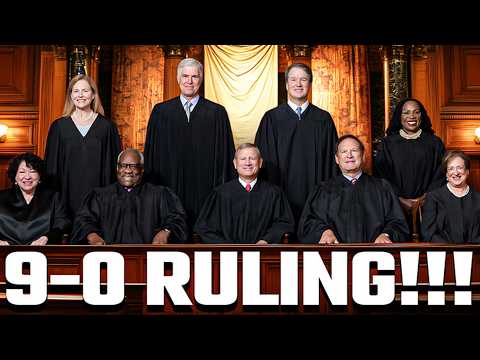
BREAKING! Supreme Court 9-0 Unanimous Decision Changes Nationwide & Constitutional Landscape Forever

Published on December 19, 2025
Duration: 8:56

This video provides an expert-level analysis of the Supreme Court's unanimous 9-0 decision in Martin v. United States. The ruling significantly impacts government accountability, particularly concerning botched raids and the application of the Federal Tort Claims Act (FTCA). The speaker, demonstrating high authority, breaks down the legal arguments and potential future implications for citizens suing the government.

Quick Summary

The Supreme Court's unanimous 9-0 decision in Martin v. United States clarifies that the government may not automatically claim immunity under the FTCA's 'discretionary function exception' for botched raids, such as executing a warrant at the wrong address due to agent error.

Chapters

  1. 00:00Introduction to the SCOTUS Decision
  2. 01:12Case Background: Martin v. United States
  3. 02:19The Botched Raid Details
  4. 03:53Legal Framework: FTCA and Discretionary Function
  5. 05:03Supreme Court Ruling and Remand
  6. 06:21Plaintiff Arguments vs. Government Claims
  7. 07:40Conclusion and Future Implications

Frequently Asked Questions

What was the Supreme Court's unanimous decision in Martin v. United States?

The Supreme Court ruled 9-0 that the government's actions during a botched raid, specifically executing a warrant at the wrong address due to agent error, may not be protected by the 'discretionary function exception' under the Federal Tort Claims Act (FTCA).

How does the Martin v. United States ruling affect government accountability?

This ruling significantly enhances government accountability by potentially limiting the scope of immunity claims. It suggests that operational negligence, like raiding the wrong home, could be grounds for a lawsuit under the FTCA, rather than being automatically dismissed as a discretionary act.

What is the Federal Tort Claims Act (FTCA) and its relevance to this case?

The FTCA allows citizens to sue the government for wrongful acts by its employees. The key issue in Martin v. United States was whether the 'discretionary function exception' within the FTCA shielded the FBI from liability for a botched raid on the wrong house.

What are the implications of the Supreme Court's decision on future tactical operations?

The decision could lead to stricter adherence to procedures during raids and increased scrutiny of law enforcement's operational decisions. It may empower citizens to seek damages for negligent execution of warrants, making agencies more cautious about errors.

Related News

All News →

More 2nd Amendment & Law Videos You Might Like

More from Armed Scholar

View all →