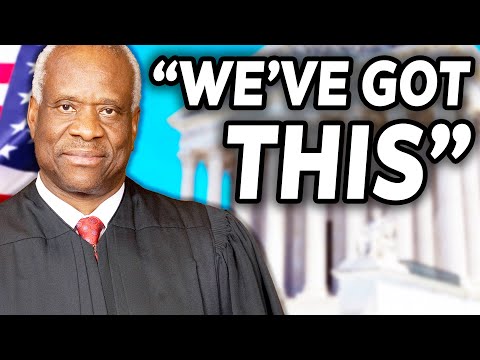
Is It Time to End Birthright Citizenship?

Published on March 29, 2026
Duration: 9:06

This video from Washington Gun Law TV discusses the Supreme Court case Trump v. Barbara, which challenges the interpretation of the 14th Amendment regarding birthright citizenship. The speaker, William Kirk, explains the historical context, including the Dred Scott decision and the intent of the 14th Amendment, and analyzes the legal arguments concerning the phrase 'subject to the jurisdiction thereof.' The video emphasizes the distinction between a democracy and a constitutional republic and questions the president's authority to alter constitutional amendment application via executive order.

Quick Summary

The Supreme Court case Trump v. Barbara examines the 14th Amendment's clause 'All persons born or naturalized in the United States, and subject to the jurisdiction thereof, are citizens.' This case challenges whether children born in the U.S. to parents who entered illegally are entitled to birthright citizenship, questioning the interpretation of 'subject to the jurisdiction thereof.'

Chapters

  1. 00:00Introduction to Washington Gun Law TV
  2. 00:07Going Outside Our Lane: Supreme Court Case
  3. 00:14Oral Arguments on April 1st
  4. 00:21Fate of Our Constitutional Republic
  5. 00:30Future of Birthright Citizenship
  6. 00:44Law to English Translation
  7. 00:57Is It Time to End Birthright Citizenship?
  8. 01:07Framing the Issue
  9. 01:22Trump v. Barbara Case
  10. 01:43Interpretation of the 14th Amendment
  11. 02:22Core Legal Conflict: Born Here vs. Subject to Jurisdiction
  12. 02:41Historical Context: Dred Scott v. Sandford
  13. 03:03Purpose of the 14th Amendment
  14. 03:27Modern Context: Parents Entering Illegally
  15. 03:51Trump Executive Order Rationale
  16. 04:04Challenges for the Trump Administration
  17. 04:13Leading Case: US v. Wong Kim Ark
  18. 04:47Justice Horace Gray's Opinion
  19. 05:22Line of Supreme Court Decisions
  20. 05:48Uphill Battle for Trump Administration
  21. 05:57Beyond Birthright Citizenship
  22. 06:11Simplest Equation: The Question
  23. 06:13Democracy vs. Constitutional Republic
  24. 06:27Defining a Constitutional Republic
  25. 06:44Paramountcy of Constitutional Structures
  26. 07:05Presidential Authority and Executive Orders
  27. 07:20Revisiting the 14th Amendment
  28. 07:37Cautionary Note on Executive Orders
  29. 08:04Case Recap: Trump v. Barbara
  30. 08:13Oral Arguments on April 1st
  31. 08:24Further Questions and Contact Info
  32. 08:46Conclusion: Know the Law

Frequently Asked Questions

What is the main issue in the Supreme Court case Trump v. Barbara?

The Supreme Court case Trump v. Barbara concerns the interpretation of the 14th Amendment, specifically whether children born in the U.S. to parents who entered the country illegally are entitled to birthright citizenship.

What is birthright citizenship and how is it defined in the U.S. Constitution?

Birthright citizenship is the right of a person to be a citizen of a country based on being born within its territory. The 14th Amendment states, 'All persons born or naturalized in the United States, and subject to the jurisdiction thereof, are citizens of the United States.'

What is the historical context behind the 14th Amendment and birthright citizenship?

The 14th Amendment was largely intended to grant citizenship to formerly enslaved persons after the Civil War, overruling the Dred Scott decision. It affirmed the principle of citizenship by birth within U.S. territory.

What is the difference between a democracy and a constitutional republic?

A democracy is a system where the majority always rules. A constitutional republic is a representative government limited by a supreme constitution that protects individual rights against majority rule, making constitutional structures paramount.

What is the significance of the 'subject to the jurisdiction thereof' clause in the 14th Amendment?

This clause is central to the debate in Trump v. Barbara. Opponents of birthright citizenship for children of undocumented immigrants argue that these individuals are not fully 'subject to the jurisdiction thereof' in the same way as children of legal residents or citizens.

Related News

All News →

More 2nd Amendment & Law Videos You Might Like

More from Washington Gun Law

View all →