MAJOR BREAKING NEWS! TRUMP DOJ FILES INSANE ANTI-2A BRIEF!

Published on April 8, 2026
Duration: 19:45

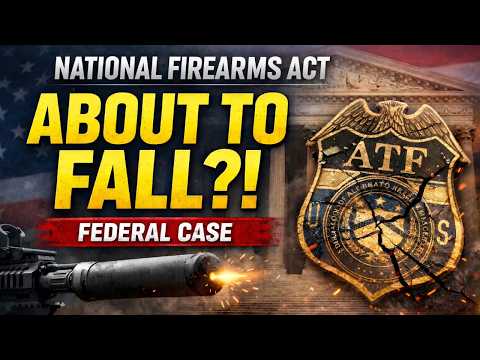
This video analyzes a Department of Justice brief filed in the Eastern District of Missouri concerning the National Firearms Act (NFA) regulations on suppressors and short-barreled rifles. The speaker, a constitutional attorney and Second Amendment advocate, argues the brief makes legally erroneous and intellectually dishonest arguments, misapplying Supreme Court precedent like Heller and Bruin. The analysis focuses on the DOJ's incorrect assertion that the 'common use' test is part of the plain text analysis and their flawed argument regarding facial challenges to the NFA.

Quick Summary

The Trump DOJ's brief in Chris Brown v. ATF is criticized for misapplying Second Amendment legal precedent. Arguments incorrectly place the 'common use' test within the plain text analysis and misinterpret facial challenges, shifting the burden of proof to plaintiffs and ignoring the government's duty to demonstrate historical justification for firearm restrictions.

Chapters

  1. 00:00Introduction: DOJ's Anti-2A Brief
  2. 01:01Speaker Introduction & Stance
  3. 02:02Case Background: Chris Brown v. ATF
  4. 03:44DOJ's Role and Obligation
  5. 05:26Constitutional Oath vs. Client Defense
  6. 06:43Misapplication of Bruin Methodology
  7. 08:08Analysis of DOJ's Legal Mistakes
  8. 08:13Elevating the 'Common Use' Test
  9. 11:39'Common Use' and Historical Tradition
  10. 14:51Facial Challenge Errors
  11. 17:17NFA and Misuse of Firearms
  12. 18:19Registration vs. Licensing
  13. 19:13Conclusion: Need for Improvement

Frequently Asked Questions

What is the main criticism of the Trump DOJ's brief in Chris Brown v. ATF?

The primary criticism is that the DOJ brief makes legally erroneous and intellectually dishonest arguments, misapplying Supreme Court precedent like Heller and Bruin. Specifically, it incorrectly places the 'common use' test within the plain text analysis of the Second Amendment and misinterprets the standard for facial challenges to laws.

How does the DOJ brief misinterpret the 'common use' test for Second Amendment analysis?

The DOJ brief argues that the 'common use' test is part of the plain text analysis, meaning plaintiffs must prove their firearms are in common use. Critics argue this test derives from the historical tradition analysis (Step 2 of Bruin), and the burden is on the government to show arms are 'dangerous and unusual,' not on the plaintiffs to prove common use.

What is the DOJ's flawed argument regarding facial challenges to the NFA?

The DOJ argued that because NFA regulations on suppressors and short-barreled rifles could be applied to unlawful purposes, the statute cannot be facially invalidated. This contradicts the Supreme Court's ruling in Heller, which allowed for facial challenges to laws, even if they had some valid applications.

According to the speaker, what is the correct application of the Bruin methodology for Second Amendment cases?

The Bruin methodology requires starting with the plain text of the Second Amendment. If a law implicates this text, the government must then demonstrate a historical tradition of firearms law that justifies the modern regulation. The 'common use' test and the 'dangerous and unusual' standard fall under this historical analysis.

Related News

All News →

More 2nd Amendment & Law Videos You Might Like

More from The Four Boxes Diner

View all →