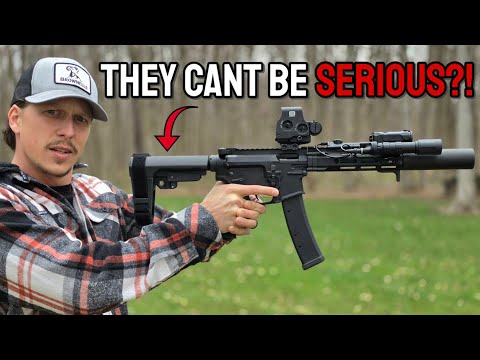
On the Brace Ban and Non-Compliance

Published on February 1, 2023
Duration: 9:04

This guide details the implications of the recent ATF ruling reclassifying pistol braces as stocks. Instructor Hop outlines three primary options for owners: brace removal, SBR registration (with or without tax stamp), and non-compliance, cautioning against the latter due to legal risks. The video emphasizes understanding the historical context of ATF positions and potential legal challenges to the new regulation.

Quick Summary

The ATF has reclassified pistol braces as NFA-regulated 'stocks,' making firearms equipped with them considered Short-Barreled Rifles (SBRs). Owners can remove the brace, register the firearm as an SBR (potentially without the $200 tax stamp via photo submission), or face legal risks with non-compliance.

Chapters

  1. 00:00Introduction: ATF Pistol Brace Ruling
  2. 00:33Prior ATF Stance on Pistol Braces
  3. 01:29New ATF Pistol Brace Classification
  4. 02:18ATF Submission Process & Motivation
  5. 03:13Option 1: Brace Removal
  6. 03:43Option 2: SBR Registration
  7. 04:16Option 3: Non-Compliance Risks
  8. 05:55Non-Compliance vs. Civil Disobedience
  9. 08:20Legal Challenges & Personal Decisions

Frequently Asked Questions

What is the ATF's new ruling on pistol braces?

The ATF has reclassified pistol stabilizing braces as NFA-regulated 'stocks.' This means firearms equipped with these braces are now considered Short-Barreled Rifles (SBRs) unless registered accordingly, reversing previous ATF guidance.

What are the options for owners of firearms with pistol braces?

Owners have three main options: 1) Remove and destroy the brace, reverting the firearm to its original configuration. 2) Register the firearm as an SBR with the ATF, either via the traditional tax stamp or a photo submission process. 3) Choose non-compliance, understanding the significant legal risks involved.

Can I register my braced pistol as an SBR without paying the $200 tax stamp?

The ATF is offering an alternative registration method by submitting a photograph of the firearm for evaluation, which may waive the $200 tax stamp requirement. However, caution is advised due to the ATF's historical stance and potential for future changes.

Is choosing not to comply with the ATF brace ban considered civil disobedience?

No, choosing not to comply with ATF regulations is generally not considered civil disobedience. Civil disobedience aims to challenge unjust laws through public action. Private non-compliance typically carries legal risks without creating a significant challenge to the law itself.

More 2nd Amendment & Law Videos You Might Like

More from Hop

View all →