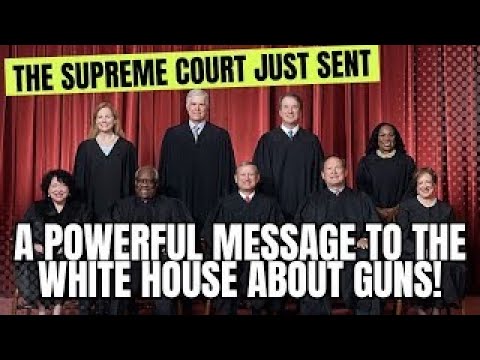
The Supreme Court Just Sent A Powerful Message To The White House About Guns!

Published on May 10, 2025
Duration: 8:34

The Supreme Court's ruling in Smith & Wesson Brands v. Estados Unidos Mexicanos clarified that gun manufacturers are protected from lawsuits under the Protection of Lawful Commerce in Arms Act (PLCAA) unless they are directly aiding and abetting criminal activity. The court emphasized that responsibility for gun smuggling and cartel violence lies with "red flag stores" and Mexico's own border enforcement, not the manufacturers themselves.

Quick Summary

The Supreme Court's ruling in Smith & Wesson Brands v. Estados Unidos Mexicanos affirmed that gun manufacturers are protected by PLCAA unless they are directly aiding and abetting criminal activity. The court emphasized that accountability for cartel gun violence rests with "red flag stores" facilitating straw purchases and Mexico's border enforcement, not the manufacturers themselves.

Chapters

  1. 00:05Supreme Court's Message on Guns
  2. 00:21Arguments in Smith & Wesson Case
  3. 00:41Mexico's Claims on Gun Smuggling
  4. 01:04US President's Tariff on Mexico
  5. 01:39Supreme Court's Stance on PLCAA
  6. 02:25Court's Concern: Aiding & Abetting
  7. 03:25Lack of Precedent for Mexico's Theory
  8. 04:01Supreme Court's Message to Mexico
  9. 04:30Accountability for Gun Violence
  10. 05:02Finger Pointing: Where Responsibility Lies
  11. 05:37Historical Significance of Ruling
  12. 06:12Responsibility for Smuggled Guns
  13. 07:05Channel Support and Prayer Requests

Frequently Asked Questions

What is the Protection of Lawful Commerce in Arms Act (PLCAA)?

PLCAA is a U.S. federal law that shields gun manufacturers and dealers from liability when their products are used in crimes. It's designed to prevent lawsuits against the firearms industry for criminal misuse, akin to how car manufacturers aren't liable for drunk driving accidents.

What was the core of Mexico's lawsuit against Smith & Wesson?

Mexico sued Smith & Wesson, alleging the company was responsible for cartel gun violence by allowing a significant number of its firearms to be trafficked into Mexico. They sought to hold the manufacturer accountable for the estimated 200,000 to 500,000 guns smuggled annually.

How did the Supreme Court rule in the Smith & Wesson case regarding gun manufacturer liability?

The Supreme Court largely upheld PLCAA protections, stating that manufacturers are shielded unless there's direct evidence they are aiding and abetting criminal activity, such as illegally selling guns to cartels. The court suggested Mexico's focus should be on illegal sales channels and border enforcement.

Who does the Supreme Court suggest is responsible for gun smuggling and cartel violence?

The Supreme Court indicated that responsibility lies with "red flag stores" that facilitate straw purchases and with Mexico's own government for its ability to stop gun smuggling across its borders. The ruling shifts accountability away from manufacturers unless direct complicity is proven.

Related News

All News →

More 2nd Amendment & Law Videos You Might Like

More from God Family and Guns

View all →